The Venezuelan leader overestimated his strength and misread his exchange with President Trump in the decisive weeks before his capture by U.S. forces.
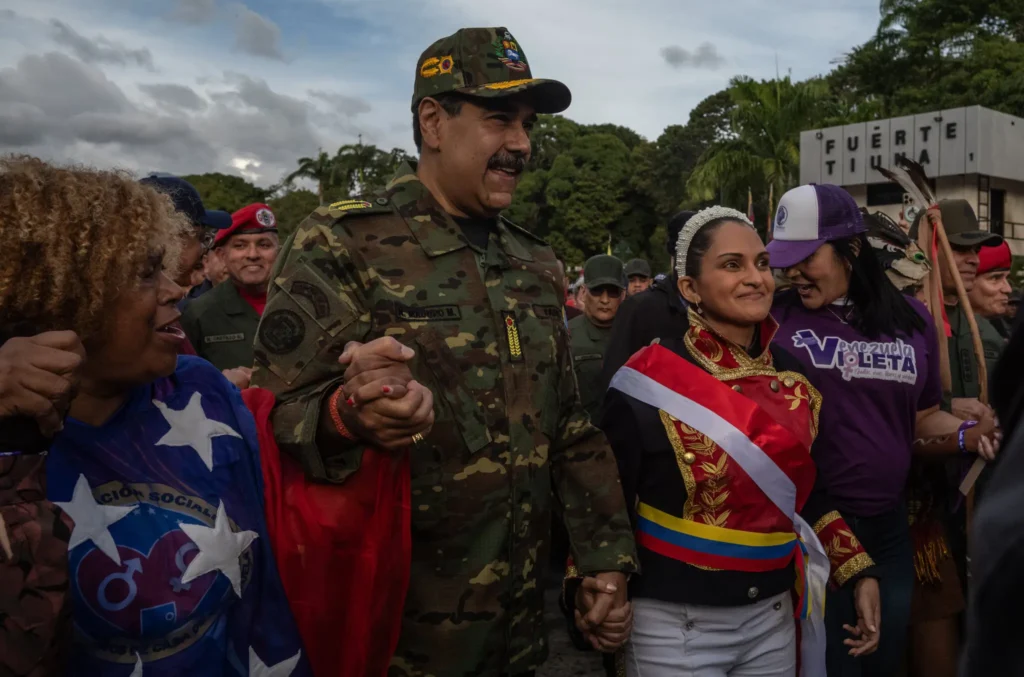
In the final weeks of Nicolás Maduro’s rule, Venezuela’s political crisis entered its most volatile phase. Despite escalating U.S. military pressure and mounting economic isolation, the Venezuelan leader appeared to believe that a negotiated exit or power-sharing arrangement with Washington remained possible, according to individuals familiar with internal discussions at the time.
This assumption would prove to be one of the most consequential miscalculations of his presidency.
By late 2025, U.S. military assets had significantly increased their presence in the Caribbean, while Washington publicly intensified its rhetoric toward Caracas. Behind the scenes, American officials were reportedly preparing contingency scenarios ranging from coercive diplomacy to direct military intervention.
Yet Maduro’s inner circle largely dismissed the prospect of an imminent U.S. assault.
Sources close to the former president describe a leadership environment shaped by overconfidence and conflicting interpretations of Washington’s intentions. While U.S. officials framed military deployments and sanctions as part of a broader pressure campaign, Maduro and several senior allies appear to have viewed these actions as leverage designed to extract political concessions rather than trigger regime-ending force.
This divergence in expectations played a decisive role in the final outcome.
Signals Misread
The only known direct exchange between Maduro and President Donald Trump occurred in November 2025. Accounts from individuals familiar with the call suggest that both leaders emerged with fundamentally different conclusions.
Maduro reportedly interpreted the conversation as evidence that diplomatic channels remained open. U.S. officials, however, saw the absence of concrete commitments as confirmation that the Venezuelan leadership was unwilling to consider immediate transition arrangements.
Such misalignment is not uncommon in high-stakes coercive diplomacy. However, in this case, the consequences were immediate and profound.
Subsequent messages relayed through intermediaries, including regional business and political figures, reinforced Washington’s demand for Maduro’s departure. According to sources with knowledge of these exchanges, the warnings were received but not treated as urgent strategic threats.
Escalation Without Compromise
Rather than signaling readiness to resign, Maduro intensified public appearances aimed at projecting control. State events, speeches, and choreographed messaging emphasized defiance and national sovereignty.
Observers note that these displays, while politically consistent with past survival strategies, may have deepened perceptions within Washington that diplomatic pressure alone would not produce regime change.
At the same time, Venezuela’s internal political dynamics were becoming increasingly fragile. The unresolved dispute over the 2024 election results had already eroded institutional legitimacy and widened fissures within the ruling coalition. Competing factions within the government advanced divergent approaches to governance, economic policy, and crisis management.
These divisions would later shape the post-Maduro transition.
Economic Pressure as Catalyst
A critical turning point came with the tightening of U.S. economic measures. Restrictions targeting Venezuela’s oil sector — the country’s principal revenue source — sharply constrained fiscal capacity and intensified macroeconomic instability.
Energy analysts indicate that disruptions to oil exports and logistics placed extraordinary strain on state finances. The resulting contraction reduced the government’s ability to stabilize currency markets, fund imports, and maintain political patronage networks essential to regime durability.
Despite these pressures, sources describe Maduro as maintaining confidence that a negotiated settlement remained achievable.
Collapse of Deterrence
Maduro’s security calculations appear to have rested on assumptions regarding the deterrent effect of Venezuela’s military capabilities and the political risks of U.S. casualties. Comparisons were reportedly drawn to historical precedents, including prior American interventions in the region.
However, these assessments underestimated the scale and nature of Washington’s operational planning.
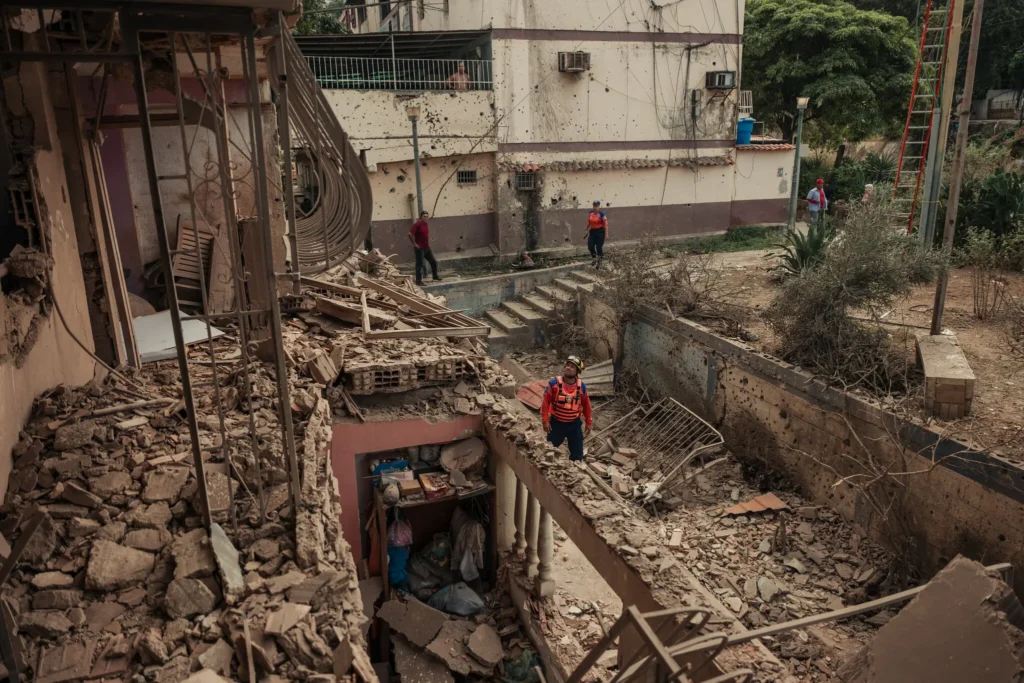
In early January 2026, U.S. forces launched a coordinated military operation targeting key Venezuelan military installations. Within hours, Maduro and his wife, Cilia Flores, were captured.
The operation marked the first large-scale foreign military action on Venezuelan territory in more than a century.
Aftermath and Reconfiguration
Maduro’s removal triggered immediate political realignment. Delcy Rodríguez assumed leadership under conditions shaped by both domestic instability and external pressure. Subsequent policy shifts signaled a recalibration of Venezuela’s international posture, including adjustments to long-standing regional alliances.
The episode also carries broader implications for hemispheric security.
For Washington, the intervention represented a reassertion of hard-power instruments after years of sanctions-driven policy. For Latin America, it underscored the volatility inherent in unresolved political crises combined with great-power confrontation.
For Venezuela, it closed one chapter of authoritarian rule while opening a period of uncertain transition.
Lessons of Miscalculation
Maduro’s downfall illustrates a recurring dynamic in contemporary conflicts between entrenched regimes and external powers: the risks associated with misjudging adversary resolve, interpreting coercive signals through domestic political lenses, and overestimating the stabilizing effect of security institutions.
Ultimately, the final weeks of his presidency were defined less by sudden collapse than by cumulative strategic misperceptions.