Throughout its history, the condition of the Central Office has been one important measure of Germany’s evolving relationship to its Nazi past. After its founding in 1958, it enjoyed 10 years of robust activity before receding from public view, amid widespread opposition to further investigations of German war crimes. Today, the youngest suspects are 90 years old, and most were low-level Nazi functionaries: guards, cooks, medics, telephone operators and the like. The defendants tend to die during the lengthy judicial process, so the odds of conviction are miniscule. Partly as a result, few Germans know the Central Office exists, and many of those who do tend to view it with ambivalence.
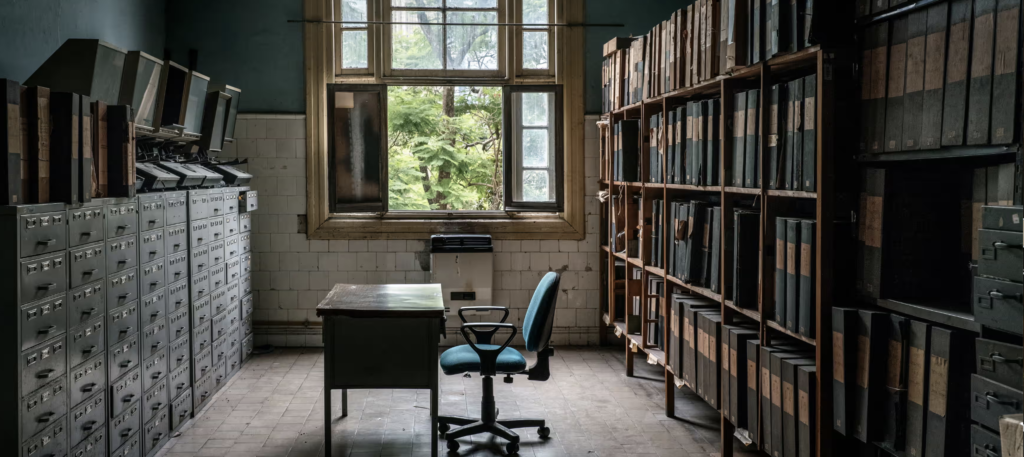
The Central Office for the Investigation of National Socialist Crimes is an austere, pale-yellow prison building nestled into the 18th-century city wall of Ludwigsburg in southwestern Germany. Once used by the Nazis to detain political prisoners, the building announces its contemporary tenants obliquely, with a small, silver sign. Entering the Central Office still feels like entering a jail; to gain access, one must pass through a white metal gate and then through a second secure doorway.
Since it was created by the West German government in 1958, the Central Office’s mission has been to deliver Nazis to justice. Every year, its six investigative “departments,” each of which consists of a single prosecutor, scour the globe looking for members of the Third Reich. Chief prosecutor Jens Rommel, who heads the operation, is a sturdy, jovial 44-year-old with frameless glasses and a triangular goatee. The German press calls him a Nazi hunter, but Rommel doesn’t like the term. “A hunter is looking for a trophy,” he told me. “He has a rifle in his hand. I’m a prosecutor looking for murderers and I have criminal code in my hand.”
Rommel and his staff visit the sites of former concentration camps across Germany and eastern Europe to sift through records and walk the grounds to determine what defendants might have witnessed from their posts. Over the past decade, the office, which has an annual budget of €1.2m, has also conducted more than 20 trips to archives in South America. The investigators spend most days under an avalanche of bureaucratic documents, checking and cross-checking names on German, Russian, British, French and Polish lists – everything from SS papers documenting quotidian affairs such as the issuing of new uniforms and marriage requests, to Allied inventories of prisoners of war. Their goal is to find the last living Nazis who have yet to be indicted and might still be able to stand trial.
The pursuit of Nazi war criminals stands as one of the most prolonged and morally compelling quests for justice in modern history. Decades after the end of World War II, dedicated individuals and legal institutions continue to seek accountability for crimes committed under the Third Reich. Among the most prominent figures in this pursuit are Serge and Beate Klarsfeld, whose work brought some of the most notorious Nazi perpetrators to justice. This investigative report delves into the tireless work of Nazi hunters, the legal evolution that enabled late-stage prosecutions, and the continued efforts of institutions like the Central Office in Ludwigsburg to hold the perpetrators accountable, even eight decades later.
The Klarsfeld Legacy: From Survivors to Pursuers of Justice
Serge Klarsfeld, a Holocaust survivor and lawyer, alongside his wife Beate, dedicated their lives to tracking down high-ranking Nazi officials responsible for the genocide of millions, particularly the Jewish population of Europe. Their work led to the capture and trial of several high-profile Nazis, including Klaus Barbie, the Gestapo chief in Lyon, infamously known as the “Butcher of Lyon.”
“We only pursued the criminals who had made decisions about the fate of masses of Jews,” Klarsfeld explained in a letter to Deutsche Welle. “Our search for and involvement in the arrest of Barbie after a 12-year struggle from 1971 to 1983 earned us great acclaim in France.”
Kurt Lischka and Herbert Hagen, key figures in the deportation of 76,000 Jews from France to extermination camps, including 11,400 children, were among those brought to trial thanks to the Klarsfelds’ dogged pursuit of justice. Their work culminated in receiving the Order of Merit of the Federal Republic of Germany in 2015.
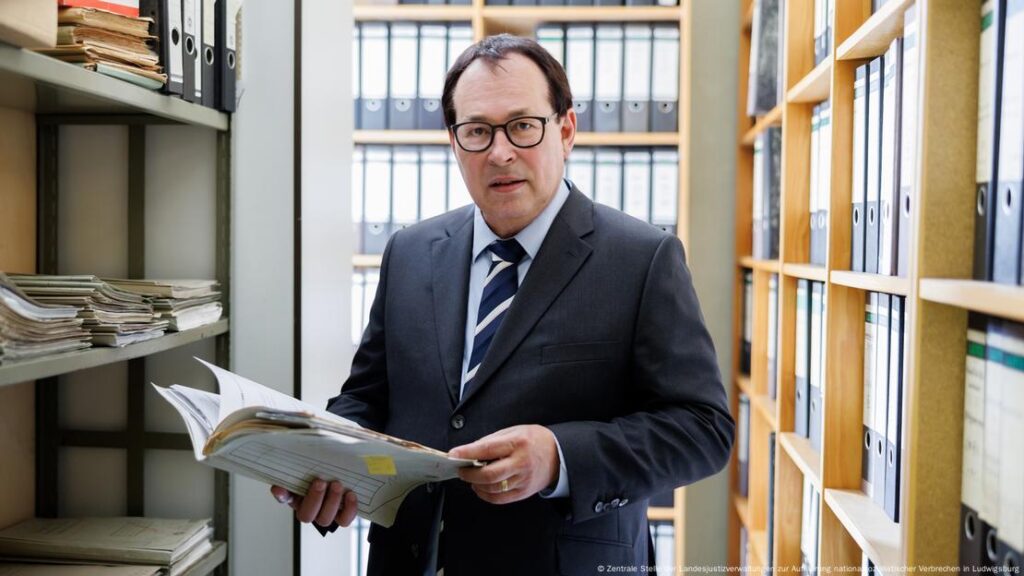
Thinking about these trials and discussing them was and still remains important today,” said Thomas Will, who heads Germany’s authority on investigating Nazi crimes
Historic Legal Milestones
The Klarsfelds’ advocacy was instrumental in the Bundestag’s historic 1979 decision to eliminate the statute of limitations for murder and genocide. This legal pivot came after years of inaction, during which many Nazis escaped trial due to legal technicalities or political reluctance.
“If the Germans had adopted the 1979 law in 1954, the cases of thousands of Nazi criminals would have been examined,” Klarsfeld said, reflecting on the missed opportunities for justice. The early post-war judiciary, often staffed with former Nazi party members, was largely lenient, hindering comprehensive accountability.
Late Justice: Recent Prosecutions
In recent years, Germany has seen a renewed push to prosecute surviving Nazi collaborators, regardless of age. A key figure in this resurgence is Thomas Will, the head of the Central Office of the State Justice Administrations for the Investigation of National Socialist Crimes in Ludwigsburg.
“Our mission is still to find people who can be brought to trial,” Will told DW. He acknowledged the limitations of time: “Realistically, only those born between 1925 to 1928 are likely to still be alive.”
One high-profile case was Irmgard Furchner, a former secretary at the Stutthof concentration camp, who was convicted in 2022 of aiding and abetting murder in over 10,000 cases. She died in January 2024 at the age of 99, becoming a symbol of the belated yet essential pursuit of justice.
In Hanau, a 100-year-old former guard at Sachsenhausen is currently on trial for complicity in over 3,300 murders. Will and his team face monumental obstacles, from incomplete personal data to the sheer scale of Nazi bureaucracy. “Finding a Karl Müller without any additional information is an impossibility,” he noted.
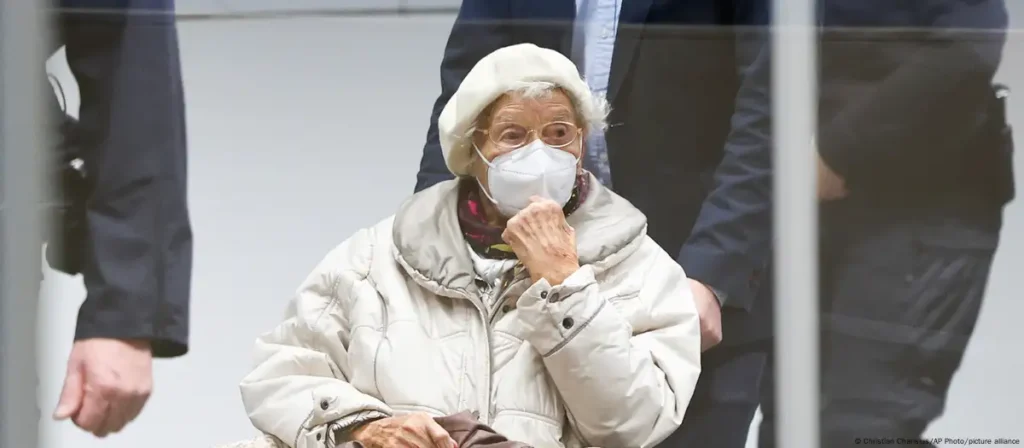
Irmgard Furchner, accused of working at the Stutthof concentration camp, at her trial in 2022
A Global Search for Perpetrators
Since its founding in 1958, Will’s office has compiled 1.78 million index cards documenting individuals and crime scenes. Nearly 19,000 cases have been initiated, some requiring international cooperation through the Schengen Information System and Interpol.
Despite immense logistical and legal challenges, the pursuit of justice continues across borders. Many suspects fled abroad, often to South America or the Middle East, requiring persistent global coordination. The capture of Klaus Barbie in Bolivia is a prime example of this international effort.
Justice vs. Time: The Ethical Debate
Some question the relevance of trying centenarians whose health may prevent them from standing trial. Will’s response is unequivocal: “The guilty verdict alone, albeit late, is very important because it establishes criminal responsibility and guilt. The importance of this for the relatives of victims cannot be overestimated.”
He also criticized early post-war legal systems: “General criminal law was not designed to prosecute state-ordered mass crimes. Initially, a distinction was made between the main perpetrators and those who were seen as mere accomplices.”
This distinction, he argues, allowed many to evade justice. “Social conditions had to change. But even then, there should have been more convictions.”
Documentation as a Tool for Historical Justice
Beyond trials, the Central Office’s archives have become invaluable for historical accountability. “The many documents that have emerged serve as evidence of how post-war society dealt with its Nazi past,” Will emphasized.
These archives are crucial not just for legal purposes but for educating future generations. They remind society of the dangers of fascism and the importance of confronting historical atrocities.
Jens Rommel, chief prosecutor for Germany’s Central Office for the Investigation of National Socialist Crimes. Photograph: Peter Bauza
A Never-Ending Quest?
The work of Nazi hunters and judicial investigators like Serge and Beate Klarsfeld and Thomas Will underscores a profound truth: justice, no matter how delayed, is a moral necessity. As time progresses and the number of living perpetrators dwindles, their legacy serves as both a warning and a beacon.
Their efforts remind us that accountability for mass atrocities is not just a legal imperative, but a societal obligation. The pursuit of justice may be slow and imperfect, but it remains one of humanity’s most essential duties.
“This is a giant cold-case operation,” Devin Pendas, a historian of Nazi prosecutions at Boston College, said of the Central Office. “It’s looking at crimes that happened a long time ago, with only the sketchiest information about who the perpetrators might be.” Rommel, a former criminal prosecutor, approaches the work the same way he used to investigate homicide cases, treating the archives at his disposal as live crime scenes. “There are crimes behind these words, but there’s no blood here,” he said.
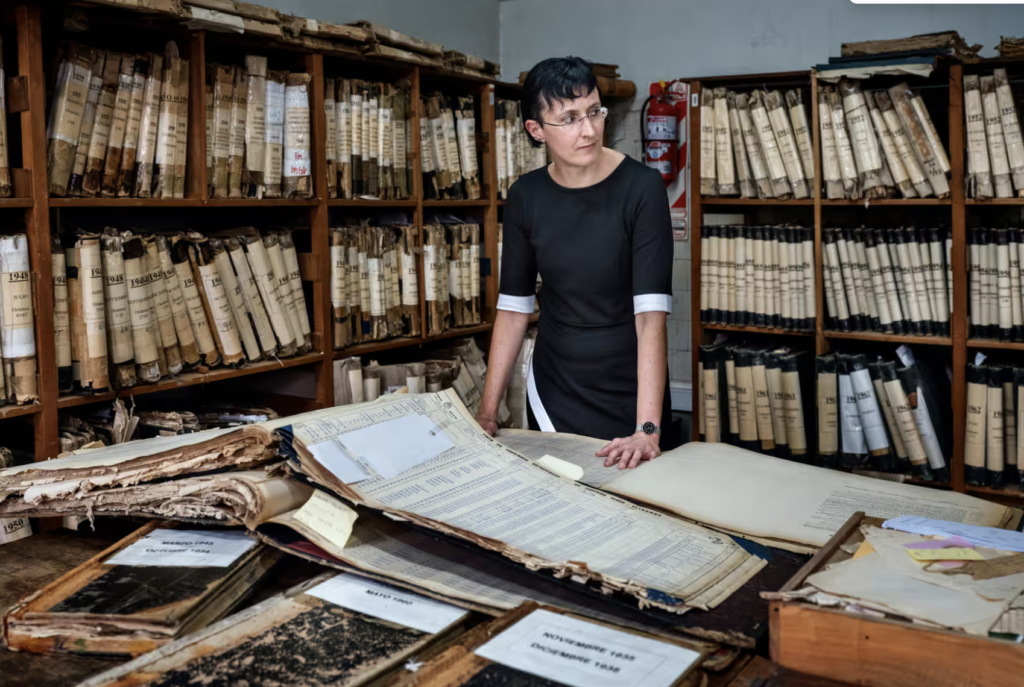
Central Office prosecutor Manuela Zeller. Photograph: Peter Bauza
Central Office prosecutors unearth the names of about 30 living perpetrators per year. Their cases are then handed over to regional prosecutors, who usually spend another year conducting follow-up investigations and deciding whether to take the individuals to court. Since the start of the 21st century, this work has led to six prosecutions, but in the media, every case has been called “the last Nazi trial”, as if writers, editors and readers all hope the label will finally prove to be true.
Today, the youngest suspects are 90 years old, and most were low-level Nazi functionaries: guards, cooks, medics, telephone operators and the like. The defendants tend to die during the lengthy judicial process, so the odds of conviction are miniscule. Partly as a result, few Germans know the Central Office exists, and many of those who do tend to view it with ambivalence. “It is hard for people to see what exactly the point is of putting a 90-year-old in jail,” Pendas said. Others view the office with reverence, awed by what it has managed to achieve despite considerable odds.