Ukraine’s rare earth deal with the United States is not just a commercial agreement—it is a high-stakes geopolitical bet. It offers a pathway to break free from Russian and Chinese economic influence, fund Ukraine’s reconstruction, and bolster the West’s critical mineral resilience. But the risks are real: environmental damage, poor governance, and resource exploitation loom large. As Kyiv and Washington move forward, the world will be watching to see if this alliance produces a model for ethical, strategic resource development—or repeats the mistakes of the past.
Background
On April 30, 2025, Ukraine and the United States signed a landmark agreement establishing a joint Reconstruction Investment Fund aimed at developing Ukraine’s critical mineral resources, including rare earth elements, oil, and gas. This strategic partnership is designed to bolster Ukraine’s economic recovery and reduce U.S. dependence on foreign sources for essential minerals.
Investigation team
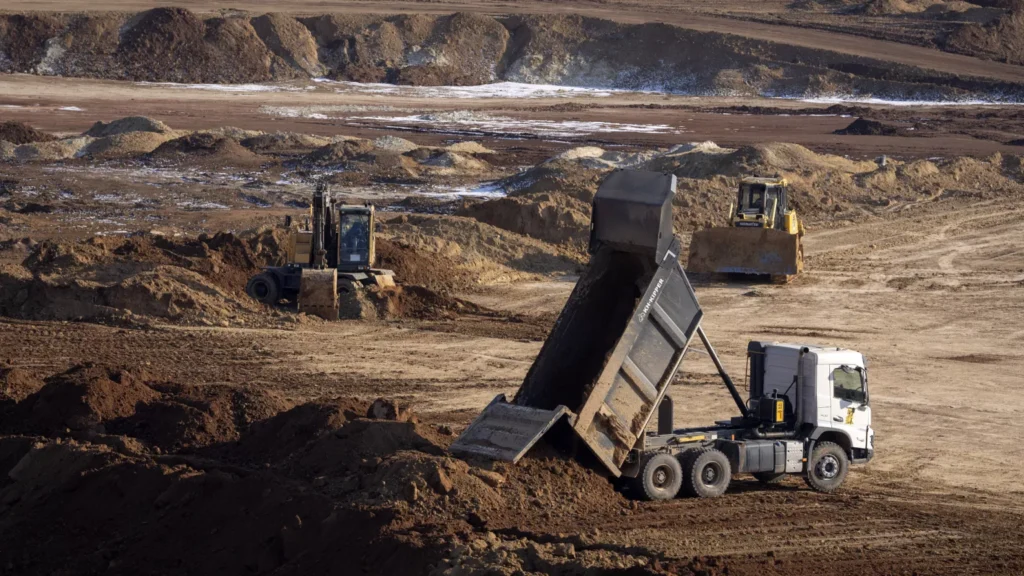
In a move that could reshape global supply chains and challenge China’s long-standing dominance over critical raw materials, Ukraine has signed a landmark agreement with the United States to jointly develop its rare earth mineral resources. As the world races to secure the elements vital for electric vehicles, wind turbines, and advanced weaponry, this new partnership signals a strategic pivot—not just for Ukraine’s battered economy, but for the geopolitical energy map itself.
While war continues to devastate Ukrainian infrastructure, below its scarred surface lies a hidden wealth: one of Europe’s largest reserves of rare earth elements (REEs). With U.S. backing, Kyiv now seeks to turn its mineral assets into leverage for both recovery and strategic relevance.
Ukraine possesses significant reserves of critical minerals vital for modern industries:
- Lithium: Essential for electric vehicle batteries.
- Graphite: Used in energy storage and electronics.
- Titanium: Crucial for aerospace and defense applications.
- Rare Earth Elements: Such as neodymium, used in wind turbines and electric motors.
These resources have remained largely untapped due to ongoing conflicts and regulatory challenges.
Key Provisions of the Agreement
- Joint Reconstruction Investment Fund: Both nations will contribute equally to a fund managed jointly, focusing on developing Ukraine’s mineral sector.
- Profit Sharing: The U.S. will receive 50% of future profits from Ukraine’s state-owned mineral resources.
- No Debt Obligations: Ukraine retains full ownership and control over its resources, with no debt incurred from the agreement.
- Investment Focus: The fund aims to attract global investments and technologies to develop Ukraine’s mineral sector.
What the Deal Means and Why It Matters
🔹 The Deal
In late April 2025, Ukraine and the United States signed a Memorandum of Understanding (MoU) to cooperate on mapping, extracting, and processing rare earth minerals and other critical materials like lithium and titanium. The agreement is supported by the U.S. Department of State’s Energy Resource Governance Initiative (ERGI), and is expected to unlock both private investment and technical expertise.
Quote
“This is about more than just resources—it’s about security and resilience,” said Jose W. Fernandez, U.S. Under Secretary for Economic Growth, Energy, and the Environment. “Ukraine has the potential to become a cornerstone of a diversified supply chain that’s not dependent on autocracies.”
🔹 Ukraine’s Rare Earth Potential
Ukraine is home to over 20 types of critical minerals, with significant reserves of titanium, lithium, and rare earth elements—most of which are underexploited. According to Ukraine’s Ministry of Environmental Protection and Natural Resources, the country holds:
- Over 500,000 tons of titanium ore
- Several large lithium deposits (including Shevchenkivske and Dobra)
- Untapped rare earth reserves in the Donbas and Dnipro regions
However, much of this potential lies in conflict zones or areas with limited infrastructure—posing huge logistical and security challenges.
🔹 The Geopolitical Stakes
Currently, China controls over 60% of global rare earth production and over 85% of processing capacity. Western nations are eager to diversify sourcing as part of broader efforts to reduce strategic dependence on Beijing.
The Ukraine-U.S. deal is part of that strategy, but it also raises concerns over environmental regulation, war profiteering, and local community displacement. Critics argue that launching new mining projects amid an ongoing war could lead to weak oversight and exploitation.
Quote
“This is a golden opportunity for Ukraine—but only if it avoids becoming the next resource extraction tragedy,” said Olha Melen-Zabramna, a Ukrainian environmental policy expert.
🔹 Who Benefits—and Who Might Not
While American companies are expected to play a major role in financing and developing Ukrainian extraction sites, questions remain over profit-sharing, transparency, and sustainability. Activists warn that local communities may be excluded from decision-making, while the environmental costs of rare earth mining are notoriously high.
The agreement also intersects with Ukraine’s recovery agenda. With reconstruction needs estimated at over $400 billion, developing natural resources could become a lifeline—if managed properly.
Political Context
The agreement follows months of negotiations, including a contentious meeting between Presidents Zelenskyy and Trump in February 2025. Initial U.S. demands for $500 billion in mineral revenues were dropped in favor of a more balanced partnership.
President Trump emphasized the deal as a means for the U.S. to recoup approximately $120 billion in aid previously extended to Ukraine, stating it allows the U.S. to “share in the benefits” of Ukraine’s recovery.
Ukrainian Prime Minister Denys Shmyhal highlighted that Ukraine retains full control over its resources and state-owned companies, ensuring no debt obligations arise from the deal.
Strategic Implications
This agreement is seen as a pivotal moment in U.S.-Ukraine relations, signaling continued international support for Kyiv amid ongoing tensions with Russia. It also represents a strategic move by the U.S. to secure access to critical minerals, reducing reliance on China, which currently controls a significant portion of global rare earth production.
The U.S.-Ukraine minerals agreement marks a significant step toward Ukraine’s economic recovery and energy independence. By leveraging its vast mineral resources through a balanced partnership with the United States, Ukraine aims to attract global investments and technologies, fostering long-term growth and stability.