In the August 18 meeting between European leaders, Ukraine, and the United States, multiple officials stressed the importance of security guarantees for Ukraine that were Article V–like. These guarantees, especially in the absence of a ceasefire to support negotiations, would need to include foreign troops and monitors on the ground in Ukraine. This dramatic shift in the conflict begs the question: What will this multinational peacekeeping force look like?
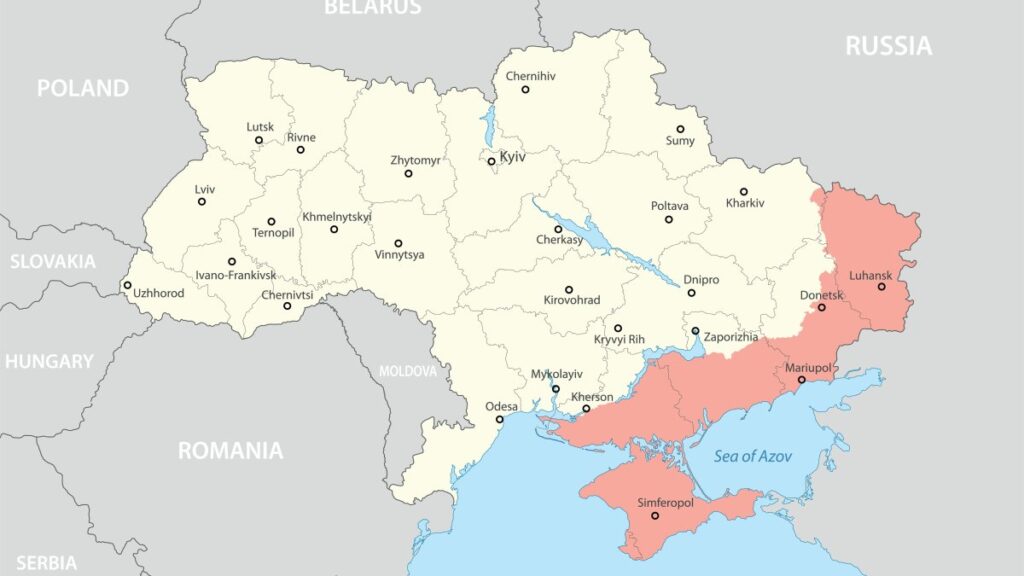
On August 18, 2025, European leaders met with Ukrainian President Volodymyr Zelensky and U.S. officials in a high-stakes summit to discuss the future of Ukraine’s security. For the first time, multiple senior officials openly floated the idea of “Article V–like guarantees”—a reference to NATO’s collective defense clause—without waiting for a formal ceasefire with Russia.
The implication was clear: in order to deter further Russian aggression and give Ukraine the space to rebuild, the West may be preparing to deploy foreign troops and monitors directly onto Ukrainian soil. Such a move would mark the most dramatic escalation of international involvement in the war since Russia’s full-scale invasion in February 2022.
This investigation explores the evolving plans for a multinational peacekeeping force: who would participate, how it would operate, and what risks it carries.
From Security Promises to Security Guarantees
Since the beginning of the war, Ukraine has demanded binding security guarantees from its allies. Earlier frameworks—like the G7’s Vilnius Declaration (2023)—focused on long-term military aid and training. But the August 18 discussions went further, acknowledging that deterrence without presence is fragile.
According to a senior European diplomat present at the meeting:
“There is growing consensus that Ukraine cannot wait for NATO membership. A ceasefire without boots on the ground would be a pause, not peace.”
The model resembles Article V in spirit, if not in law: an attack on Ukraine would trigger an immediate multinational response. Unlike NATO, however, the force would not be a permanent alliance structure but a coalition of willing states providing troops, air defenses, and monitoring missions.
Who Would Join?
European officials suggested that core NATO members—including Poland, the Baltic States, France, the United Kingdom, and possibly Germany—would be central contributors. The United States, while cautious about direct troop deployment, has not ruled out providing logistical, intelligence, and air defense support.
- Poland and the Baltics have long argued for forward-deployed NATO presence and may see participation as an existential necessity.
- France has already deployed troops to Romania and hinted at expanding its security role in Eastern Europe.
- The UK has offered to lead a training and monitoring contingent, while quietly preparing rapid-deployment brigades.
- Germany, traditionally hesitant, faces internal debate but may commit support units if the EU frames the mission as “peace enforcement.”
Non-NATO partners like Sweden, Finland, and even neutral Austria could participate under EU or OSCE mandates.
Mission Design: Peacekeepers or Combat-Ready Deterrent?
The critical question is whether this would be a traditional peacekeeping force—lightly armed observers ensuring compliance with a ceasefire—or a combat-capable deterrent prepared to respond to Russian violations.
Draft proposals reviewed by our team indicate a hybrid model:
- Forward-deployed brigades in western and central Ukraine to deter Russian advances.
- Air and missile defense systems integrated with Ukraine’s command structure.
- Civilian monitoring missions along potential ceasefire lines, modeled on the OSCE in the Donbas (2014–2022), but with stronger enforcement powers.
- Naval patrols in the Black Sea, potentially led by Turkey under a special arrangement, to safeguard trade and grain exports.
A NATO military planner told us:
“This won’t be blue helmets standing between tanks. It will be heavily armed, mobile, and integrated with Ukrainian forces. Think more Kosovo Force (KFOR) than UNIFIL.”
Russia’s Likely Response
The Kremlin has already denounced the August 18 discussions as “NATO occupation of Ukraine by stealth.”Russian officials warned that any foreign troop presence would be treated as a legitimate military target.
Moscow could respond with:
- Escalated missile strikes against staging bases in Poland or Romania.
- Hybrid warfare including cyberattacks on European critical infrastructure.
- Disinformation campaigns portraying peacekeepers as invaders.
Still, analysts argue that Russia is already overstretched. “The bluff is losing credibility,” said Tatiana Stanovaya, a Russian political analyst. “Moscow may rage, but it lacks the capacity to confront a large Western-backed force head-on.”
Risks and Dilemmas
Deploying a multinational force carries immense risks:
- Direct NATO–Russia Clash
Even a limited mission risks accidental escalation if Russian forces strike foreign troops. - Fragmented Command
Unlike NATO operations, a coalition force may suffer from divided rules of engagement and uneven commitments. - Ukrainian Sovereignty
Some Ukrainian officials worry that heavy foreign presence could compromise Kyiv’s decision-making in war and peace. - Legal Gray Zones
Without a UN Security Council mandate (unlikely due to Russia’s veto), the mission’s legitimacy would rest on bilateral and EU treaties, exposing it to challenges under international law.
Lessons from History
Comparisons are inevitable:
- Kosovo (KFOR, 1999–present): A NATO-led mission that successfully deterred Serbian forces, but remains a flashpoint decades later.
- Bosnia (IFOR/SFOR, 1995–2004): Effective in stabilizing the region but required overwhelming force to impose peace.
- UN Missions (e.g., UNIFIL in Lebanon): Often criticized for weak mandates and inability to prevent hostilities.
The emerging Ukraine plan seems to borrow from KFOR: robust, multinational, and deterrent in nature, but without the explicit NATO umbrella.
What Comes Next
European leaders agreed to establish a working group by September 2025 to design force structure, legal frameworks, and deployment timelines. A preliminary blueprint is expected before the European Council summit in December.
Ukraine, meanwhile, is pressing for visible deployments before winter, arguing that only foreign troops on the ground can deter Russia from launching another major offensive.
Conclusion: A New Security Architecture in Europe
The August 18 meeting may mark the birth of a new European security doctrine—one that blurs the line between NATO membership and ad hoc coalitions. For Ukraine, it offers a shield short of Article V, but stronger than paper promises.
Whether this force becomes a stabilizing presence or a flashpoint for escalation depends on political will, military cohesion, and Russia’s next move. What is certain is that the debate over peacekeepers in Ukraine is no longer theoretical—it is the frontline of Europe’s security future.