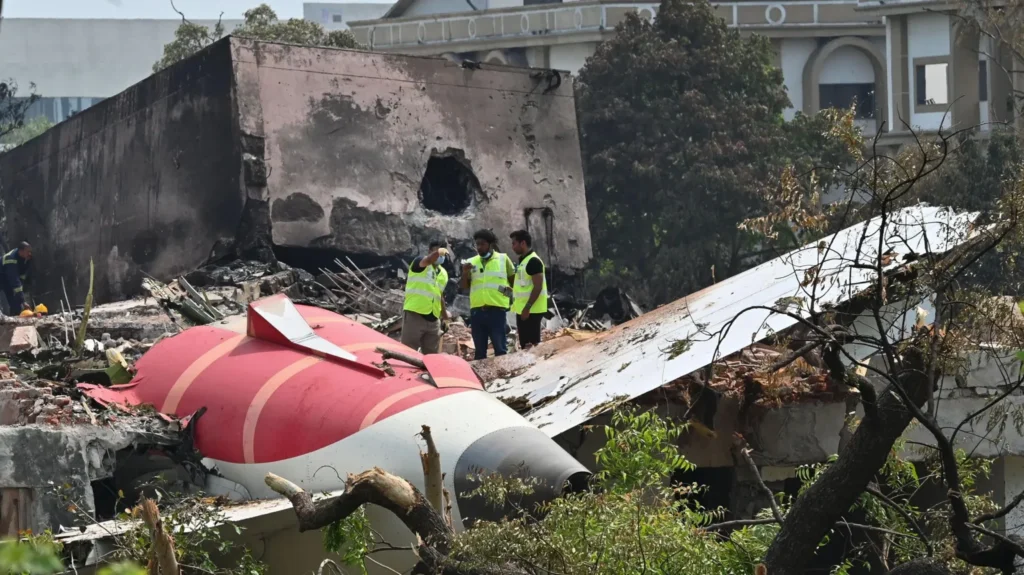
Nearly five months after a plane crash in India which killed 260 people, the investigation has become mired in controversy – with the country’s Supreme Court the latest to weigh in.
Flight 171 was en route to London from Ahmedabad in western India on 12 June. It crashed into a building just 32 seconds after taking off.
An interim report was released in July, but critics argue it unfairly focused on the actions of the pilots, diverting attention away from a possible fault with the aircraft.
On Friday, a judge in India’s Supreme Court insisted that nobody could blame the aircraft’s captain.
His comments came a week after the airline’s boss insisted there was no problem with the aircraft.
During a panel discussion at the Aviation India 2025 summit in New Delhi in late October, Air India’s chief executive Cambell Wilson admitted that the accident had been “absolutely devastating for the people involved, for the families of those involved, and the staff”.
But he stressed that initial investigations by Indian officials, summed up in a preliminary report, had “indicated that there was nothing wrong with the aircraft, the engines or the operation of the airline”.
He added although Air India was working with investigators it was not involved directly.
Because the accident happened in India, the investigation is being led by the country’s Air Accident investigation Bureau (AAIB). However, because the aircraft and its engines were designed and built in America, US officials are also taking part.
A month after the accident, the AAIB published a preliminary report. This is standard procedure in major accident investigations and is meant to provide a summary of the known facts at the time of publication.
The report will typically draw on information gleaned from examination of the crash site, for example, as well as basic material downloaded from the flight data recorder. It will not normally make firm conclusions about the cause of the accident.
However, the 15-page report into Air India 171 has proved controversial. This is largely due to the contents of two short paragraphs.
First, it notes that seconds after takeoff, the fuel cutoff switches – normally used when starting the engines before a flight and shutting them down afterwards – had been moved from the “run” to the cutoff position.
This would have deprived the engines of fuel, causing them to lose thrust rapidly. The switches were moved back to restart the engines, but too late to prevent the disaster.
It then says: “In the cockpit voice recording, one of the pilots is heard asking the other why did he cutoff. The other pilot responded that he did not do so.”