Military analysts and some Ukrainian commanders worry that Kyiv may be repeating the mistake of staying in an embattled city longer than it should, aiming to inflict far more casualties than it suffers.
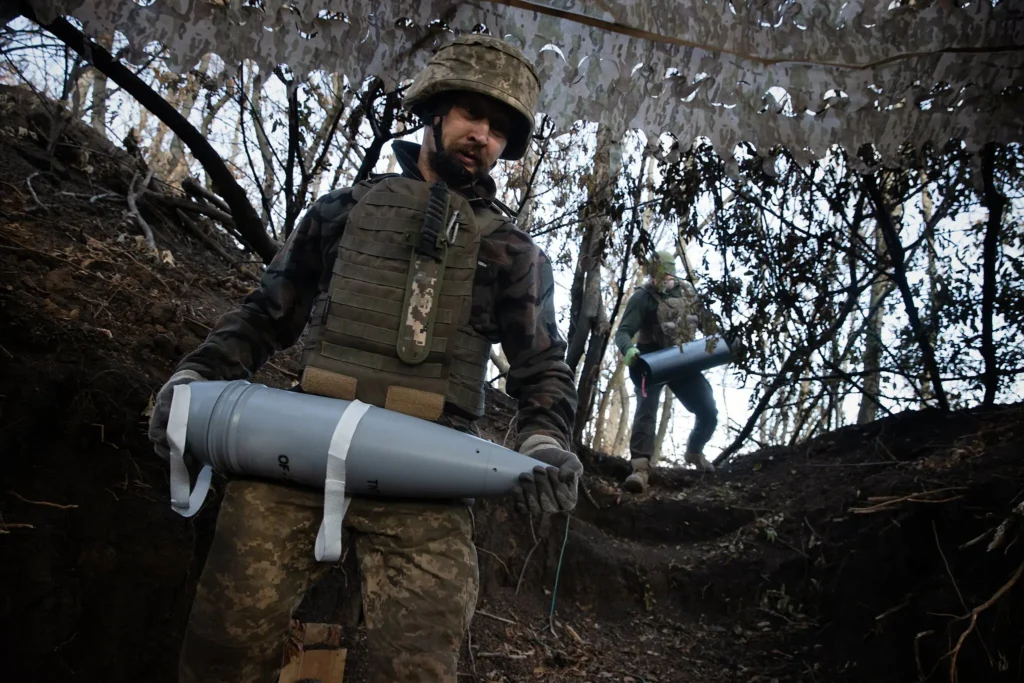
With Russia on the verge of capturing Pokrovsk, a strategic city in eastern Ukraine, Kyiv faces a cruelly familiar choice. It could pull back, concede defeat and save lives. Or it could fight on, delaying a symbolic and tactical victory for Moscow but risking heavier losses of its own.
It’s a dilemma that has haunted the Ukrainian military throughout the war, as it has struggled to contain Russian advances. Ukraine chose to hold on amid grinding battles in cities like Bakhmut and Avdiivka, both of which ultimately fell to Moscow. Critics argued that a timely retreat could have saved soldiers, Kyiv’s most precious resource in a war of attrition against a much larger adversary.
Ukraine’s argument for holding cities as long as possible is that it forces the Russian Army to expend vast numbers of troops, leaving it weakened in the battles to come. There is also a political element, as the two sides wage a battle of narratives. Kyiv wants to prevent Moscow from claiming successes that could sap morale at home and that the Kremlin could use to persuade the Trump administration that supporting Ukraine is a losing wager.
But with parts of Pokrovsk under Russian control and an adjacent city, Myrnohrad, facing the threat of encirclement, military analysts and some Ukrainian commanders worry that Kyiv may now be repeating past mistakes by staying weeks or months longer than necessary.
“Ukraine has previously held certain positions and cities for too long after the conditions became unfavorable,” said Rob Lee, a senior fellow at the Philadelphia-based Foreign Policy Research Institute, who recently visited the front line.
Pokrovsk, with a prewar population of 60,000, would be the largest Ukrainian city to fall since Bakhmut in May 2023. Its capture would give Russia a platform to push north and pursue its stated goal of capturing the Donetsk region, about three-quarters of which it already controls.

President Volodymyr Zelensky has acknowledged the difficult situation around Pokrovsk, saying that Ukrainian forces are badly outnumbered. But he has shown no sign of preparing to order a retreat. Instead, he visited Ukrainian troops near Pokrovsk last week and discussed their needs in defending the area.
If Ukraine keeps fighting for Pokrovsk, it risks being drawn into protracted urban combat as Russia continues to pour its superior resources into the battle. While Moscow has proved capable of replacing its losses through regular army recruitment campaigns offering sizable payouts, Ukraine has long struggled with troop shortages.
Vyacheslav Shevchuk, a drone battalion commander in Ukraine’s 68th Separate Jaeger Brigade, who fights in Pokrovsk, said the Ukrainian military was ill-suited for urban combat. It lacks soldiers to clear enemy positions, he said, and cannot use its drones as efficiently in built-up areas that provide concealment for Russian troops. Ukraine is also vulnerable to Russia’s use of heavy guided bombs to smash its defenses.
“It seems to me that the fate of this city is already decided,” Mr. Shevchuk said. “We must take care of our soldiers and withdraw them in time. I see nothing wrong or shameful in pulling our positions back to more advantageous locations.”

Pokrovsk and Myrnohrad have long stood as bulwarks against Russian advances in Donetsk. Moscow’s forces began attacking the cities more than a year ago but were held back by Ukraine’s fortified defenses and extensive use of drones to detect and counter incoming attacks.
Still, repeated assaults wore down Ukrainian defenses, and Russian forces now increasingly rely on small assault groups to slip through undermanned Ukrainian lines undetected. They have also exploited recent poor weather, which hampers Ukrainian reconnaissance drones, to push into the city.
In a video that circulated widely on social media this week, Russian troops entered Pokrovsk from the south, along a road shrouded in fog. The footage, whose location was verified by The New York Times, showed a ragtag column of soldiers on motorcycles and on top of cars, some missing doors. They drove down the road seemingly unopposed.
Whether Ukraine can pin these troops in street fighting in Pokrovsk for an extended period and bleed Russia’s army remains unclear.
In Bakhmut, fierce combat raged for months over every street and block, leaving the city in ruins.

The Royal United Services Institute, a British think tank, said in a report last year that holding Bakhmut made sense initially, as it allowed Kyiv to “inflict disproportionate losses” on Russian forces.
But after Russians advanced far enough to bring Ukrainian supply routes into the city within reach of their artillery, “the disparity in losses became unfavorable for Ukraine,” the report said. Still, Ukraine’s top command decided to hold on so as not to signal weakness, just as it was trying to secure more military aid from Western partners.
Overall, some 10,000 Ukrainian troops were killed or severely wounded in Bakhmut, while Russia suffered four times as many casualties, the report said. The bulk of the Russian force there were convicted criminals recruited from jails by the Wagner paramilitary group, making it significantly easier for the Kremlin to absorb many deaths without stoking discontent at home.
The report said the best course for Ukraine “would have been to withdraw to a new defense line.”
By late 2023, the focus of the war had shifted to Avdiivka, a heavily fortified Ukrainian town south of Bakhmut. Russia is believed to have suffered even more deaths there than in Bakhmut — at least 20,000, according to a statistical analysis, based on Russian court data, by the independent news outlets Mediazona and Meduza.
Russian forces pressed on despite the losses. Unlike in Bakhmut, they did not enter the city frontally but gradually moved to encircle it, trying to force a Ukrainian retreat. Moscow would later use that tactic in other eastern Ukrainian strongholds such as Vuhledar.
Ukraine kept its forces in Avdiivka even as the Russian noose drew tighter. As the battle came to a close in February 2024, Ukrainian soldiers had to exit through a corridor roughly a mile wide, under heavy enemy fire. Hundreds may have been captured or gone missing during the chaotic last-minute retreat.
There is now fear that a similar scenario may unfold in Myrnohrad, just east of Pokrovsk.
Building on their advance in Pokrovsk and progress to the north, Russian forces have created pincers around Myrnohrad, leaving a corridor less than two miles wide for troops to exit, according to a map by DeepState, a Ukrainian group monitoring battlefield developments. Bohdan Yanush, a deputy battalion commander in Ukraine’s 79th Air Assault Brigade, said several hundred Ukrainian soldiers were most likely still fighting in the pocket.
Mr. Yanush said he was concerned about a possible encirclement, but he and other commanders in the area said there was none for now. Some roads into the city remain usable, soldiers said, and the same fog that helped Russian troops move into Pokrovsk has allowed Ukraine to rotate soldiers into the Myrnohrad pocket.
“Reserves are working, the command is reacting and we see that the line holds,” said Oleksandr Bannikov, a sergeant with Ukraine’s 38th Marine Brigade.
Ukrainian soldiers fighting in Myrnohrad said that they had received no orders to retreat, and that they were focused on inflicting as many casualties on attacking Russian troops as they could.
The question, as in Bakhmut and Avdiivka, is when the attrition balance will turn against Ukraine and whether Kyiv will then decide to concede defeat.
The relentless Russian assaults have opened gaps along the front that Moscow has exploited to push forward. In recent days, Russian troops have captured half a dozen settlements in the Zaporizhzhia region, southwest of Pokrovsk, in an unusually rapid advance.
If troops are not withdrawn from Pokrovsk and Myrnohrad, “we could end up in a situation where there is no one to plug the gap in the front,” Vitaliy Deinega, the founder of Come Back Alive, a major Ukrainian charity that supports the military, wrote on Facebook. In that case, “the fortifications we have dug in our rear will quickly fall into enemy hands,” he said.