How court records, settlements, and missing archives shaped the world’s most contested accountability dossier. The inside story of the Caribbean playground that sheltered a paedophile
By InDepthReports | Investigative Desk
For years, “the Epstein files” have lived in two realities at once: a paper trail of verified court records and a swirling myth of secret lists and hidden vaults. The tension between those realities has become the story—because the documents the public can actually read show something both more concrete and more troubling than internet folklore: an accountability system that moved slowly, revealed selectively, and left key gaps behind.
In January 2024, a New York judge ordered the release of a large tranche of previously sealed material tied to civil litigation involving Jeffrey Epstein’s former associate Ghislaine Maxwell. The unsealed records did not deliver a single definitive “client list,” nor did they prove criminal conduct by every person named. But they did something else: they exposed how wealth, status, and institutional caution can keep a network opaque long after the harm is known.
This investigation maps what the “Epstein files” actually are, what they are not, what has been confirmed in court, and how financial settlements and vanishing archives have become part of the accountability battlefield.
1) What people mean when they say “Epstein files”
The phrase “Epstein files” is not a single archive. It generally refers to four overlapping categories:
- Criminal case records (charging documents, motions, rulings, sentencing memos).
- Civil litigation records (depositions, exhibits, discovery fights, and unsealed filings).
- Government records (investigations, jail logs, agency communications—often sought via FOIA).
- Financial and institutional records revealed through lawsuits, settlements, and compliance failures.
The public often expects a single “drop” of truth. But the truth—at least the legal truth—has come in fragments: a court order here, a deposition there, a settlement that releases money but not always clarity.
2) The January 2024 unsealing: names, allegations, and the limits of exposure
In early 2024, unsealed filings from civil litigation tied to Epstein/Maxwell became public after court-ordered disclosure in New York. Those records included references to numerous well-known individuals, but the documents themselves repeatedly underscored a basic legal fact: being named is not the same as being accused, and being accused is not the same as being proven.
What the release did provide was context—how relationships were described, what witnesses claimed under oath, where testimony conflicted, and which details were serious enough to be litigated for years rather than dismissed as rumor.
Key takeaway: the 2024 unsealing was not the end of the story. It was a demonstration of how much of the story had been sealed for so long.
3) The Maxwell case: conviction, appeals, and why the legal record matters
Maxwell was convicted in federal court for her role in Epstein’s trafficking operation; courts have continued to litigate the case through appeals and procedural disputes. In 2025, a federal appeals court upheld Maxwell’s conviction, keeping the core findings intact even as debate continued around what additional records should be made public.
This matters because the most reliable “Epstein files” are not online lists—they are the filings, testimony, and rulings that survive legal scrutiny.
4) Follow the money: what bank settlements revealed—and what they did not
One of the most consequential parts of the Epstein record emerged not from criminal trials, but from civil suits targeting financial gatekeepers.
- Deutsche Bank agreed to a $75 million settlement in litigation brought by Epstein accusers.
- Additional litigation against other major banks has continued, with federal judges scrutinizing whether claims are specific enough to proceed—illustrating how difficult it remains to establish institutional liability in court without discovery-grade detail.
Settlements can validate harm and transfer resources to survivors, but they can also function as a second veil: cases end, money moves, and the public still may not see the full set of underlying documents.
A former top prosecutor in the U.S. Virgin Islands, who pursued Epstein-linked civil actions, described the institutional web around Epstein’s operations as something investigators had to pry open—a picture that included corporate actors, intermediaries, and unusual financial structures.
5) The missing archive problem: when records “disappear
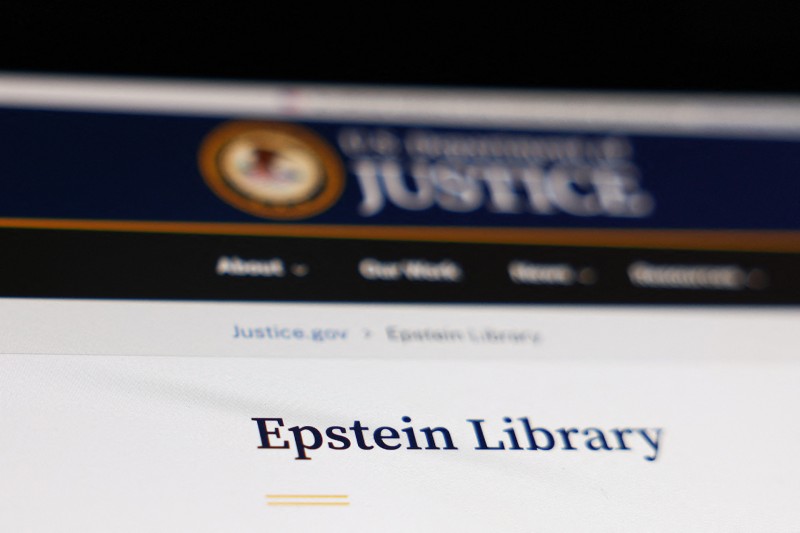
In 2026, reporting highlighted an unsettling reality: some Epstein-related records that were previously accessible online were no longer easy to find, adding fuel to public suspicion and intensifying calls for mandated transparency.
Whether the cause is bureaucratic churn, platform reorganization, legal process, or something else, the effect is the same: when records flicker in and out of view, public trust collapses—and conspiracy narratives rush in to fill the vacuum.
6) The politics of disclosure: transparency demands vs. due process
Pressure to “release everything” has become a political slogan in multiple countries. But a real disclosure process is constrained by law: privacy protections for victims, ongoing investigative equities, sealed grand-jury rules, and defamation risk for uncharged individuals.
That tension—between radical transparency and legal safeguards—creates a recurring pattern:
- Partial releases generate more questions than answers.
- Names without clear context turn document dumps into social-media trials.
- Delayed disclosure breeds suspicion that institutions are protecting the powerful.
In practice, the most responsible disclosures are the least satisfying to a public conditioned to expect a single explosive revelation.
7) What the “files” still don’t answer
Even after major unsealings and multiple waves of civil litigation, central questions remain contested or unresolved in public view:
- Who enabled the operation operationally (logistics, recruitment, travel facilitation)?
- Which institutions failed internal safeguards—and when they knew enough to act?
- What evidence remains sealed because of grand jury limits or ongoing investigations?
- Which victim accounts never reached court due to fear, intimidation, or exhaustion?
The Epstein case is often described as a scandal. It is also an anatomy lesson in how modern power works: reputations managed as aggressively as assets, institutions moving only when forced, and survivors made to carry the burden of proof across decades.
8) The accountability test: what meaningful transparency would look like
If transparency is more than a slogan, it requires structure. Based on what the Epstein record has revealed so far, meaningful accountability would mean:
- A stable, auditable public repository for already-releasable records (so documents don’t “disappear”).
- A victim-first redaction standard that protects survivors without shielding enablers.
- A clear disclosure framework for institutional failures (compliance breakdowns, escalation failures, internal warnings).
- A public explanation, case by case, for what remains sealed and why.
Without those elements, each new release will repeat the same cycle: hype, fragments, outrage, and a deeper mistrust of institutions.
The Epstein files are not a single revelation waiting in a locked drawer. They are a long, messy, legal and institutional record—one that tells a consistent story even when details remain contested: harm happened, systems failed, and disclosure has been partial and uneven.
What remains is not just the question of who knew what, but whether modern democracies can build an accountability architecture that does not depend on survivors spending decades in court to make the powerful legible.