By InDepthReports
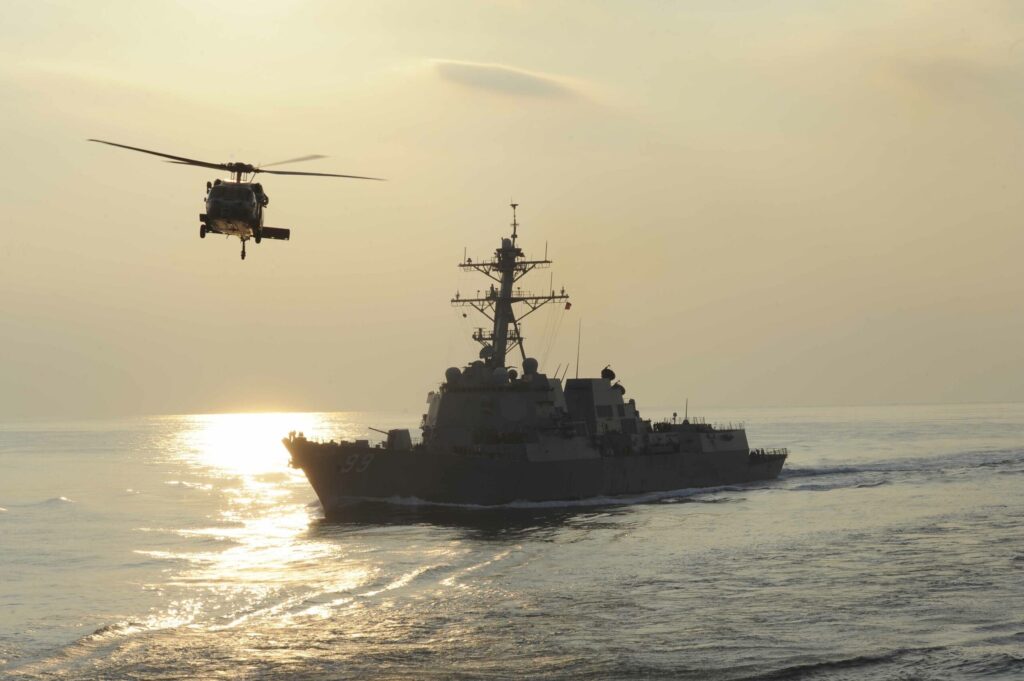
Since the United States imposed a maritime blockade on Iran’s ports on April 13, a central question has dominated policy and media debates: Is the blockade actually working?
Conflicting narratives have emerged. Shipping analytics firms and media outlets have suggested that dozens of Iran-linked vessels have successfully crossed the blockade line, raising doubts about enforcement. In contrast, the Pentagon maintains that only a negligible number of ships have evaded interception—a claim that, at face value, appears incompatible with independent reporting.
Yet a closer analysis suggests that the reality lies somewhere in between—though significantly closer to Washington’s position.
A Data Gap or a Perception Gap?
A review conducted by the Jewish Institute for National Security of America (JINSA), drawing on data from maritime analytics firm Kpler, provides one of the clearest available snapshots of activity around the blockade zone.
According to this analysis:
- 17 blockade-eligible vessels crossed the blockade line between April 13 and April 30
- Approximately 25% of these crossings occurred on the first day, pointing to early enforcement gaps
- No oil or gas tankers were among the vessels that breached the blockade
- Most were bulk cargo ships, including smaller vessels with limited strategic value
These findings complicate the narrative. While breaches did occur, their scale appears significantly smaller than suggested in early reporting, and their strategic impact relatively limited.
Enforcement in Practice
U.S. enforcement efforts appear to extend well beyond interception alone.
According to available data:
- 44 vessels were redirected away from the blockade zone
- At least one vessel was seized directly within the operation
- Two additional ships carrying Iranian crude oil were seized in Asia
This suggests that the blockade is not primarily measured by how many ships get through—but by how many are prevented from attempting the journey at all.
The Hidden Layer: Deterrence
Perhaps the most critical aspect of the blockade is also the least visible.
Shipping data alone cannot capture the deterrent effect of the operation. A significant number of vessels may be:
- Choosing not to depart Iranian ports
- Avoiding routes entirely due to risk of interception or sanctions
- Engaging in more covert tactics, such as turning off transponders (AIS spoofing) or falsifying cargo data
This invisible layer of deterrence represents a core pillar of the U.S. strategy, often overlooked in public analysis.
Tracking the Untrackable
Even under normal conditions, maritime tracking is imperfect. In the current environment, it is further complicated by:
- Ships disabling tracking systems
- False flagging and misreported destinations
- Use of intermediary ports and shadow fleet logistics
These tactics, long associated with sanction evasion, make it difficult to establish a fully accurate picture of blockade effectiveness.
Beyond Oil: A Broader Strategic Objective
While much attention has focused on Iran’s oil exports, the blockade serves a wider purpose.
U.S. operations aim not only to disrupt revenue streams, but also to:
- Limit Iran’s ability to import weapons components and materials
- Disrupt supply chains linked to missile production
- Restrict access to financial flows and strategic goods
- Interfere with support networks involving China and Russia
In this sense, the blockade is part of a broader economic warfare framework—often described as “Operation Economic Fury.”
Conclusion: Effective but Misunderstood
The evidence suggests that the U.S. blockade is neither airtight nor ineffective. Rather, it operates within a more nuanced reality:
- A small number of breaches have occurred
- Most high-value shipments, particularly energy exports, have been successfully disrupted
- The operation’s deterrent effect may outweigh visible enforcement actions
Ultimately, the blockade’s success may not lie in eliminating all maritime traffic but in raising the cost, risk, and uncertainty to a level that constrains Iran’s economic and military capabilities over time.
As long as these conditions persist, Iran’s ability to reverse its current trajectory of economic and strategic pressure will remain limited regardless of how many ships manage to slip through.