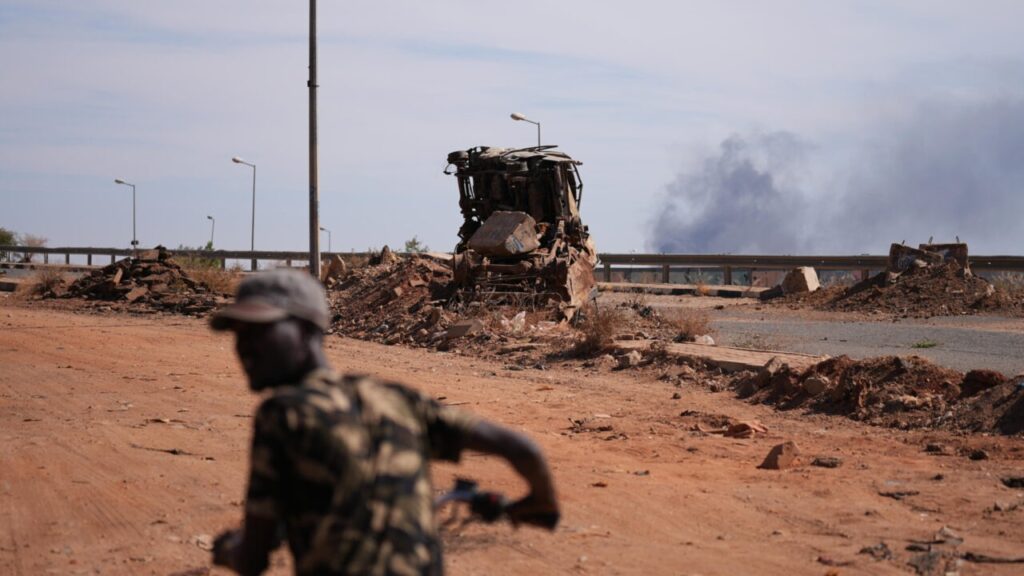
The increasing regional and international involvement in the Sudanese conflict reflects how the war has shifted from an internal confrontation into a wider geopolitical struggle shaped by competing external interests. Saudi Arabia’s evolving role illustrates this complexity, balancing official humanitarian and diplomatic support with reports of indirect military assistance to the Sudanese army through arms deals and the financing of advanced weapon systems.
At In Depth Reports
As the Sudanese conflict enters its fourth year since erupting in April 2023, the war is becoming increasingly complex amid growing regional and international entanglements. The confrontation between the Sudanese army and its rivals is no longer merely an internal power struggle; it has evolved into a battleground where regional powers intersect in an effort to reshape Sudan’s political landscape, against the backdrop of one of the world’s worst humanitarian crises. United Nations estimates indicate that more than 30 million Sudanese are now in need of humanitarian assistance.
In this context, there are mounting signs that the conflict is no longer determined solely by the balance of power on the ground, but also by the scale and nature of external support received by the warring parties.
U.S. Warnings: The Army and Shifts in Identity
Former U.S. Ambassador to Khartoum Alberto Fernandez warned that the war in Sudan is heading toward a “deep political deadlock,” pointing to significant internal transformations within the military establishment. He also highlighted what he described as the growing influence of Islamist currents inside the army, arguing that this is increasingly reflected in military and political decision-making.
Fernandez noted that a notable proportion of newly appointed officers are linked to Islamist ideological backgrounds, amid the continued influence of networks associated with the former regime that was overthrown by the December 2019 revolution. According to observers, this overlap is fueling concerns about the re-emergence of old power structures within the state apparatus, at a time when the country remains engulfed in a devastating war.
External Support: Between Diplomacy and Armament
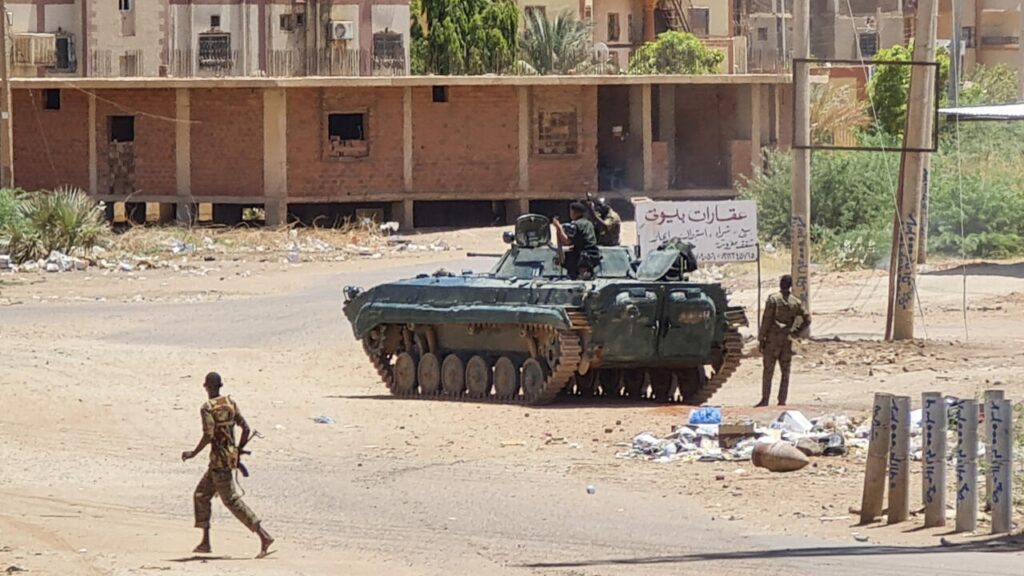
Saudi Arabia is considered one of the largest backers of the Sudanese army, alongside Turkey, Qatar, and Iran.
At the official level, Riyadh has consistently emphasized its role in supporting stability in Sudan, particularly through humanitarian and diplomatic efforts. During a meeting held in New York in April 2026, Port Sudan political adviser Amjad Farid El Tayeb expressed his government’s appreciation for Saudi support, praising what he described as the Kingdom’s “brotherly positions” throughout the crisis.
However, international reports point to more complex dimensions behind this support. A report by Intelligence Online stated that between 2023 and 2024, Saudi Arabia supplied the Sudanese army with advanced M777 artillery systems — lightweight U.S.-made howitzers used in field operations — along with ammunition shipments.
According to the report, visual evidence showed these systems being used inside Sudan, while intelligence sources spoke of Sudanese personnel receiving training on their operation. Other reports also referred to financing for military deals involving drones and weapons systems acquired through third parties, including Pakistan.
Deals and Questions: Military Financing or Political Realignment?
In a related context, Africa Confidential revealed details of a military deal reportedly financed by Saudi Arabia in support of the Sudanese army, with an estimated value of up to $1.5 billion. According to the report, the package includes training and light attack aircraft, multi-role drones, air defense systems, and armored vehicles.
Observers argue that the scale and nature of these weapons systems raise important questions about the true scope of Saudi Arabia’s role and whether it falls within the framework of supporting stability, or rather reflects an effort to reshape the balance of power in favor of one side in the conflict.
Political Maneuvering: Supporting Stability or Building a New Political Base?
Alongside the military indicators, Sudanese sources speak of political efforts led by Riyadh to help form a new civilian coalition supportive of the Sudanese army, in what appears to be an attempt to reshape the country’s political landscape in the post-war phase.
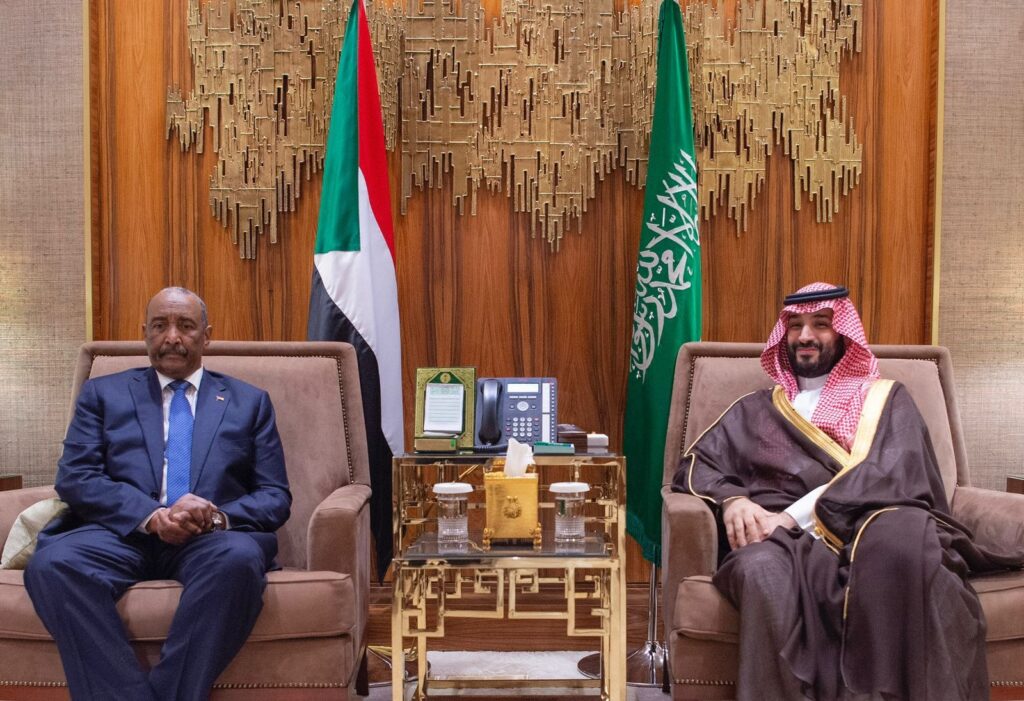
These moves coincided with repeated visits by army commander Abdel Fattah al-Burhan to Saudi Arabia, most notably his meeting with Crown Prince Mohammed bin Salman. Analysts believe these visits go beyond mere protocol and reflect Burhan’s efforts to consolidate his position amid mounting internal and external pressures.
Sudanese analysts argue that Burhan “was not only seeking to end the war, but also trying to reassert his place within a rapidly shifting political equation,” at a time when some international capitals are increasingly losing confidence in his ability to manage the transitional period.
Reading the Motives: Regional Security and Red Sea Interests
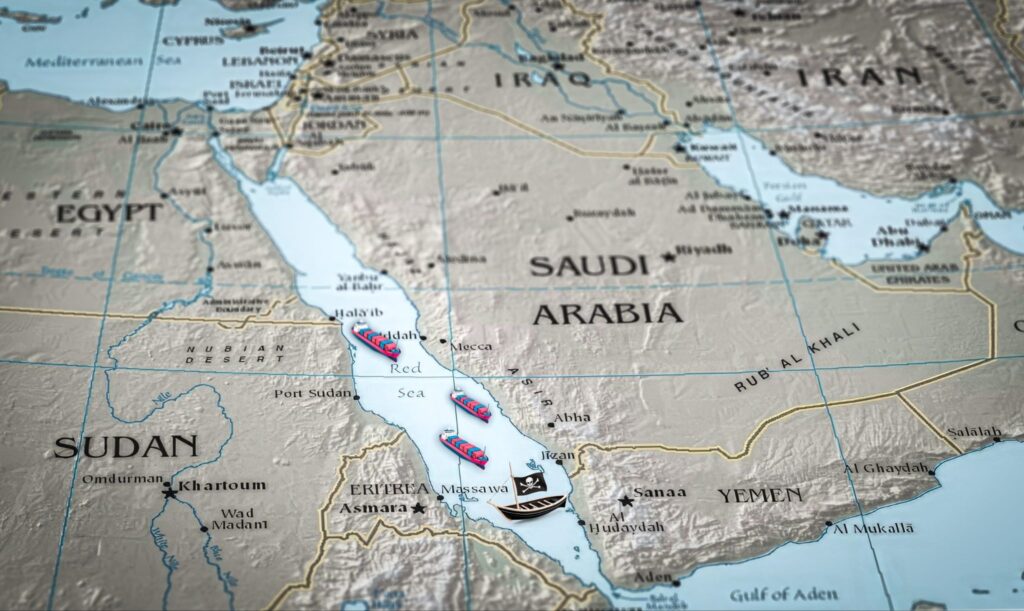
Observers explain Saudi Arabia’s growing involvement in the Sudanese through several considerations, foremost among them regional security particularly in the Red Sea region, which represents a vital corridor for global trade and energy flows.
According to this interpretation, Riyadh is also seeking to secure a significant share of Sudan’s economic and strategic opportunities. Sudan is a resource-rich country with a highly strategic location, and Saudi Arabia appears eager to maximize its gains amid the current instability in a war-weary nation fractured by competing conflicts. Critics, however, argue that this pragmatic approach overlooks several risks, including the growing influence of extremist groups allied with the Sudanese army.
Observers broadly agree that continued military support for any party in the conflict risks prolonging the war and undermining prospects for a political settlement, particularly given the fragility of Sudan’s internal balance of power.
Between Supporting Stability and Prolonging the Conflict
Available evidence suggests that Saudi Arabia’s role in Sudan is marked by a complex duality: publicly declared humanitarian and diplomatic support, alongside what appears to be growing indirect military involvement. Between these two tracks lies the central question: is this role helping contain the crisis, or reshaping it in ways that prolong the conflict?
In the absence of a comprehensive political settlement, and with continued external support flowing to multiple actors, the Sudanese war appears increasingly likely to escalate further carrying humanitarian and political consequences that extend far beyond Sudan’s borders and into the wider region.