By InDepthReports
The first round of direct negotiations between the United States and Iran has concluded with what mediators described as “encouraging progress,” offering the strongest indication yet that both sides are attempting to move beyond months of military confrontation and toward a broader regional settlement.
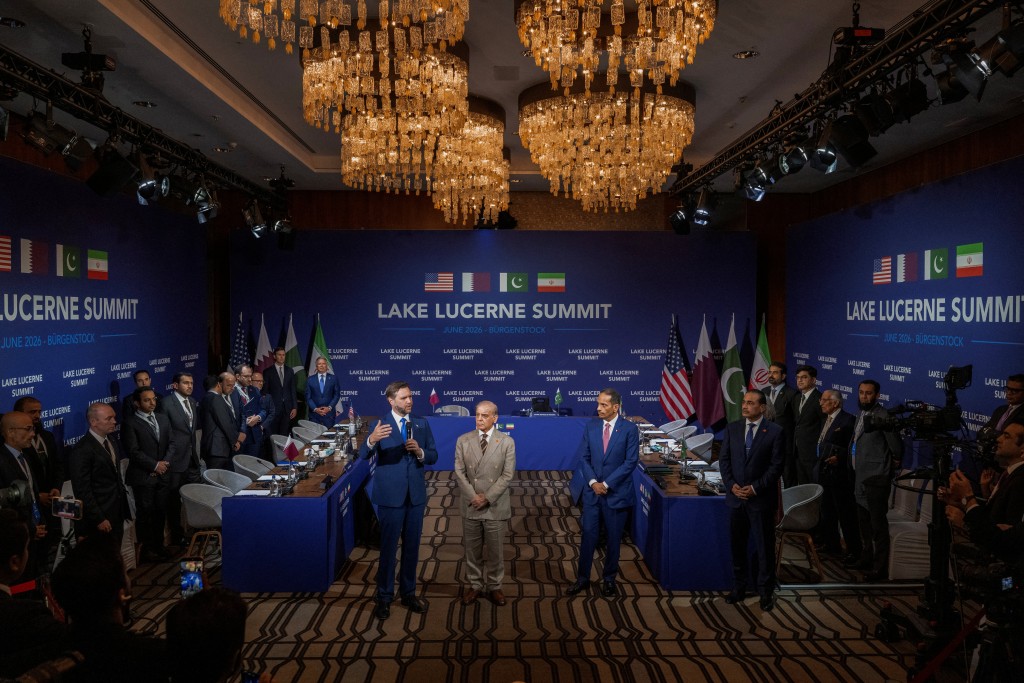
Hosted in Switzerland and mediated jointly by Qatar and Pakistan, the talks produced what officials called a preliminary roadmap for a comprehensive agreement within sixty days. While negotiators have remained cautious in their public statements, the outcome represents a significant diplomatic breakthrough after a period that brought the region dangerously close to a wider war.
Yet behind the carefully worded statements lies a far more complicated reality. The negotiations are not simply about restoring shipping through the Strait of Hormuz or easing economic sanctions. They are about redefining the balance of power in the Middle East after one of the most consequential confrontations between Washington, Tehran, Israel, and Iran’s regional allies in decades.
The question now is whether this diplomatic opening represents the beginning of a sustainable regional order—or merely a temporary pause before another round of conflict.
A Deal Born Out of Escalation
The talks follow months of unprecedented escalation.
The conflict expanded dramatically after Israeli and American military operations against Iranian targets earlier this year. What began as a confrontation involving Iran’s nuclear program quickly evolved into a regional crisis involving multiple actors, including Hezbollah in Lebanon and maritime tensions in the Gulf.
The economic consequences were immediate.
The Strait of Hormuz, through which roughly one-fifth of the world’s oil and liquefied natural gas exports pass, became a central point of leverage. Iranian threats to close the waterway triggered concerns across global energy markets and raised fears of a wider economic shock.
At the same time, military exchanges between Hezbollah and Israel intensified along the Lebanese border, creating a second front that threatened to drag the region into a broader war.
Against this backdrop, Qatar and Pakistan emerged as unexpected but increasingly influential mediators. Their diplomatic efforts eventually produced a memorandum of understanding that served as the foundation for the Swiss negotiations.
What Has Actually Been Agreed?
Although the final agreement remains under negotiation, several key elements have already emerged.
Iran has committed to facilitating the reopening of the Strait of Hormuz and restoring safe commercial navigation through one of the world’s most important maritime corridors.
The United States, in return, has reportedly agreed to lift certain restrictions on shipping linked to Iranian ports and begin discussions regarding broader sanctions relief.
The agreement also includes provisions related to the release of some frozen Iranian assets and the launch of a major reconstruction and economic development framework reportedly valued at hundreds of billions of dollars.
Most significantly, both sides agreed to establish mechanisms designed to prevent further military escalation, including direct communication channels and a de-confliction framework involving Lebanon.
These measures are intended to reduce the risk of accidental confrontations while broader negotiations continue.
However, the most contentious issue—the future of Iran’s nuclear program—remains unresolved.
The Nuclear Question Still Hangs Over Everything
Despite optimistic statements from both sides, the central dispute that has shaped US-Iran relations for more than two decades remains largely untouched.
Iran continues to insist that its nuclear program serves peaceful purposes.
Washington, meanwhile, seeks long-term guarantees that Tehran will never develop nuclear weapons capabilities.
This issue was intentionally deferred during the initial negotiations because both sides recognized that agreement on less controversial issues was necessary before tackling the most politically sensitive questions.
Yet the nuclear file remains the ultimate test.
Any durable settlement will require compromises regarding uranium enrichment, international inspections, verification mechanisms, and future sanctions relief.
These issues have historically proven difficult to resolve.
The collapse of previous agreements continues to shape calculations on both sides.
Iranian leaders remain skeptical that future American administrations would honor long-term commitments.
American policymakers remain concerned that sanctions relief could strengthen Tehran without fundamentally altering its strategic behavior.
As a result, the nuclear issue continues to represent both the greatest obstacle and the most important objective of the diplomatic process.
Lebanon: The First Real Test
If the nuclear issue represents the long-term challenge, Lebanon represents the immediate one.
Iranian Foreign Minister Abbas Araghchi described the newly created Lebanon de-confliction mechanism as the first real test of the agreement.
His assessment reflects reality.
The situation in southern Lebanon remains volatile despite ceasefire announcements.
Recent weeks have seen continued Israeli airstrikes, Hezbollah military activity, and repeated accusations of ceasefire violations by both sides.
Israel maintains that Hezbollah continues to operate military infrastructure close to its northern border.
Hezbollah insists that Israeli military operations and territorial advances justify continued resistance.
The creation of a de-confliction mechanism involving the United States, Iran, Qatar, Pakistan, and Lebanon represents an attempt to prevent local incidents from triggering a larger regional confrontation.
Whether such a mechanism can function effectively remains uncertain.
History suggests that local dynamics often undermine broader diplomatic efforts.
A single miscalculation along the Lebanese border could rapidly derail the fragile progress achieved in Switzerland.
Why Tehran Wants a Deal
For Iran, the motivations behind the negotiations extend far beyond military concerns.
Years of sanctions have placed enormous pressure on the Iranian economy.
Inflation, currency instability, investment shortages, and declining purchasing power have generated growing domestic frustration.
The prospect of sanctions relief offers an opportunity to stabilize economic conditions and re-engage with international markets.
Access to frozen assets could provide immediate financial relief.
The reopening of shipping routes would restore a vital economic lifeline.
Foreign investment, if it materializes, could help modernize critical sectors of the economy.
At the same time, Iranian leaders recognize that continued confrontation carries significant risks.
The conflict demonstrated both Iran’s regional influence and its vulnerabilities.
Negotiations therefore offer an opportunity to secure economic gains while preserving strategic leverage.
Why Washington Is Engaging
For the United States, the incentives are equally significant.
The Biden administration—and potentially future administrations—faces increasing pressure to avoid prolonged military entanglements in the Middle East.
American strategic priorities have shifted toward competition with China, support for Ukraine, and domestic economic challenges.
A regional war involving Iran would complicate all three.
The disruption of energy markets would affect global inflation.
Military escalation would require additional resources and attention.
Regional instability could undermine relationships with allies and partners.
From Washington’s perspective, diplomacy offers a pathway toward reducing these risks while preserving deterrence.
Vice President JD Vance’s remarks before the negotiations reflected this logic. The message was clear: if Iran abandons destabilizing regional activities and addresses concerns regarding its nuclear program, the United States is willing to consider a fundamentally different relationship.
Whether that vision is realistic remains an open question.
Winners and Losers Across the Region
The implications of a successful US-Iran agreement extend far beyond the two negotiating parties.
For Gulf states, reduced tensions could enhance regional stability and encourage investment.
For global energy markets, restored navigation through Hormuz would reduce uncertainty and volatility.
For Lebanon, a functioning de-confliction mechanism could reduce the risk of another devastating conflict.
For Europe, the agreement could contribute to energy security and reduce geopolitical risks affecting international trade.
Yet not all regional actors necessarily view the negotiations positively.
Israel remains deeply skeptical of any arrangement that does not permanently constrain Iran’s strategic capabilities.
Hardline factions within Iran also view compromise with suspicion.
Both sides possess the capacity to influence events on the ground in ways that could complicate negotiations.
The challenge for mediators will be maintaining momentum despite these competing interests.
A Fragile Opening
The first round of negotiations ended with optimism, but optimism alone will not produce a lasting agreement.
The coming sixty days will determine whether the current framework evolves into a comprehensive settlement or joins the long list of failed diplomatic initiatives that have characterized US-Iran relations for decades.
The talks have demonstrated that dialogue remains possible even after intense confrontation.
They have also highlighted the enormous complexity of the issues involved.
Regional security, nuclear policy, sanctions relief, economic reconstruction, maritime security, and proxy conflicts are now intertwined within a single diplomatic process.
Success would reshape the Middle East and reduce one of the most dangerous sources of instability in international politics.
Failure could return the region to confrontation, military escalation, and renewed economic uncertainty.
For now, the negotiations have achieved something that seemed unlikely only weeks ago: they have created a political opening where conflict appeared inevitable.
Whether that opening becomes a pathway to peace remains the defining question facing the Middle East today.