By InDepthReports
For more than two decades, Germany has been regarded as one of the world’s most ambitious champions of renewable energy and climate action. Successive governments invested hundreds of billions of euros into the Energiewende, or energy transition, seeking to transform the country’s energy system away from fossil fuels and nuclear power toward wind, solar, and other renewable sources. The coal phase-out became one of the flagship pillars of this strategy, symbolizing Germany’s commitment to decarbonization and its determination to lead Europe’s fight against climate change.
Yet in 2026, Germany finds itself confronting a difficult and politically sensitive question: can it afford to abandon coal as quickly as planned?
The debate has emerged against the backdrop of growing geopolitical instability, rising energy prices, and increasing concerns about Europe’s economic competitiveness. What was once considered a settled political issue has become the subject of intense discussion among policymakers, industrial leaders, environmental advocates, and energy experts. The controversy illustrates a broader challenge facing many advanced economies: how to reconcile ambitious climate objectives with the realities of energy security and industrial survival.
The immediate catalyst for the debate has been the sharp increase in global gas prices following renewed instability in the Middle East and concerns about energy supplies moving through strategic maritime routes. Germany remains heavily dependent on imported natural gas despite years of efforts to diversify energy sources. While renewable energy now provides the majority of German electricity production, wind and solar power remain vulnerable to weather fluctuations, particularly during winter months when energy demand reaches its peak.
This has exposed a structural weakness within Germany’s energy transition. Renewable energy can generate vast quantities of electricity under favorable conditions, but periods of low wind and reduced sunlight still require reliable backup generation. Historically, this role was performed by coal, natural gas, and nuclear power. However, Germany shut down its last nuclear reactors in 2023 and has simultaneously committed to eliminating coal. This leaves natural gas as the primary backup option—an increasingly expensive and geopolitically vulnerable choice.
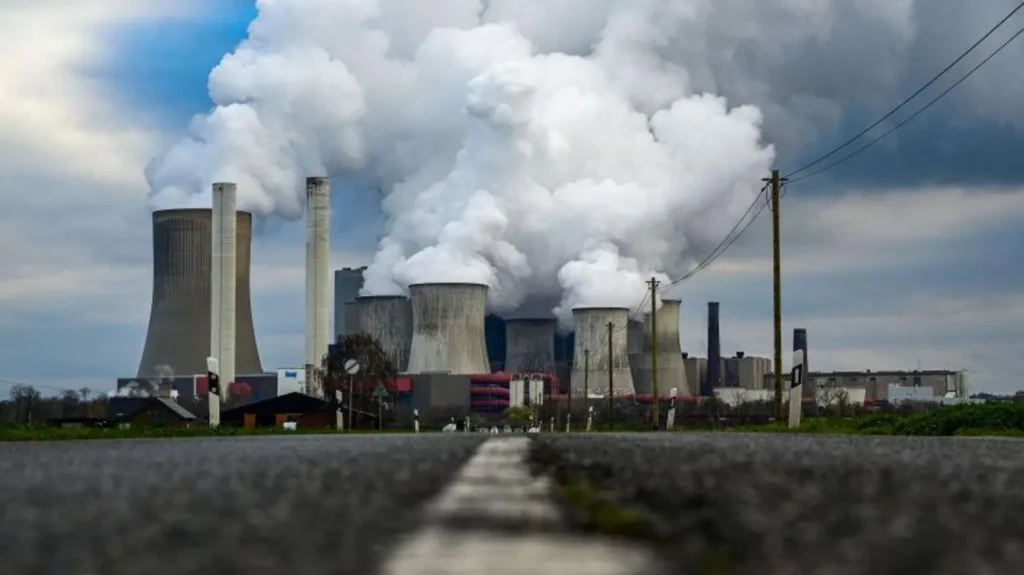
Germany’s coal debate is particularly complicated because of the country’s unique resource position. Unlike natural gas, which must largely be imported, Germany possesses some of the largest lignite reserves in Europe. Lignite, often described as brown coal, is among the most carbon-intensive fuels in the world, but it is also abundant, cheap, and domestically available. Germany’s mining regions continue to hold vast reserves capable of supplying power stations for years to come.
For many industrial stakeholders, this reality is becoming increasingly difficult to ignore. Energy-intensive sectors such as chemicals, steel manufacturing, automotive production, and advanced engineering have repeatedly warned that persistently high electricity costs threaten Germany’s position as Europe’s industrial powerhouse. Business leaders argue that reliable and affordable energy is not simply an economic issue but a strategic necessity. As global competition intensifies, particularly from China and the United States, concerns are growing that high energy costs could accelerate industrial relocation and undermine Europe’s economic competitiveness.
These concerns have found increasing support among conservative politicians and regional leaders in coal-producing areas. Some policymakers argue that the assumptions underpinning Germany’s original coal phase-out timetable no longer reflect current geopolitical realities. They point to the energy disruptions that followed Russia’s invasion of Ukraine, the volatility of global gas markets, and the challenges associated with integrating large amounts of intermittent renewable energy into the grid.
Environmental organizations and climate experts strongly reject such arguments. They warn that any extension of coal use risks undermining Germany’s climate commitments and delaying the broader transition toward a low-carbon economy. According to environmental advocates, the answer to energy insecurity is not more coal but faster investment in renewable generation, battery storage, hydrogen technologies, and modernized electricity networks. Extending coal dependence, they argue, would create a dangerous “fossil lock-in” effect that could slow progress for years.
The debate has also exposed divisions within Germany’s governing coalition. While some members emphasize energy affordability and industrial competitiveness, others remain committed to maintaining ambitious climate targets. The resulting political tensions reflect a broader struggle unfolding across Europe, where governments are increasingly attempting to balance environmental commitments with economic realities and voter concerns about living costs.
What makes Germany’s situation particularly significant is its influence on the wider European Union. As Europe’s largest economy and largest electricity consumer, Germany’s energy policies often shape broader trends across the continent. Any decision to slow the coal phase-out could encourage similar discussions elsewhere in Europe, particularly in countries facing comparable concerns about energy security and industrial competitiveness.
At the same time, Germany’s dilemma highlights a growing challenge for climate policy worldwide. The transition away from fossil fuels was often presented as a relatively linear process in which renewable energy would steadily replace conventional fuels. Reality has proven more complicated. Geopolitical crises, supply chain disruptions, inflation, and rising strategic competition have all introduced new uncertainties that policymakers must navigate.
The question facing Germany is therefore not simply whether coal should remain part of the energy mix. It is whether the country can successfully manage the transition to a low-carbon economy without undermining economic growth, industrial competitiveness, and energy security. The answer will likely shape European energy policy for years to come.
A complete reversal of Germany’s coal phase-out remains highly unlikely. Public support for climate action remains strong, and no major political party is advocating a permanent return to coal as a central energy source. However, the possibility of temporary extensions, strategic reserves, or limited exemptions appears increasingly realistic. Such measures would not represent a rejection of the energy transition but rather an acknowledgment of the practical difficulties involved in implementing it.
Ultimately, Germany’s coal debate reflects a larger global reality. The transition toward cleaner energy is no longer taking place in a stable geopolitical environment. Instead, it is unfolding amid wars, economic uncertainty, supply disruptions, and intensifying strategic competition. Governments are increasingly discovering that climate policy cannot be separated from questions of national security, industrial strategy, and economic resilience.
Whether Germany succeeds in balancing these competing priorities may determine not only the future of its own energy system but also the credibility of Europe’s broader green transition. The decisions made in Berlin during the coming months will be watched closely across Europe and beyond, as governments everywhere grapple with the same fundamental question: how to build a sustainable energy future without sacrificing economic stability in the present.