By In Depth Reports
The Peace Government has announced its formal approval of opening internationally supervised humanitarian corridors for civilians trapped in the Sudanese city of El Obeid, expressing its readiness to coordinate with the United States, the United Kingdom, the European Union, the African Union, and other international partners to implement urgent measures aimed at protecting civilians and ensuring unhindered humanitarian access.
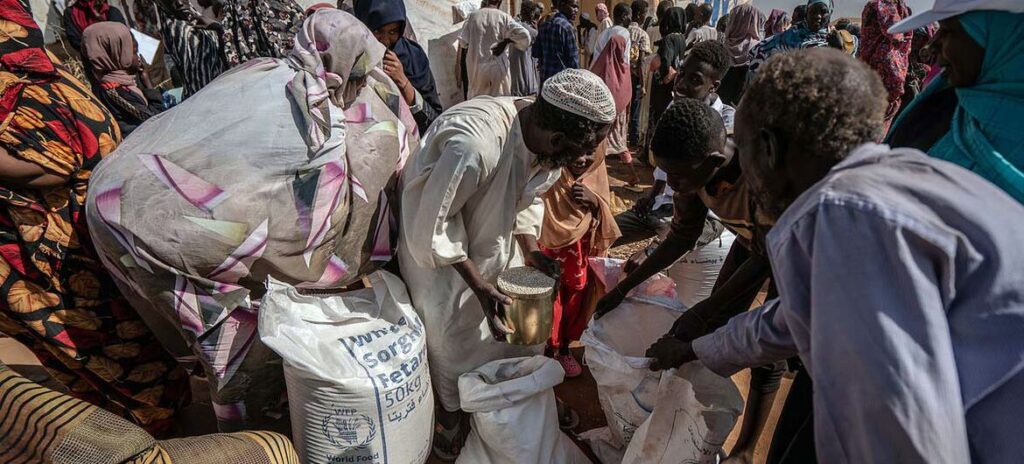
The initiative comes at a time when humanitarian conditions inside El Obeid continue to deteriorate following months of fighting. According to the Peace Government, civilians remain trapped inside the city amid severe restrictions on movement, while shortages of food, medicine, electricity, clean water, and essential healthcare continue to worsen. The government argues that the humanitarian situation has reached a critical stage requiring immediate international action rather than further diplomatic appeals.
In a statement issued on Monday, the Peace Government, headquartered in Nyala, said it was closely monitoring ongoing discussions with international partners concerning civilian protection, humanitarian assistance, and the establishment of safe humanitarian corridors under the supervision of the international community and the African Union.
The government welcomed growing international engagement and reaffirmed its willingness to cooperate fully with the United Nations and international humanitarian organizations to facilitate the safe evacuation of civilians wishing to leave the city while ensuring the uninterrupted and non-discriminatory delivery of humanitarian assistance to those who remain.
The government stressed that the proposal forms part of a broader effort to engage constructively with international and regional actors in addressing the humanitarian crisis. It reiterated its readiness to maintain dialogue with the United States, the United Kingdom, the European Union, and the African Union in order to develop practical mechanisms for civilian protection, humanitarian access, and internationally supervised evacuation arrangements. According to the statement, sustained international coordination remains essential for transforming humanitarian commitments into effective action on the ground.
Presenting the initiative as an urgent humanitarian necessity, the Peace Government stated that internationally monitored humanitarian corridors represent one of the few practical mechanisms capable of protecting civilians while reducing the immediate risks posed by the conflict. Such corridors, the government said, would enable women, children, the elderly, the wounded, and other vulnerable civilians to leave the city safely and reach areas where humanitarian assistance and legal protection can be guaranteed.
The Peace Government also renewed its appeal for the international community to intensify pressure on the Sudanese Armed Forces. According to the statement, the government alleges that army forces continue to prevent civilians from leaving El Obeid, impose severe restrictions on freedom of movement, forcibly recruit civilians, use civilians as human shields, and shell residential neighbourhoods. The government argues that these actions have significantly aggravated the humanitarian crisis and constitute serious violations of international humanitarian law.
The statement further emphasized that civilians wishing to leave El Obeid should be allowed to do so voluntarily, safely, and without fear of retaliation or discrimination, while humanitarian organizations should receive unrestricted access to deliver life-saving assistance to those remaining inside the city.
The Peace Government reiterated that the immediate implementation of an unconditional humanitarian ceasefire remains the most effective means of protecting civilians. It argued that a ceasefire would facilitate humanitarian operations, enable the evacuation of the wounded and the sick, restore humanitarian access, and create the conditions necessary for the successful implementation of internationally supervised humanitarian corridors.
“The most effective and fundamental means of protecting civilians and ending their suffering is the immediate implementation of an unconditional humanitarian ceasefire. Such a ceasefire would facilitate the protection of civilians, the delivery of humanitarian assistance, and the evacuation of the wounded and the sick,” Minister of Information and official spokesperson Khaled Danaa said in the statement.
The government also called upon international partners—including the United States, the United Kingdom, the European Union, the African Union, and the United Nations—to translate ongoing diplomatic engagement into practical measures capable of protecting civilians and ensuring safe humanitarian access. According to the statement, stronger international guarantees and sustained diplomatic pressure are essential if humanitarian corridors are to become operational.
The initiative also signals an effort by the Peace Government to place the humanitarian situation in El Obeid firmly on the international diplomatic agenda. By publicly committing itself to facilitating safe corridors and humanitarian access, the government seeks to encourage greater international involvement while presenting civilian protection as an immediate humanitarian priority requiring coordinated international guarantees rather than political negotiations alone.
International humanitarian law obliges all parties to armed conflicts to facilitate humanitarian relief, protect civilians, and allow the voluntary evacuation of those wishing to leave active conflict zones. Humanitarian organizations have repeatedly warned that prolonged restrictions on civilian movement significantly increase the risks of famine, disease, preventable deaths, and the collapse of essential civilian services.
Whether the initiative announced by the Peace Government develops into an operational humanitarian mechanism will depend on the willingness of the parties to the conflict and on the capacity of international actors to facilitate negotiations, monitor implementation, and provide guarantees that humanitarian commitments are respected on the ground.
As diplomatic efforts continue, El Obeid is emerging as one of Sudan’s most urgent humanitarian challenges. The Peace Government maintains that it is prepared to facilitate internationally supervised humanitarian corridors immediately and has urged international partners to support the initiative as a practical step toward protecting civilians, reducing human suffering, and creating conditions that could contribute to broader humanitarian de-escalation.
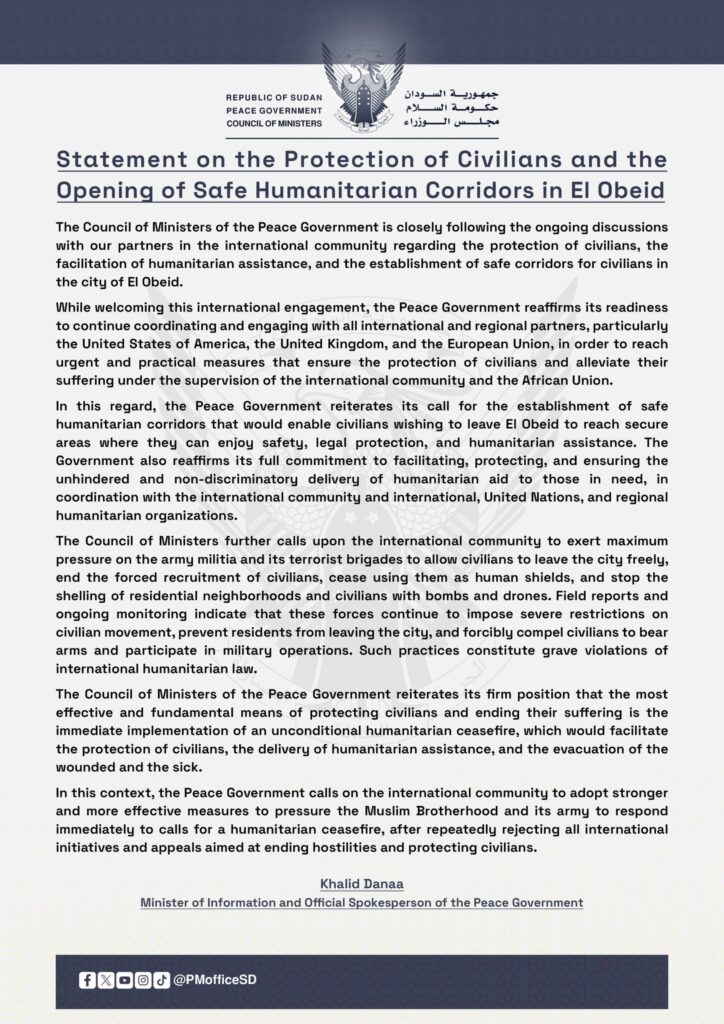
The full statement issued by the Peace Government is reproduced below: