An In Depth Reports
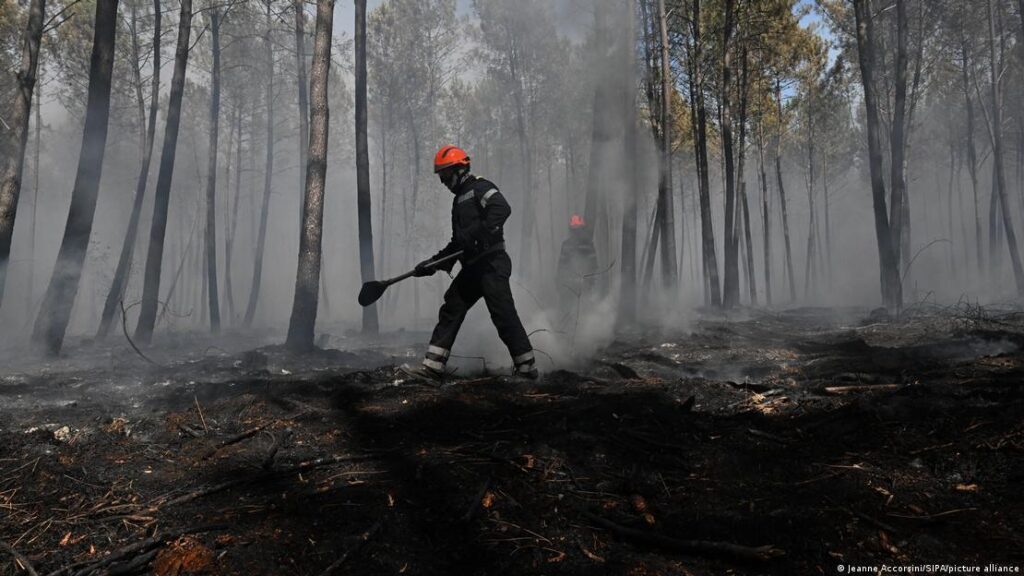
The fires spreading across France and Spain in late July 2026 are not merely another severe episode in Europe’s increasingly destructive wildfire seasons. They represent a test of whether European governments have adapted their emergency systems, land-management policies and civil-protection structures to a climate reality that is moving faster than public institutions. The scale of the evacuations in southwestern France, the extraordinary deployment of aircraft around the Gironde coast and the threat of separate fires merging west of Madrid point to a danger that is no longer confined to remote forests. Wildfires are becoming complex national emergencies capable of displacing entire communities, paralysing transport networks, threatening tourism centres and overwhelming firefighting systems that were designed for a less volatile climate.
In France, the decision to evacuate thousands more people from Atlantic coastal resorts came after a much broader displacement that had already affected an exceptionally large population. The significance of these evacuations lies not only in their size, but also in the geography of the areas under threat. Coastal resorts, residential communities and major tourism zones are increasingly exposed to fires that can advance rapidly through dry vegetation under conditions of extreme heat and wind. The emergency around Grand Crohot, west of Bordeaux, required more than twenty aircraft and helicopters, illustrating the degree to which modern wildfire containment depends on large-scale aerial intervention. Yet even this concentration of resources could not immediately guarantee control. The admission by local authorities that the situation remained complicated reflected a wider reality: Europe’s most capable emergency services are confronting fires that can exceed the assumptions on which their response plans were built.
The French experience also demonstrates the limits of national capacity during simultaneous or prolonged emergencies. A fire burning across an area several times the size of Paris and resisting assistance from multiple countries is not simply a difficult local incident. It is a continental stress test. Firefighting aircraft, specialised crews, evacuation systems and emergency logistics are finite resources. When several countries experience severe fires at the same time, the European model of mutual assistance becomes vulnerable because every government may need to retain its own assets. The European Union can coordinate additional support when a member state requests help, but a mechanism built primarily around the redistribution of emergency capacity may struggle when extreme conditions become widespread rather than exceptional.
Spain is facing a parallel but distinct challenge. Although some residents were permitted to return home after major fires were contained, the broader threat remained acute as another heatwave approached and temperatures were expected to exceed 40 degrees Celsius. The possibility that two large fires west of Madrid could merge into a single, more destructive front captures the increasingly unpredictable behaviour of extreme wildfires. Once separate fire systems begin influencing each other, they can create powerful wind patterns, increase the intensity of burning and complicate containment efforts. The appearance of a pyrocumulonimbus cloud over a blaze in Ávila further underlined the severity of the conditions. Such fire-generated storm systems indicate that a wildfire is producing enough heat to alter the local atmosphere, creating its own vertical cloud formation and potentially generating unstable winds, lightning and rapidly changing fire behaviour.
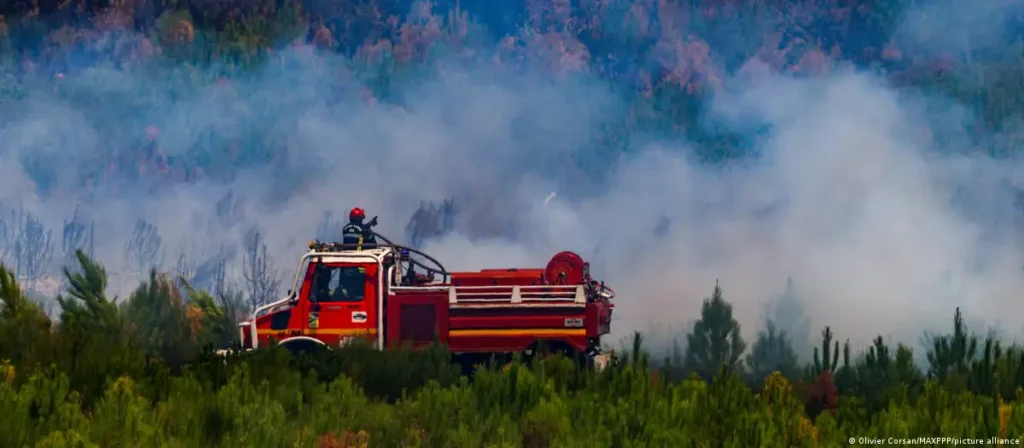
These phenomena challenge the traditional perception of wildfires as linear emergencies that can be contained through the gradual deployment of crews and equipment. Extreme fires increasingly behave as dynamic atmospheric events. They can create their own weather, change direction with little warning and spread at speeds that outpace evacuation procedures. This has profound consequences for civil protection. The central question is no longer simply whether a country has enough firefighters, but whether its warning systems, road networks, hospitals, municipal authorities and communication infrastructure can function under the pressure of rapidly expanding disasters. In such conditions, wildfire policy becomes inseparable from urban planning, public health, transport security and national resilience.
Climate change is intensifying each component of this risk. Hotter summers accelerate the drying of vegetation, reduce soil moisture and create larger areas of combustible material. Longer periods of extreme heat extend the fire season beyond the months traditionally associated with peak danger. Drought weakens forests and landscapes, while repeated heatwaves reduce the recovery time available to emergency services. The result is not only a greater number of fires, but fires that are more difficult, expensive and dangerous to suppress. European states are therefore confronting a structural change in the risk environment rather than a temporary succession of bad summers.
The political implications are becoming increasingly difficult to avoid. For years, wildfire policy in many European countries concentrated heavily on emergency response: purchasing aircraft, expanding firefighting units and strengthening cross-border assistance. These measures remain essential, but they address the crisis primarily after ignition. The events in France and Spain demonstrate why prevention must become equally important. Forest management, controlled clearing, the maintenance of firebreaks, restrictions on development in high-risk areas and the restoration of more resilient landscapes all require sustained investment long before smoke becomes visible. These policies are often less politically dramatic than emergency deployments, but they may determine whether a fire remains containable or develops into a national disaster.
Land use is particularly important. Rural abandonment in parts of southern Europe has allowed vegetation to accumulate across large areas, increasing the amount of fuel available to fires. At the same time, housing and tourism development have expanded into zones where forests, dry scrubland and populated areas intersect. This creates a growing wildland–urban interface in which fires threaten not only ecosystems but also homes, hotels, campsites and critical infrastructure. Evacuations on the French Atlantic coast reveal the human consequences of this convergence. A policy framework that permits continued development in high-risk landscapes without corresponding investment in access roads, water supplies, evacuation routes and vegetation management effectively transfers environmental risk into future public emergencies.
The economic consequences will extend beyond the immediate costs of firefighting and reconstruction. Southwestern France and large parts of Spain depend heavily on tourism, agriculture and regional transport, all of which are vulnerable to prolonged heat and fire. Evacuations during the peak summer season can undermine local businesses even when physical damage remains limited. Agricultural losses may affect food production and rural incomes, while smoke can disrupt aviation, road transport and public health. Insurance markets will also reassess the exposure of homes, businesses and public assets in fire-prone regions. As risk increases, premiums are likely to rise, coverage may become more restrictive and governments may face growing pressure to act as insurers of last resort.
Wildfires therefore pose a fiscal challenge as well as an environmental one. Repeated disasters require governments to finance emergency operations, reconstruction, compensation and infrastructure repair while also investing in future prevention. The costs are likely to rise as events become more frequent. The danger is that public policy remains trapped in a reactive cycle in which resources are mobilised after every disaster but structural vulnerabilities remain largely unchanged. This approach may be politically sustainable when extreme fires are rare. It becomes economically untenable when severe wildfire seasons occur repeatedly across multiple countries.
The European dimension of the crisis is equally significant. The current civil-protection model relies on solidarity between member states, but climate change is increasing the probability that several countries will need support simultaneously. Aircraft and specialist crews cannot be transferred easily when domestic conditions are also dangerous. Europe may therefore need to move beyond a system based primarily on pooled national resources and develop a larger permanently available European capability. Such a force would not replace national services, but it could provide strategic reserves, common training, shared command systems and rapid deployment capacity during large-scale emergencies.
Greater European coordination would also improve prevention. Wildfire risk does not stop at national borders, and many of the underlying problems—rising temperatures, drought, land abandonment and fragmented forest management—are shared across the continent. Common standards for risk mapping, evacuation planning, satellite monitoring and infrastructure resilience could reduce disparities between national systems. European funding could be linked more directly to preventive land management, rather than concentrating primarily on post-disaster recovery. The political difficulty is that prevention produces benefits that are less visible than emergency response, while often requiring restrictions on construction, changes in agricultural practices and long-term public expenditure.
The fires of July 2026 also expose a deeper issue in the European climate debate. Climate policy is often framed around emissions targets and the transition to cleaner energy. These objectives remain central, but the destruction in France and Spain demonstrates that adaptation can no longer be treated as a secondary agenda. Even rapid progress in reducing emissions will not eliminate the climate risks already embedded in the coming decades. Europe must therefore pursue mitigation and adaptation simultaneously. Fire-resistant infrastructure, resilient landscapes, improved health systems, stronger evacuation capacity and better emergency communications are now essential elements of climate policy.
This shift requires governments to reconsider what constitutes national security. A wildfire that displaces hundreds of thousands of people, disrupts regional economies and requires international assistance can produce consequences comparable to other major security crises. Yet environmental emergencies are often managed through administrative structures with less political influence and fewer resources than defence or internal-security institutions. As climate-driven disasters intensify, civil protection will need to be treated as a strategic capability. This means long-term funding, regular preparedness exercises, clear command structures and integration with military, police, health and transport authorities.
The human dimension must remain central. Behind every evacuation figure are families leaving homes with limited information, elderly residents requiring assistance, workers losing income and communities confronting uncertainty about whether they will have anything to return to. Anger and helplessness, expressed by residents in affected Spanish regions, reflect more than the trauma of a single fire. They reveal a growing public expectation that governments should anticipate foreseeable climate risks rather than repeatedly declaring them unprecedented. Political trust may increasingly depend on whether authorities can demonstrate that warnings were acted upon, landscapes were managed and evacuation systems were ready before disaster struck.
Europe’s wildfire crisis is therefore entering a new phase. The continent is no longer confronting isolated seasonal emergencies but a persistent pattern of extreme events capable of overwhelming national response systems and exposing long-standing weaknesses in land management, infrastructure and regional coordination. France and Spain are currently at the centre of the emergency, but the underlying conditions are continental. Hotter temperatures, longer fire seasons and more combustible landscapes are reshaping the geography of risk from the Mediterranean to the Atlantic coast and beyond.
The critical question is not whether Europe will experience more extreme fires. The evidence presented by the events of July 2026 suggests that it will. The question is whether European institutions will continue to treat each disaster as an exceptional emergency or recognise wildfires as a permanent strategic threat requiring structural adaptation. Aircraft, firefighters and international assistance can contain individual blazes. They cannot, on their own, resolve the deeper crisis. That will require a new European model of climate security—one that invests before ignition, plans for simultaneous disasters and accepts that protecting forests, infrastructure and communities has become one of the central governance challenges of the coming decade.