An In Depth Reports
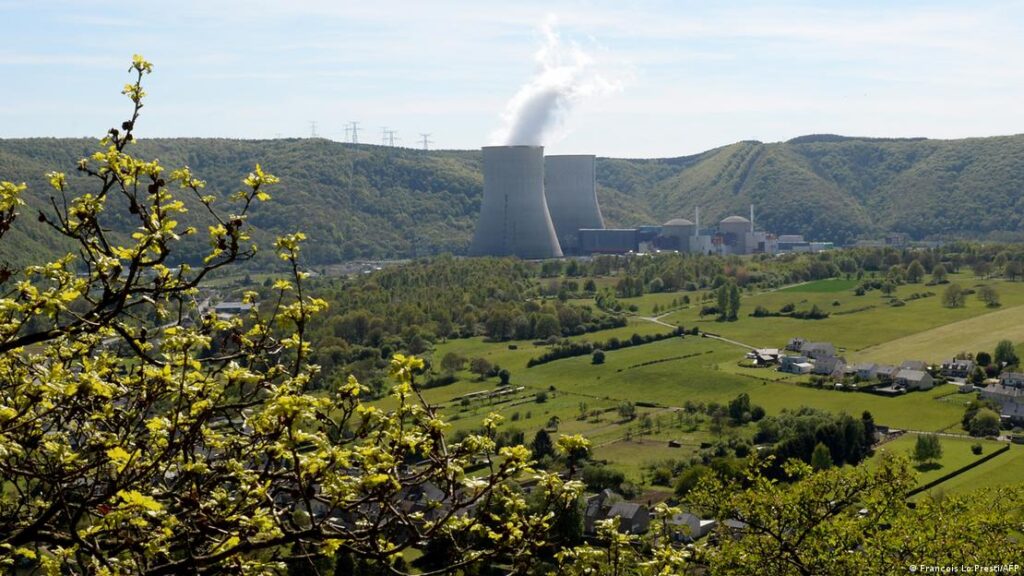
Europe’s latest heatwave has exposed an uncomfortable contradiction at the heart of the continent’s energy transition. Nuclear power is increasingly promoted as a reliable source of low-carbon electricity capable of supporting energy security, reducing dependence on fossil fuels and stabilising grids dominated by intermittent renewable generation. Yet the extreme heat sweeping across Europe in the summer of 2026 has demonstrated that nuclear power itself is not immune to climate stress. From France to Hungary, unusually warm rivers, record-low water levels and prolonged drought have forced reactors to reduce output or temporarily shut down, raising a question that is becoming increasingly difficult for policymakers to ignore: can Europe rely more heavily on nuclear energy while the climate conditions required to cool nuclear plants are becoming less predictable?
The problem is not that reactors become unsafe simply because the weather is hot. The issue is more technical and, in some ways, more strategically important. Most large nuclear plants require enormous quantities of water to remove waste heat and cool their systems. Many European reactors are located alongside major rivers precisely because those rivers historically offered reliable access to relatively cool water. During prolonged heatwaves, however, water temperatures rise while river levels fall. That reduces the effectiveness of cooling and can also make it impossible for operators to discharge warmed water back into rivers without breaching environmental limits designed to protect aquatic ecosystems. In France, these restrictions have already forced significant reductions in nuclear generation during the 2026 summer heatwaves. On 24 June alone, French nuclear output was cut by about 4.1 gigawatts, equivalent to roughly 7% of national power demand at midday, because elevated temperatures limited the availability of cooling water.
By July, the problem had become more persistent. EDF temporarily shut down three French reactors and warned that several others could require output restrictions as river temperatures continued to climb. Facilities located on the Rhône, Garonne and other waterways were particularly exposed because these rivers can warm rapidly during periods of intense heat and low flow. The shutdowns were largely driven by environmental regulations rather than by immediate reactor safety concerns, but this distinction offers little comfort from the perspective of energy security. Electricity that cannot be produced because cooling conditions are unsuitable is unavailable to the grid regardless of whether the restriction is technical, environmental or regulatory.
The vulnerability became even clearer in Central Europe in August. Hungary’s Paks nuclear plant, responsible for nearly half of the country’s electricity, was forced down to approximately 10% of capacity after the Danube reached record-low levels during an extended heatwave and drought. Only one of eight turbines remained operational at the lowest point of the disruption. On 10 August, authorities began bringing another turbine back online after the Danube rose by 19 centimetres, but officials warned that the improvement could prove temporary. For Hungary, this was not a marginal reduction in an isolated generating asset. It was a direct threat to a central pillar of the national electricity system.
Similar problems have affected other European countries. In early August, France, Italy, Poland, Hungary, Romania and Slovenia all experienced power-generation restrictions linked to low river levels or elevated water temperatures. European Commission officials described the energy situation as strained, while stopping short of warning of an immediate continent-wide supply crisis. That distinction is important. Europe still possesses interconnected grids, gas-fired generation, renewables, hydropower and cross-border trading mechanisms capable of compensating for individual plant disruptions. But simultaneous stress across several countries reduces the amount of spare capacity available and increases the possibility that what begins as a climate event becomes an energy-market shock.
This is what makes the current crisis different from a routine summer maintenance issue. Extreme heat simultaneously pushes electricity supply and demand in opposite directions. Nuclear and hydroelectric production can fall because rivers are too warm or too shallow, while demand for electricity rises as homes, businesses and hospitals increase air-conditioning use. Solar power may provide valuable daytime generation during clear weather, but it cannot fully compensate for the loss of large baseload units at all hours, particularly during evening demand peaks. Gas-fired plants may fill part of the gap, but that can raise fuel consumption, electricity prices and carbon emissions. Climate-driven stress therefore creates a paradox in which Europe may need more electricity precisely when parts of its generating system become less capable of producing it.
France illustrates the strategic scale of this challenge. Nuclear energy has historically supplied the majority of French electricity, giving the country one of Europe’s lowest-carbon power systems and allowing it to export substantial electricity to neighbouring states under favourable conditions. When French nuclear output falls sharply, the consequences can therefore extend beyond France itself. Electricity imports may increase, exports may decline and wholesale prices can rise across interconnected European markets. A cooling problem on one French river may ultimately influence electricity costs hundreds of kilometres away because Europe’s power system increasingly functions as a single interconnected market.
This cross-border dependence becomes even more important as Europe electrifies transportation, industry and heating. Electric vehicles, heat pumps, data centres, battery manufacturing and hydrogen production will all increase demand for reliable electricity. At the same time, European governments are reconsidering nuclear power as part of their strategy to reduce fossil-fuel dependence while meeting climate targets. France plans extensive investment in new reactors, several Central and Eastern European countries are developing or expanding nuclear programmes, and small modular reactors are being promoted as a potential future source of flexible low-carbon generation. The 2026 heatwaves therefore arrive at a politically sensitive moment: Europe is considering greater nuclear dependence just as climate change is testing the physical assumptions on which many existing plants were designed.
The challenge, however, should not be interpreted as evidence that nuclear power is uniquely vulnerable to climate change. Extreme heat affects almost every form of electricity generation. Hydropower suffers when rivers and reservoirs run low. Gas and coal plants can also depend on cooling water and face similar thermal discharge limits. High temperatures reduce the efficiency of transmission lines, transformers and some thermal plants. Drought can disrupt fuel transportation on rivers, while wildfires threaten electricity infrastructure. Even solar panels lose some efficiency at very high temperatures. The broader lesson is therefore not that nuclear energy cannot function in a warming climate, but that Europe’s entire electricity system was largely designed around climatic conditions that are changing.
Nuclear plants nevertheless present a particularly important adaptation challenge because of their scale. Losing several gigawatts of nuclear generation over a short period can be significantly more disruptive than losing output from individual wind or solar installations. Large reactors are centralised assets, and national grids often depend heavily on their predictable operation. That concentration creates efficiency during normal conditions but can amplify the impact of simultaneous outages. Resilience therefore requires designing nuclear fleets so that climate stress at one river basin does not translate automatically into system-wide electricity shortages.
Several adaptation strategies already exist. New reactors can employ cooling towers that reduce dependence on direct river-water withdrawals, although these systems still require water and involve efficiency trade-offs. Coastal nuclear facilities can use seawater, reducing exposure to low river levels, though rising sea temperatures and coastal climate risks create their own challenges. Dry or hybrid cooling systems dramatically reduce water consumption but generally cost more and can become less efficient during high temperatures. Operators can also increase water-storage capacity, improve thermal efficiency, optimise maintenance schedules and design plants to operate under wider temperature conditions. None of these measures eliminates climate risk entirely, but together they can significantly reduce exposure.
The more difficult challenge concerns Europe’s ageing reactor fleet. Many existing nuclear plants were constructed decades ago when extreme heat events of today’s intensity were significantly less common. Extending the operating life of these reactors may remain economically attractive, but lifetime extensions increasingly require climate adaptation alongside conventional safety upgrades. Regulators will need to reassess historical assumptions about river flows, water temperatures, drought duration and extreme weather. Infrastructure designed around twentieth-century climate statistics cannot automatically be expected to remain resilient through the middle of the twenty-first century.
The situation also raises difficult questions about environmental regulation. Thermal limits on river discharges exist to protect ecosystems already stressed by high temperatures and low oxygen levels. During severe energy emergencies, governments may face pressure to temporarily relax those restrictions to maintain electricity generation. France has previously used exceptional exemptions under certain conditions, but widespread reliance on such measures would create an uncomfortable trade-off between energy security and environmental protection. As extreme heat becomes more frequent, regulations designed for exceptional events risk being tested repeatedly rather than occasionally.
This is where the issue shifts from engineering into governance. Europe’s electricity systems are becoming increasingly interconnected, but climate adaptation remains largely organised at national or plant level. A heatwave affecting several river basins simultaneously can create cross-border consequences that require coordinated planning. European authorities may need better continent-wide assessments of cooling-water vulnerability, common stress tests for extreme heat and drought, and regional contingency planning that considers nuclear, hydroelectric and thermal power restrictions at the same time. Climate resilience cannot remain an afterthought added to individual energy projects; it needs to become part of European energy-security strategy.
The economic consequences matter as well. Building new cooling infrastructure, reinforcing grids, expanding storage and maintaining backup generation all require investment. Yet the alternative—repeated summer production losses, volatile electricity prices and emergency fossil-fuel generation—also carries significant costs. Governments therefore face a familiar climate-adaptation dilemma: pay for resilience before the crisis or absorb larger and increasingly unpredictable costs afterwards.
The heatwaves of 2026 are giving that debate new urgency. Central and Eastern Europe have experienced extreme temperatures and severe drought, while the Danube has fallen to historically low levels in some areas. Western Europe has faced repeated heatwaves since early summer, with France preparing for yet another period of intense temperatures in August. Europe’s power system has so far remained functional, but the repeated restrictions imposed on thermal generation suggest that climate stress is no longer an occasional operational problem. It is becoming a structural feature of energy planning.
The deepest irony is that nuclear power is being asked to help Europe confront climate change at precisely the moment climate change is forcing the nuclear industry to adapt. That does not invalidate the case for nuclear energy. It changes the conditions under which that case must be made. Future debates can no longer focus only on reactor safety, construction costs, waste management and carbon emissions. They must also examine water availability, cooling technologies, regional climate projections and the resilience of the wider electricity grid.
Europe is therefore confronting a broader question than whether individual reactors can survive the next heatwave. The real issue is whether an energy system undergoing rapid decarbonisation can remain reliable in a climate that is becoming hotter, drier and less predictable. Nuclear power may remain a major part of that system, but only if policymakers stop treating climate adaptation as an environmental side issue and begin treating it as a core element of energy security.
The events of summer 2026 offer a warning rather than a verdict. Europe’s nuclear fleet has not failed, and its electricity system has not collapsed. But heatwaves have demonstrated how rapidly weather can constrain some of the continent’s most important power stations at exactly the moment electricity demand rises. The strategic lesson is increasingly clear: low-carbon energy must also be climate-resilient energy. Europe’s next generation of power plants will need to be designed not for the climate of the past, but for the extremes that are rapidly becoming the new normal.
The challenge also creates a new governance question for the European Union. Energy policy remains partly national, yet the consequences of reactor outages cross borders immediately through Europe’s interconnected electricity market. Coordinated climate stress tests, shared information on water availability, common emergency planning and regional reserve mechanisms could reduce the risk that national responses compete with one another during simultaneous heatwaves. Europe has already learned through previous energy crises that fragmented responses can magnify market disruption. The same lesson applies to climate-driven electricity shortages.
Water governance will become increasingly important as well. Nuclear plants are not the only users competing for scarce freshwater. Agriculture, cities, industry and ecosystems all depend on the same river basins. Severe drought therefore creates political choices regarding which sectors receive priority. These conflicts are likely to become more frequent as warming intensifies. The JRC has repeatedly highlighted the growing economic consequences of drought across Europe, including implications for energy and other sectors. Nuclear policy will consequently become entangled with broader debates about water allocation and environmental protection.
The most important strategic shift may be conceptual. For decades, Europe’s energy-security debate asked where energy would come from: Russia, the North Sea, LNG terminals, nuclear reactors, renewables or other sources. The next phase must also ask whether the physical environment supporting those sources will remain reliable. Climate change turns weather itself into an infrastructure variable.
That changes the meaning of energy independence. A country may produce most of its electricity domestically and still be vulnerable if its generating system depends heavily on rivers experiencing severe drought. True strategic autonomy therefore requires environmental resilience as well as control over fuel supplies and technology.
Europe’s experience in 2026 should be understood as an early warning. Heatwaves have not rendered nuclear power unviable, nor have they produced a continent-wide electricity crisis. What they have done is expose a design assumption that can no longer be taken for granted: that cooling water will remain sufficiently abundant and sufficiently cold whenever reactors need it.
The next European nuclear debate should therefore move beyond the familiar arguments over whether nuclear energy belongs in the continent’s low-carbon future. The more consequential question is what kind of nuclear system Europe needs for the climate future it is actually entering. If reactors are expected to provide reliable electricity during the hottest and driest decades ahead, climate adaptation must become part of nuclear engineering, grid planning and European security policy from the beginning rather than after the next emergency.