An accidental disclosure of confidential financial records during Donald Trump’s first presidency reveals a deeper story about banking secrecy, executive accountability and the decisions institutions make when protecting their reputation conflicts with informing their customers.
InDepthReports | Investigative Analysis
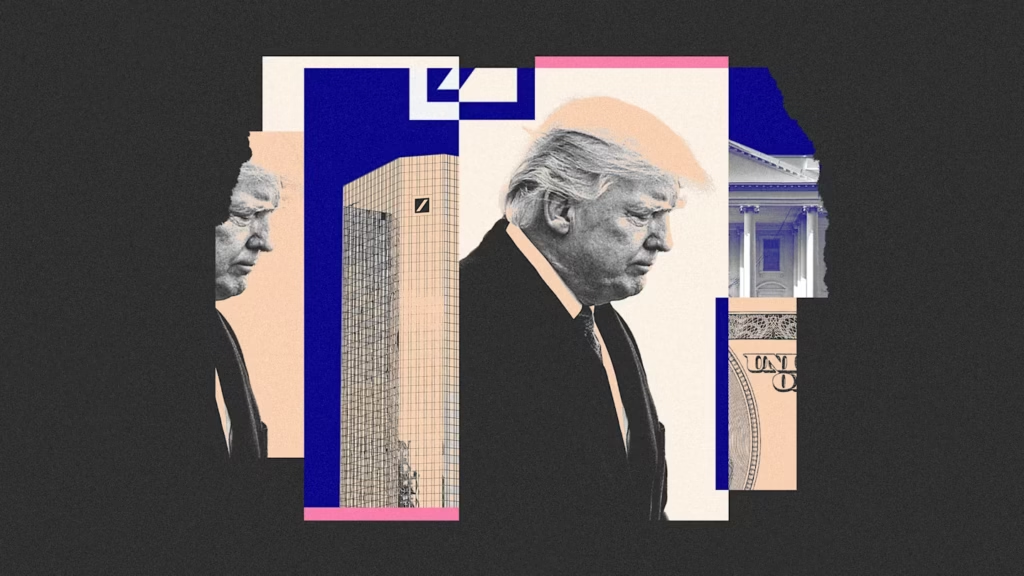
In March 2017, as Donald Trump was beginning his first term as president of the United States, an accountant in Maine received an unexpected communication from Deutsche Bank. The bank employee responsible for the message had intended to provide tax documents relating to a single client. Instead, the accountant was given access to documents associated with 1,586 private banking accounts, including three connected to the newly inaugurated American president. The error exposed confidential financial information at an unusually sensitive political moment, when Trump’s refusal to release his complete tax returns had become a major public controversy. Yet the most consequential aspect of the incident was not simply that the information was mistakenly sent outside the bank. It was the internal response that followed, including a decision not to notify the affected customers.
The episode became public on November 17, 2026, through the Inside Deutsche Bank investigation, an international journalistic project examining more than 15 million leaked internal banking files. Reporting by the Financial Times and Austrian newspaper Der Standard describes how senior Deutsche Bank personnel assessed the incident, debated its legal classification and considered whether customers should be informed. The records indicate that the bank notified the Federal Reserve Bank of New York and undertook an internal investigation, but ultimately did not inform Trump or the other affected account holders. Christian Sewing, then a senior executive responsible for private banking and later Deutsche Bank’s chief executive, was briefed on the matter. The newly disclosed communications provide a rare view of how a global financial institution managed a serious confidentiality problem involving one of the world’s most politically sensitive customers.
The documents at the centre of the incident require careful description. They were American tax forms known as 1099 statements, which can report categories of income such as interest or investment-related payments. They were not Trump’s complete federal income tax returns, and the disclosure should not be presented as evidence that the bank released his entire tax history. The distinction matters because the public debate surrounding Trump’s finances has often blurred different kinds of financial documents. A bank’s year-end tax statement can contain confidential information about income and accounts, but it does not necessarily reveal the full range of income, deductions, liabilities and other information included in a comprehensive tax return. The incident was therefore a significant banking-data exposure, not the publication of the complete tax records that journalists and political opponents had sought during Trump’s presidency.
The larger issue is institutional accountability. Deutsche Bank was responsible for protecting sensitive customer information regardless of whether the customer was an ordinary investor, a wealthy entrepreneur or the president of the United States. A single employee’s mistake can occur even in institutions with sophisticated controls. What determines the significance of such an event is how the organisation responds: whether it establishes what information was exposed, determines who could have accessed it, assesses the legal consequences, informs relevant authorities and communicates appropriately with those whose privacy may have been compromised. The leaked records suggest that Deutsche Bank confronted these questions internally but reached a decision that prioritised a narrow assessment of the incident’s consequences over direct disclosure to the customers concerned.
The Mistake That Defeated a Special Security System
The timing of the incident makes the failure particularly striking. According to Der Standard, Deutsche Bank had already recognised that Trump’s election created exceptional information-security risks. Before the accidental disclosure, the bank had introduced a special internal arrangement, reportedly known as Project Novus Ordo, intended to strengthen protection of his records. The measures included centralising sensitive documents, restricting access and requiring more secure methods of transmitting information. A senior manager had warned that the bank possessed substantial personal information about the president-elect and that this increased the institution’s exposure to information-security risks. The precautions reflected an understanding that even a routine banking record could become politically consequential if mishandled. <Cite ref=”turn675003search1″/>
Nevertheless, the March 2017 error reportedly occurred through an ordinary document-sharing process. An employee intending to transmit records for one customer instead sent access to a much larger collection of files. The recipient, an accountant in Maine, recognised that the material was not intended for him and alerted the bank. He reportedly assured Deutsche Bank that the information had been deleted. The bank subsequently sought to determine whether copies might remain on the recipient’s computer. According to the reporting, internal forensic work could not conclusively exclude that possibility. This uncertainty is important because a recipient’s assurance that information has been deleted does not necessarily establish that it was never downloaded, copied, cached or otherwise retained.
The scale of the exposure is also central to the story. Although Trump’s presence among the affected account holders made the incident politically extraordinary, the breach was not confined to his records. Documents associated with 1,586 accounts were involved, meaning that a substantial number of customers faced a potential confidentiality problem. The reporting does not establish that every account holder suffered financial harm or that the records were subsequently misused. It does establish that information intended to remain within a controlled banking relationship was made available to an unauthorised external recipient. For a major private bank, that represents a failure of the systems and procedures designed to protect client information.
The incident demonstrates how technical controls can be undermined by weaknesses in everyday workflows. An institution may invest heavily in cybersecurity, encrypted communications and restricted-access systems while remaining vulnerable to errors involving file permissions, document selection or the transmission of links. Such failures are especially dangerous when systems allow a user to share a large collection of documents without sufficiently clear warnings or effective limits. The Deutsche Bank case illustrates a general principle of information security: the confidentiality of sensitive records depends not only on protection against malicious outsiders but also on the design of ordinary internal processes. A system can be secure against sophisticated attacks and still permit a damaging disclosure through a seemingly routine action.
The existence of special protections for Trump’s records makes the governance questions more pointed. The bank had identified the president’s information as unusually sensitive and reportedly created additional procedures to protect it. Yet those measures did not prevent the accidental disclosure. This does not mean the special arrangements were entirely ineffective, nor does it establish that the same error could have occurred under every possible technical configuration. It does, however, suggest that the bank’s risk assessment and its operational controls were not fully aligned. Recognising a high-risk category of information is only the first step; institutions must also ensure that the processes used to handle it are capable of preventing foreseeable mistakes.
From a Privacy Breach to a Question of Classification
The most revealing part of the November 2026 investigation concerns what happened after the accountant notified Deutsche Bank. According to the leaked internal communications described by Der Standard, the bank initially treated the incident as a significant privacy problem. An internal legal assessment reportedly used language indicating a serious breach of personal data. Subsequent discussions, however, moved toward a different characterisation, one that placed greater emphasis on the circumstances of the disclosure and the perceived likelihood that the information would be misused. The distinction was not merely semantic. It affected the institution’s conclusion about whether the affected customers needed to be notified.
The Financial Times reported that executives discussed treating the event as a near miss rather than a data breach, partly because the recipient had reportedly not downloaded the documents. That reasoning illustrates a difficult issue in privacy law and corporate incident management. The fact that confidential information has been made accessible to an unauthorised person is not identical to proof that the information has been copied or exploited. The legal consequences can depend on the applicable rules, the nature of the data, the circumstances of access and the likelihood of harm. But a narrow focus on whether misuse has been demonstrated can also obscure the fact that the institution has already lost exclusive control over information it was entrusted to protect.
This distinction is central to understanding why the episode matters. A bank investigating a possible breach has to establish the facts before making legal conclusions. It should not automatically treat every mistaken communication as a catastrophic incident. At the same time, the organisation has an interest in minimising reputational damage, regulatory exposure and disruption to valuable client relationships. Those interests can create pressure to adopt the least serious defensible classification of an event. The risk is not necessarily that officials fabricate facts. It is that they interpret uncertain facts through a framework that favours the institution’s immediate interests rather than the affected customers’ need to understand what happened.
According to the reporting, Deutsche Bank ultimately decided not to inform the customers. The bank did notify the Federal Reserve Bank of New York, which requested an internal investigation. This is an important qualification: the available reporting does not support the claim that Deutsche Bank concealed the incident from every authority. The more precise issue is that it disclosed the event to a regulator while withholding notification from the people whose records had been exposed. Whether that decision complied with every applicable legal obligation would require a full assessment of the governing rules and underlying records. The leaked communications nevertheless raise a legitimate question about whether the decision-making process gave sufficient weight to customer transparency.
Internal reactions described in the investigation add another dimension. Der Standard reported that a senior manager welcomed the outcome of the review and that Sewing acknowledged the decision not to inform Trump. The Financial Times described Sewing as regarding the incident itself as a serious mistake while expressing satisfaction after a regulatory meeting proceeded without major difficulty. These details do not establish that Sewing personally ordered the original disclosure or that he directed anyone to violate the law. They do indicate that the matter reached senior management and that the eventual handling of the incident was understood as an important institutional outcome.
The difference between preventing customer harm and preventing institutional embarrassment is not always obvious in internal correspondence. Executives may legitimately welcome an investigation finding that information was unlikely to have been misused. They may also welcome the absence of additional regulatory consequences. Yet the public-interest question remains whether the same decision would have been reached if the institution had no reputational stake in the outcome. That is why the leaked communications deserve scrutiny: they provide evidence of the reasoning surrounding the response, rather than simply documenting the original mistake.
Why Trump’s Financial Relationship with Deutsche Bank Mattered
The disclosure took place within a banking relationship that had already attracted extensive public attention. Deutsche Bank had been a major lender to Donald Trump for many years, providing financing connected to his property and business interests at a time when other major financial institutions had become reluctant to extend him credit. According to Reuters and the Financial Times, the bank’s relationship with Trump began in the late 1990s, and he still owed it more than $300 million when the institution stopped pursuing new business with him in 2021. The relationship was commercially significant, politically sensitive and subject to increasing scrutiny after Trump entered the White House.
The circumstances of Trump’s presidency made the confidentiality issue especially sensitive. Unlike recent presidential predecessors, Trump had declined to release his complete tax returns voluntarily during his election campaign. That decision generated political controversy and intense media interest in his finances. In March 2017, shortly before the Deutsche Bank incident, the public had already seen reporting on pages from his 2005 tax return. The bank therefore understood that any disclosure involving Trump’s tax information could attract extraordinary attention. The fact that the documents were 1099 statements rather than complete returns does not eliminate the political sensitivity, but it does limit what could reasonably be inferred from their contents.
The incident should not be interpreted as evidence of wrongdoing by Trump. Nothing in the reporting establishes that the tax statements revealed criminal activity, that Trump caused the disclosure or that he had any involvement in the bank’s internal decision about notification. He was a customer whose confidential records were among those mistakenly made available to an external recipient. His political position made the event unusually consequential, but the underlying privacy issue would have existed even if the affected account holder had been a private citizen with no public profile.
This distinction matters because investigations involving prominent political figures can become distorted by the surrounding political debate. The public interest in a president’s financial relationships is legitimate, particularly where those relationships may raise questions about conflicts of interest or financial dependence. But that interest does not eliminate the individual’s right to confidentiality or justify treating an accidental disclosure as evidence of unrelated misconduct. A responsible analysis must separate three questions: what the bank disclosed, what the disclosed documents actually contained and how the bank responded. The November investigation primarily illuminates the first and third questions. It does not provide a basis for sweeping conclusions about the entirety of Trump’s finances.
The relationship also illustrates why banks serving politically prominent individuals face exceptional operational challenges. Such clients may require enhanced scrutiny for financial-crime and reputational reasons, but they also present heightened confidentiality risks. Employees may face pressure from external attention, internal hierarchy or the commercial importance of the relationship. Senior executives may become involved in decisions that would ordinarily remain within legal, compliance or operational teams. The result can be a complicated environment in which protecting the client, protecting the institution and satisfying regulatory obligations are treated as overlapping but sometimes competing objectives.
A Data Breach That Became a Test of Corporate Accountability
The broader significance of the incident lies in the distinction between technical error and institutional responsibility. The employee who mistakenly shared the documents triggered the exposure, but the organisation was responsible for the systems within which the error occurred and the response that followed. Large banks routinely manage confidential information belonging to thousands or millions of customers. Their ability to protect that information depends on technical safeguards, staff training, internal controls and effective escalation procedures. When a mistake occurs, accountability must extend beyond identifying the employee involved to examining whether the institution’s systems made the error possible and whether management responded appropriately.
The November reporting suggests that Deutsche Bank’s internal response focused heavily on the consequences of classification. Determining whether an event qualifies as a reportable breach is a legitimate legal task. But it can become problematic when the classification process is treated primarily as a way to avoid notification. Customers have an interest in understanding whether their personal information was exposed, even where the probability of misuse appears low. At the same time, notification requirements vary across jurisdictions and circumstances, and institutions must avoid making legal judgments based solely on public expectations. The appropriate standard is a documented, independent assessment that weighs the nature of the exposure, the available evidence and the applicable obligations without allowing commercial considerations to dictate the outcome.
The case also demonstrates the limits of relying on assurances from an unintended recipient. According to the investigation, the Maine accountant reported the error and said the documents had been deleted. His response appears to have reduced the bank’s concern about potential misuse. But digital information can be difficult to account for conclusively once access has been granted outside an institution’s systems. Depending on the technology involved, files may be downloaded, cached, synchronised or otherwise retained without the original sender being able to verify their complete removal. The available reporting does not establish that the accountant exploited the information or deliberately retained copies. It does, however, show why the absence of demonstrated misuse should not automatically be equated with proof that no meaningful exposure occurred.
The incident is particularly relevant in an era when financial institutions increasingly depend on digital platforms for routine document exchange. Large-scale data breaches are often associated with sophisticated hacking operations, ransomware or malicious insiders. Yet accidental disclosures can result from ordinary mistakes amplified by poorly designed systems. A misplaced attachment, incorrect recipient or overly broad sharing permission can expose substantial amounts of confidential information. Such incidents may receive less attention than cyberattacks because they lack an identifiable external adversary, but the consequences for customers can be serious. The Deutsche Bank case demonstrates how a relatively simple operational error can create a crisis involving senior executives, regulators and politically sensitive records.
The Wider Deutsche Bank Leak and the Question of Institutional Culture
The Trump disclosure is one part of a much larger investigation into Deutsche Bank’s historical operations. The Inside Deutsche Bank project, published on November 17, involved more than 200 journalists examining millions of internal documents. The reporting also addressed the bank’s relationships with Jeffrey Epstein, Russian clients and other controversial business activities. These matters are distinct and should not be treated as evidence of a single coordinated scheme. Their common significance lies in the questions they raise about internal controls, the influence of commercial incentives and the effectiveness of management oversight.
Deutsche Bank has responded by emphasising that many of the matters described in the reporting occurred years ago and that it has substantially strengthened its controls. The institution says it has invested in compliance systems, improved its risk-management culture and restored sustainable profitability under Sewing’s leadership. It has also argued that any potential financial impact from the historical matters is unlikely to be material. These statements are relevant because the Trump incident occurred in 2017, before Sewing became chief executive in 2018. A historical operational failure does not by itself demonstrate that identical weaknesses persist in the bank’s current systems. <Cite ref=”turn675003news12″/>
Nevertheless, the disclosure creates a specific governance question because Sewing was already a senior executive when the incident occurred. The leaked communications reportedly show that he was informed of the bank’s response. This does not establish personal responsibility for the technical mistake, nor does it prove that the notification decision was unlawful. It does mean that the event cannot be understood solely as an isolated operational problem beneath the attention of senior management. The incident reached a level at which the institution could consider its wider implications for customer relationships, regulatory exposure and reputational risk.
The market response to the broader investigation was immediate. Deutsche Bank shares fell around 5% in early trading on November 17, while MarketWatch estimated that the decline temporarily erased as much as €3.8 billion from the bank’s market value. The fall reflected investor reaction to the wider collection of reports, not exclusively to the Trump tax-data incident. Still, it demonstrates that historical questions about governance can carry present-day consequences. Investors evaluating a financial institution must consider not only its profitability and capital position but also whether past weaknesses may generate renewed scrutiny or undermine confidence in management’s claims of reform.
The distinction between reputational and financial materiality is important. A bank may reasonably conclude that a historical incident is unlikely to produce a significant new financial penalty. Yet the same incident may remain relevant to customers, shareholders and regulators because it reveals how sensitive decisions were made. Corporate accountability cannot be measured exclusively through the size of a settlement or the immediate effect on earnings. It also concerns whether institutions can demonstrate that their internal processes are reliable, that executives receive accurate information and that customer interests are considered independently of commercial pressures.
The Unanswered Questions
The newly published records provide substantial information about the 2017 incident, but they do not resolve every issue. The first outstanding question concerns the exact scope of the exposure. Reporting indicates that documents associated with 1,586 accounts were made accessible to an external accountant. The available public accounts do not establish that the recipient opened every document or that all the information was downloaded. A complete technical reconstruction would need to distinguish between access being granted, files being viewed, files being copied and information being retained. Those distinctions matter both for understanding the actual risk and for evaluating the bank’s legal response.
The second question concerns the decision not to notify customers. The reporting indicates that Deutsche Bank reached this conclusion after internal legal and compliance discussions and after notifying the Federal Reserve Bank of New York. But the public has not been provided with a complete independent legal assessment establishing whether the decision satisfied every applicable requirement at the time. The internal documents suggest that the bank’s characterisation of the event changed during the review, making the reasoning behind that change particularly important. A credible explanation would need to show how the bank assessed the nature of the data, the recipient’s access, the possibility of retention and the relevant notification obligations.
The third question concerns what the bank learned from the incident. Project Novus Ordo had reportedly been designed to protect Trump’s information through special procedures, yet the accidental disclosure still occurred. It would therefore be important to know whether the bank changed its document-sharing systems, restricted access to bulk tax files, introduced stronger recipient verification or revised its incident-response procedures. The public reporting does not provide a comprehensive account of all subsequent technical reforms connected specifically to this event. Deutsche Bank’s broader statement that it has improved controls is relevant, but it does not substitute for a detailed explanation of how this particular weakness was addressed.
The fourth question concerns customer trust. The accountant who received the documents reportedly alerted the bank, and there is no established evidence in the cited reporting that the information was publicly released or misused. Yet the affected customers were apparently not informed that their records had been exposed. This creates a tension between an institution’s assessment of risk and a customer’s ability to make an informed judgment about their own privacy. The appropriate balance depends on the facts and applicable law, but the case demonstrates why transparency is a central component of financial trust. Customers cannot independently evaluate risks that institutions decide not to disclose.
Conclusion: The More Important Story Is the Decision After the Mistake
The accidental disclosure of Donald Trump’s tax statements was an extraordinary banking error because of the political circumstances in which it occurred. In March 2017, the newly inaugurated American president’s financial records were the subject of intense public interest, and Deutsche Bank had already recognised the need to protect them through special internal procedures. Yet an employee mistakenly provided an external accountant with access to documents associated with 1,586 accounts, including three linked to Trump. The records were tax-related 1099 forms, not complete income tax returns, but they nevertheless contained information that the bank was responsible for keeping confidential.
The subsequent response is what makes the incident especially significant. According to the newly disclosed internal communications, Deutsche Bank investigated the error, notified the Federal Reserve Bank of New York and debated how the event should be classified. The institution ultimately did not notify the affected customers. Senior executives, including Christian Sewing, were aware of the matter. These findings do not establish that the bank deliberately exposed Trump’s records, that the accountant misused the information or that the notification decision violated the law. They do, however, reveal an institutional process in which the interpretation of a privacy incident had direct consequences for whether customers were told what had happened.
The case therefore raises a broader question about the incentives governing corporate responses to sensitive mistakes. Financial institutions have legitimate reasons to avoid unnecessary alarm, protect confidential information and ensure that incident notifications are accurate. They also have powerful incentives to minimise reputational damage and regulatory exposure. Those interests can coexist, but they are not always aligned. Effective governance requires institutions to distinguish the legal and practical interests of customers from the institution’s desire to contain a crisis.
The wider Inside Deutsche Bank investigation makes that question particularly timely. The leaked files describe multiple historical episodes in which the bank’s internal controls and decision-making have come under scrutiny. Deutsche Bank maintains that it has changed substantially and that its current compliance framework is stronger than it was during the period covered by many of the disclosures. Whether that transformation is sufficient must be assessed through current evidence rather than inferred from historical incidents alone. But the 2017 tax-data exposure provides a concrete example of the kind of decision-making that any credible reform must address.
Ultimately, the story is not principally about whether Donald Trump’s tax information should have been made public. It should not have been disclosed accidentally to an unrelated accountant, regardless of the political debate surrounding his finances. Nor is it about assuming that every person whose records were included suffered demonstrable harm. The central issue is the responsibility of a major bank when it loses control of confidential customer information and must decide how much of that failure to reveal.
The mistake occurred when Deutsche Bank sent the wrong documents. The more consequential institutional decision came afterward, when it determined that the customers whose information had been exposed did not need to know.
That distinction gives the November 2026 revelations their lasting importance. They demonstrate that the credibility of financial privacy depends not only on whether banks can prevent errors, but also on whether their executives are prepared to respond transparently when prevention fails.