This investigation uncovers the systematic use of sexual violence as a weapon of war in Sudan, particularly in areas under the control of militias aligned with the Sudanese army. Through 17 survivor testimonies, satellite imagery analysis, medical records, and expert legal commentary, the report documents a harrowing pattern of rape, assault, and psychological warfare targeting women and girls.
By the In Depth Reports team
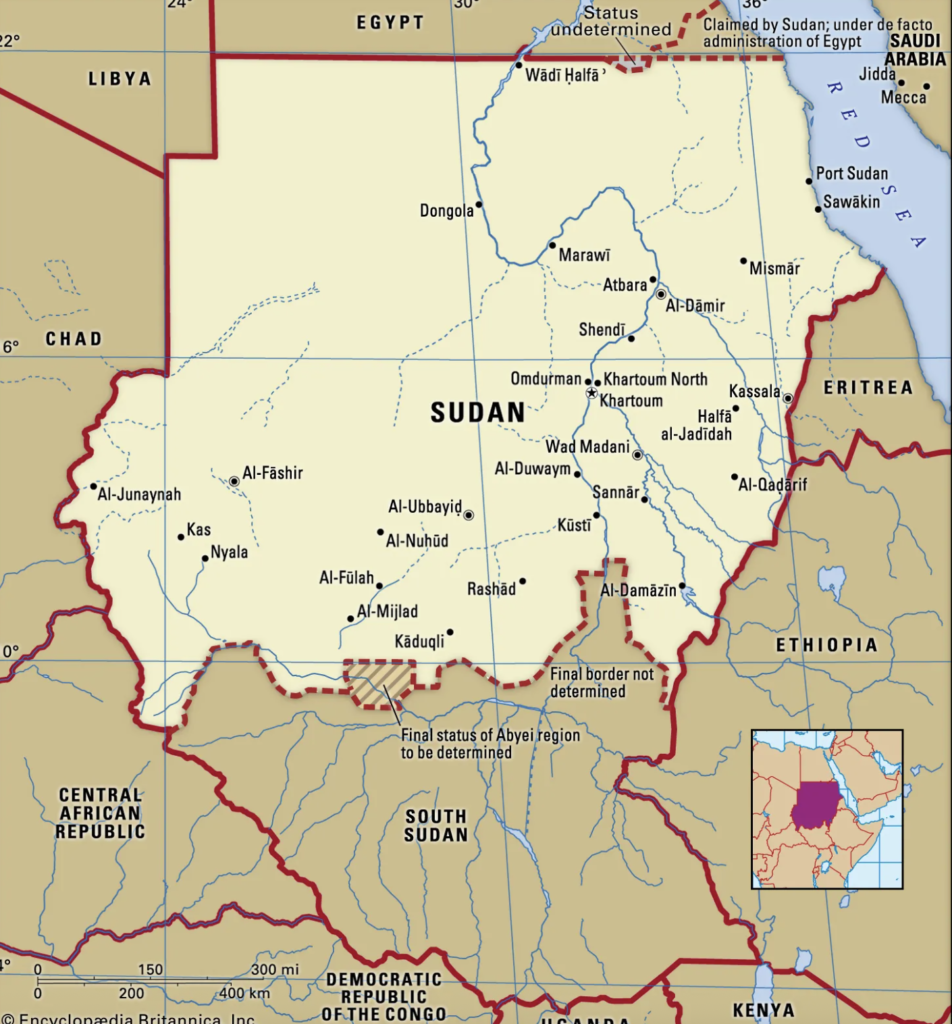
When militias affiliated with the Sudanese army, including the Al-Bara bin Malik brigade and other tribal factions, seized large parts of Khartoum, Omdurman, and Al-Jazirah in early 2024, the surface suggested a return to “security.” Checkpoints appeared, armed patrols dominated the streets, and markets began reopening. But this calm was deceptive.
Beneath the surface, a different war was being waged in silence: one fought on the bodies of women, practiced in homes, at checkpoints, and in makeshift detention centers. Sexual violence became a tool of control, a new language of oppression used to subjugate communities, terrorize families, and break civilian will in territories under indirect military supervision.
This investigation documents testimonies from women and girls subjected to sexual violence by armed men affiliated with militias operating in zones controlled or surrounded by military command. These acts occurred in areas where law and order were ostensibly upheld, but where terror was imposed by hands unbound by accountability.
Sexual Violence as a Weapon of War
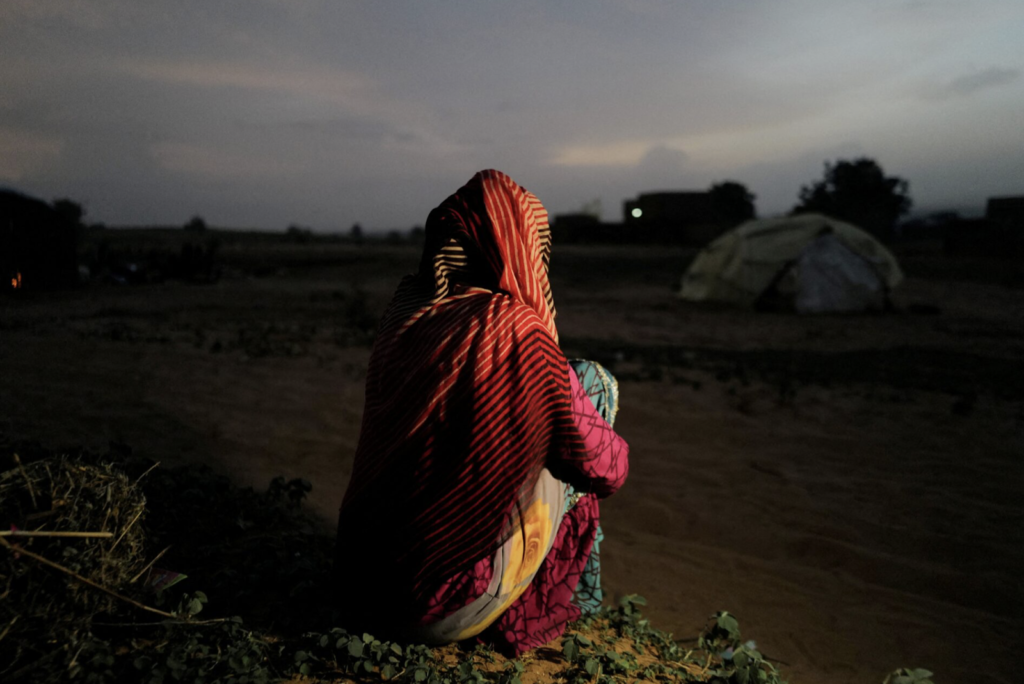
In a dim corner of a clandestine medical clinic run by volunteer doctors in Al-Jazirah, sits Amina (36), surrounded by pale walls and oppressive silence.
In a trembling voice, she recalls: “They came into the house wearing military uniforms. Said they were there to search. Minutes later, I was left alone with two of them. When I tried to scream, one said: ‘Your scream will only reach the sky.'”
Amina is one of 17 survivors whose accounts were collected for this report. Their testimonies bear striking similarities: surprise raids, direct threats at gunpoint, total absence of legal protection, and a deep fear of reporting due to the collapse of institutional trust.
Official reports, including those from Sudan’s now-suspended Unit for Combating Violence Against Women and the UNFPA, indicate a sharp rise in rape and sexual assault in areas witnessing heavy militia presence.
Dr. Hashim Al-Jaleel, a community health specialist, states: “We recorded a 300% increase in sexual violence in certain regions during the first half of 2025. Most victims do not report, fearing stigma, security reprisal, or retaliation against their families.”
Collapsed Justice, and the Complicity of Silence
The trauma endured by women in conflict areas is not only defined by the severity of the violations, but also by the legal silence surrounding them a silence that shields perpetrators and criminalizes victims.
An in-depth review of Articles 135, 149, and 151 of Sudan’s 1991 Penal Code reveals a gaping chasm between law and the lived realities of violated women.
Article 149, which defines rape, requires either four righteous male witnesses or a direct confession from the perpetrator. In wartime, where rape is carried out under duress and in secrecy, these conditions become impossible barriers that force survivors into silence and expose them to potential prosecution for “adultery” if they cannot prove what happened.
Legal expert and former member of Sudan’s Legal Reform Committee, Buthaina Al-Tahir, explains: “The legal system sides with the perpetrator. A woman reporting rape may be charged with adultery if she can’t prove it. Silence becomes safer than shame or prison. There is no legal protection—not even guarantees at police stations.”
Article 135, addressing abortion, offers no clear exceptions for pregnancies resulting from rape, placing victims in an agonizing bind: either carry a forced pregnancy amid social disgrace or resort to illegal abortion with potential prison time.
Worse still, Article 151 criminalizes “indecent acts” with vague language often weaponized against victims rather than protecting their dignity.
Buthaina adds: “Most cases never reach court due to social pressure, direct threats from perpetrators or associated security elements. Even lawyers face harassment when attempting to bring cases forward.”
According to both local and international legal experts, Sudan’s legal framework fails to meet the minimum standards of international humanitarian law. Justice in Sudan remains moralistic and punitive, not protective and rights-based.
This has raised existential questions among activists: Is legal reform enough? Or does Sudan need a complete redefinition of justice that no longer condemns the victim and exonerates the violator?
At present, there is no independent body in Sudan guaranteeing survivors’ access to justice, nor any effective mechanisms for protection or reparations. For many, international accountability via the UN or war crimes courts remains the only hope.
But delayed justice is often perceived in conflict zones as another form of betrayal.

Silent Hospitals and Satellite Eyes
Most survivors remain unable to report assaults silenced by shame or fear of retaliation. In this vacuum, field hospitals have become silent witnesses to horrors hidden from the public eye.
In ramshackle rooms and with scarce supplies, volunteer doctors provide emergency care to women and girls who carry not just the scars of assault, but its long-lasting physical and psychological consequences.
A field doctor, speaking anonymously, shared: “Over the past months, we’ve seen dozens of girls aged 13 to 17. There are clear signs of vaginal tearing, both recent and old. We’ve observed outbreaks of HPV, gonorrhea, and severe depression even suicide attempts.”
“The real numbers are much higher than what we can record. We don’t trust the official health system with data. Crimes are committed in silence. Survivors often flee before completing treatment, fearing exposure or revenge.”
Beyond collecting testimony, our investigation collaborated with OSINT researchers to analyze satellite imagery taken between January 2024 and June 2025. The focus: locations where survivors reported rape and abuse.
The findings included:
- Military outposts embedded in densely populated neighborhoods in Omdurman and southern Khartoum, correlating with multiple survivor accounts.
- Armed personnel in official uniforms occupying civilian buildings and abandoned health centers complicating future accountability.
- Troop movements coinciding with the dates of reported assaults, repeated across several locations.
Satellite imagery analyst Sara Lindholm, part of the investigation team, noted: “By mapping dates and troop movements, we found clear spatial and temporal links between uniformed forces stationed in civilian areas and reported sexual assaults. This suggests a deliberate pattern, not isolated incidents.”
This supplemental evidence indicates that sexual violence occurred not in chaos alone, but often under structured military control, facilitated by the silent complicity of security institutions.
While not sufficient for immediate prosecution, this data serves as preliminary evidence for future international tribunals, countering official narratives that these were “isolated acts.”
From Darfur to Khartoum: Impunity Expands
Darfur was not the exception it was the prototype. The model was never dismantled. It simply moved. The same tactics sexual violence, displacement, impunity have resurfaced in the heart of the capital.
A former UN peacekeeping official in Sudan explained: “State forces and their allied militias never changed their behavior. They just redrew their maps. What we saw in Al-Geneina and Kutum is now happening in Khartoum and Al-Jazirah. The perpetrators were never punished. The system recycled them.”
International reports, including those by the UN Security Council and ICC, documented systematic sexual violence in Darfur as a tool of genocide and displacement.
While charges were brought against figures like ousted President Omar al-Bashir, the military-intelligence apparatus was never dismantled. Instead, key perpetrators were reintegrated into the national army or newly formed units.
“Impunity in Sudan is not a flaw. It is policy,” says Dan Stewart, a former war crimes judge who investigated Sudanese violations.
“The state doesn’t see accountability as a path to peace. It sees it as a threat to survival.”
The officer who ordered rape in Darfur was promoted. The soldier who carried it out now commands a unit in Omdurman. Impunity has become a reward.
The message to survivors is chilling: What happened in Darfur can happen in Khartoum and no one will be held accountable.
Suicide as a Shield from Rape
In areas under militia control, rape is not the only fear. Life itself becomes unbearable.
A field activist, speaking under anonymity, confirmed multiple suicides of women who had lost husbands to field executions, only to face threats of sexual violence themselves.
One case, relayed via WhatsApp, described a woman crying while typing: “Her sister killed herself after being raped by soldiers claiming to belong to the national army. The same soldiers had just executed five of her brothers and relatives before her eyes.”
This layered violence starting with murder and ending with rape creates a suffocating atmosphere of existential terror. For some women, suicide becomes a final escape from a future full of threats.
A July 2024 UN report documented over 400 survivor testimonies of conflict-related sexual violence. According to the 80-page report, the scale of abuse was, in the words of its lead author Mohamed Shendi Othman, “overwhelming.“
“The brutal sexual assaults recorded in Sudan are staggering. The numbers don’t reflect the full picture, but they are enough to paint a devastating image.”
Victims ranged in age from 8 to 75. Most required urgent medical care, which was often unavailable due to targeted attacks on health infrastructure or deliberate shutdowns.
Under these conditions, the female body becomes a battlefield, and her choices reduced to two: violation or death.
Between Silent Death and International Silence
Survivors insist: these are not isolated acts, but systematic patterns of sexual terror. Their bodies become weapons in a broader campaign of collective punishment.
In the absence of accountability and amid legal and social complicity, silence becomes another crime. Documentation itself becomes a moral and political act of resistance.
Even amid fear, the voices of women resonate more powerfully than bullets: “I don’t want pity,” says Amina. “I want the truth to survive me. Even if I die, the world must know what they did. If we stay silent, they’ll do it again to others. Silence is the second crime.”
What survivors revealed, and what the evidence confirms, leaves no room for doubt: sexual violence is being normalized, and impunity institutionalized.
Dr. Nabil Abdelsalam, an international law expert and member of several UN fact-finding missions, stresses:
“There must be an independent international mechanism to investigate sexual violence in Sudan, with a clear mandate and UN Security Council or Human Rights Council backing. Without it, justice will remain delayed, victims forgotten, and perpetrators empowered.”
This investigation was produced in collaboration with field reporters, medical volunteers, satellite imagery analysts, legal experts, and survivors across Sudan.