By InDepth Reports
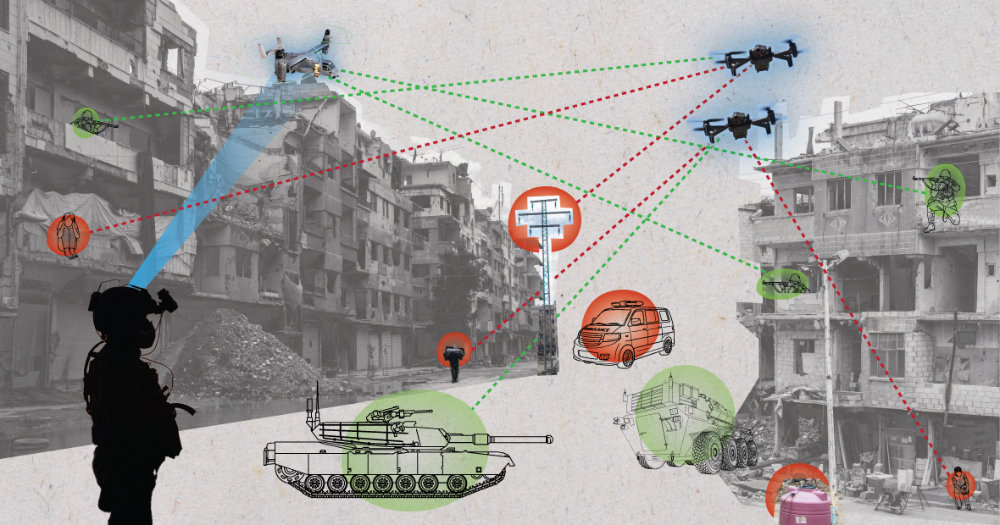
Artificial intelligence is increasingly shaping the way wars are fought, reported, and understood. From identifying military targets and analyzing satellite imagery to generating intelligence assessments and monitoring online conversations, AI systems have become deeply embedded in modern conflicts. Governments and militaries around the world are investing billions of dollars in technologies they believe will provide strategic advantages on the battlefield.
Yet behind the promises of speed, efficiency, and precision lies a growing concern among researchers, human rights advocates, and security experts. As AI systems become more involved in conflict-related decisions, questions are emerging about accountability, reliability, and the potentially devastating consequences of machine error. In an environment where decisions can determine life or death, even small mistakes can have catastrophic outcomes.
The Promise of Algorithmic Warfare
Supporters of military AI argue that these technologies can reduce human error and improve operational effectiveness. Modern AI systems can process vast amounts of information far faster than any human analyst. Satellite images that once took intelligence teams days to examine can now be analyzed in minutes. Patterns of troop movements, military logistics, and battlefield activity can be identified almost instantly.
Military planners increasingly view AI as a force multiplier. The technology can help commanders make faster decisions, allocate resources more effectively, and respond to rapidly changing situations. In theory, this could reduce civilian casualties by improving target identification and minimizing mistakes caused by fatigue, stress, or incomplete information.
However, critics argue that such promises often overlook the limitations of the technology itself.
Artificial intelligence systems are only as reliable as the data on which they are trained. In conflict zones, where information is often incomplete, biased, manipulated, or rapidly changing, this presents a significant challenge. Researchers have repeatedly demonstrated that AI models can misidentify objects, misunderstand context, and produce false conclusions with high levels of confidence.
A civilian truck may be mistaken for a military vehicle. A gathering of displaced families may appear similar to a military assembly. Social media posts can be misinterpreted, translated incorrectly, or stripped of crucial context. Unlike human analysts, AI systems often struggle to understand cultural nuances, local dynamics, and the broader circumstances surrounding a particular event.
In war, such errors carry consequences that extend far beyond technical failure.
The Black Box Problem
One of the most persistent concerns surrounding military AI is what experts call the “black box problem.” Many advanced machine learning systems generate recommendations or classifications without providing a clear explanation of how they reached their conclusions.
This lack of transparency creates a dilemma for military commanders. If an AI system identifies a target as a potential threat, how can decision-makers verify that conclusion? What evidence supports the recommendation? And who bears responsibility if the system is wrong?
As AI becomes more sophisticated, understanding its internal decision-making processes becomes increasingly difficult. Critics argue that deploying opaque technologies in life-and-death situations risks creating accountability gaps that could undermine international humanitarian law.
AI and the Information War
The role of artificial intelligence extends beyond physical battlefields. Modern conflicts increasingly involve battles over information, perception, and public opinion. AI-generated content has transformed this landscape.
Deepfake videos, synthetic audio recordings, and AI-generated news articles can spread rapidly across social media platforms. These technologies make it possible to create convincing false narratives, impersonate public figures, or fabricate events that never occurred.
During conflicts, such content can fuel panic, inflame tensions, and distort public understanding of events. Researchers warn that the growing sophistication of generative AI may soon make it nearly impossible for ordinary users to distinguish authentic content from fabricated material without specialized verification tools.
For journalists covering conflicts, the rise of AI-generated content presents new challenges. Verification has always been a central part of reporting from war zones, but the volume and complexity of digital information have increased dramatically.
Newsrooms now face a constant stream of images, videos, audio recordings, and eyewitness accounts circulating online. Determining what is genuine and what has been manipulated requires specialized expertise and technical resources. Many journalists fear that the speed at which false information spreads is beginning to outpace the ability of fact-checkers and investigators to respond.
The result is an information environment where uncertainty itself becomes a weapon.
The Race for Military AI Dominance
Governments around the world are investing heavily in military AI capabilities. The United States, China, Russia, and several European countries have identified artificial intelligence as a strategic priority. Defense budgets increasingly include funding for autonomous systems, predictive analytics, intelligence platforms, and AI-assisted command structures.
This competition has sparked concerns about a global technological arms race. As nations seek strategic advantages, pressure is mounting to deploy new technologies quickly, potentially before adequate safeguards are established. Some experts warn that the pace of innovation is exceeding the pace of regulation.
Unlike nuclear weapons or chemical weapons, there is currently no comprehensive international framework governing the use of AI in warfare.
The Ethics of Delegating Decisions
At the heart of the debate lies a fundamental ethical question: how much decision-making should be delegated to machines?
Supporters argue that AI should remain a tool assisting human operators. Critics worry that increasing reliance on automation could gradually erode meaningful human oversight. As systems become faster and more complex, commanders may feel pressured to trust algorithmic recommendations rather than independently verifying them.
Human rights organizations have repeatedly called for international standards that ensure humans remain responsible for decisions involving the use of force. Without such safeguards, they argue, accountability risks becoming diluted across software developers, military operators, contractors, and government institutions.
Artificial intelligence is often discussed as a future challenge, but its influence on modern conflicts is already visible. From intelligence gathering and battlefield analysis to propaganda and disinformation, AI technologies are reshaping the nature of war in ways that were difficult to imagine only a decade ago.
The debate is no longer about whether artificial intelligence will become part of warfare. It already has. The real question is whether governments, international organizations, and societies can establish rules and safeguards before the technology evolves beyond their ability to control it.
As conflicts become increasingly digital, the decisions made today may determine not only how future wars are fought, but also whether human judgment remains at the center of them.