By InDepthReports
The devastating twin earthquakes that struck northern Venezuela have rapidly evolved from a natural disaster into one of the country’s largest humanitarian emergencies in decades. As search-and-rescue teams continue to dig through the ruins of collapsed neighborhoods, the operation is increasingly becoming a race against time rather than a rescue mission. Every passing hour reduces the chances of finding survivors, while the scale of destruction continues to reveal the deeper structural vulnerabilities that existed long before the earth began to shake.
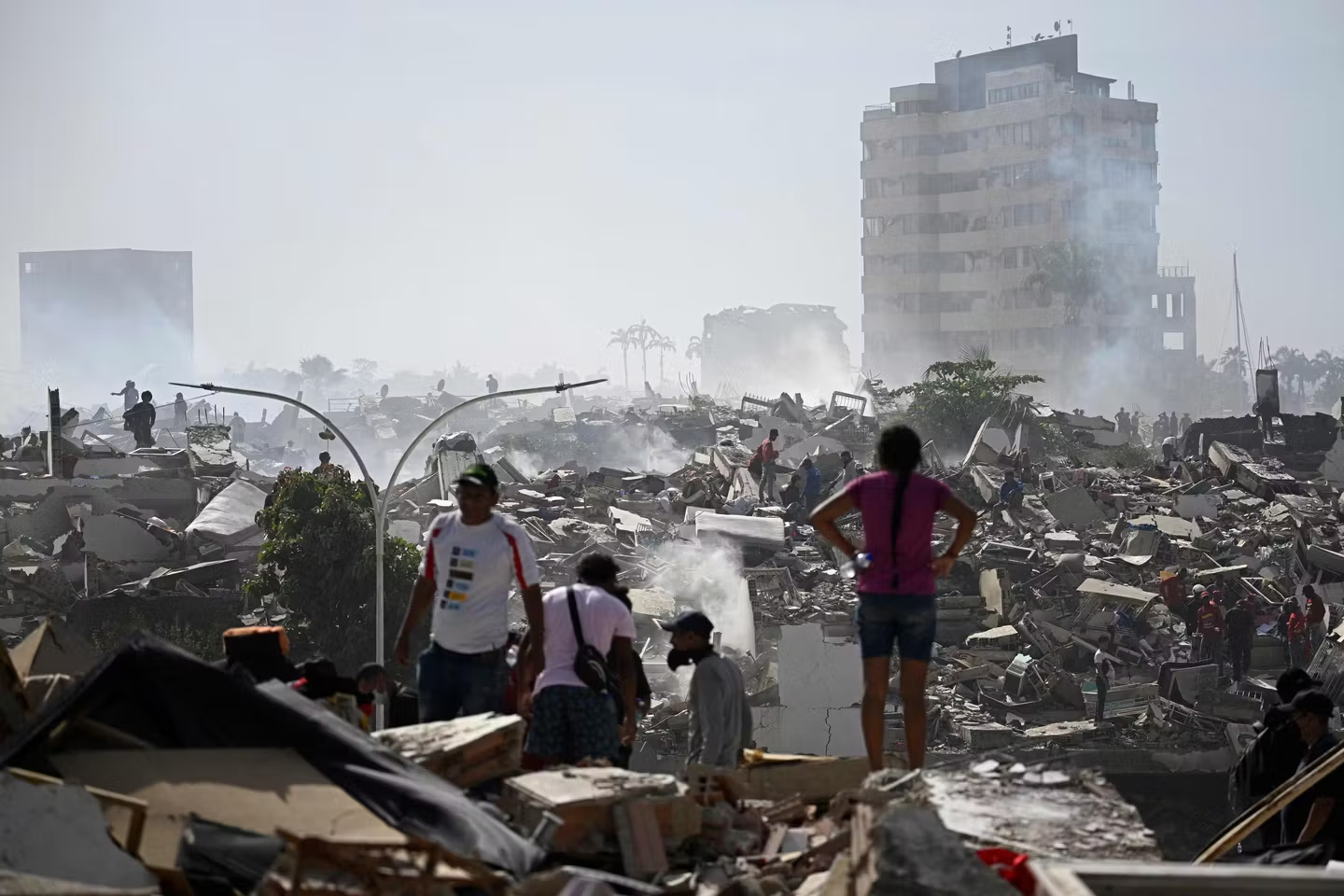
The two powerful earthquakes, measuring 7.2 and 7.5 in magnitude and occurring within less than a minute of each other, devastated Venezuela’s northern Caribbean region, with the coastal state of La Guaira suffering the most severe destruction. Entire residential blocks collapsed, hospitals and schools sustained heavy damage, roads became impassable, and thousands of families were forced to sleep in open spaces, fearing additional aftershocks. Authorities have reported more than a thousand fatalities, thousands of injuries, and tens of thousands of displaced residents, while rescue operations continue across multiple locations.
For rescue workers, the first seventy-two hours represented the critical window during which survivors trapped beneath collapsed buildings had the greatest chance of being found alive. As that window began to close, hopes faded across devastated communities. Nevertheless, isolated rescue operations continued to produce remarkable stories of survival. International rescue teams from France, the United States and several Latin American countries managed to extract a father and his son alive after they had spent four days trapped beneath the rubble. The painstaking rescue required approximately twelve hours of work using specialized search cameras and carefully controlled excavation techniques to avoid triggering additional collapses.
Earlier rescue operations also succeeded in saving a mother and her infant, while other survivors—including children and elderly residents—were pulled alive from destroyed buildings after prolonged operations. These rescues offered moments of hope amid overwhelming tragedy, but emergency specialists acknowledge that such outcomes become increasingly rare as time passes without access to water, medical care, or breathable air beneath collapsed structures.
Beyond the human stories lies a broader question confronting Venezuelan authorities and international observers alike: why did the destruction become so extensive?
Although the earthquakes themselves released enormous seismic energy, experts suggest that the scale of building collapses cannot be explained by seismic intensity alone. Structural engineers point to the condition of many residential buildings, inconsistent enforcement of construction regulations, aging infrastructure, and years of limited investment in maintenance as factors that likely amplified the disaster. Analysts have also noted contrasts with countries such as Chile, where decades of strict seismic building codes have significantly reduced structural failures during earthquakes of comparable or even greater magnitude.
The disaster has therefore reopened an uncomfortable debate regarding urban resilience across Latin America. Earthquakes cannot be prevented, but catastrophic building failures often reflect long-term governance decisions involving planning regulations, construction standards, inspection systems, and infrastructure investment. In many developing countries, rapid urban expansion has outpaced regulatory capacity, leaving millions of residents living in buildings that were never designed to withstand major seismic events.
In Venezuela, these structural weaknesses intersect with a broader humanitarian reality. Years of economic crisis, institutional deterioration, migration, and pressure on public services had already weakened emergency response capabilities before the earthquakes occurred. Rescue operations have relied heavily on volunteers, neighborhood groups, firefighters, military personnel, and international assistance. Countries across the region, together with rescue specialists from Europe and North America, have deployed personnel, heavy equipment, medical teams, and search dogs to assist Venezuelan authorities.
The logistical challenge remains enormous. Damaged roads, unstable buildings, disrupted electricity networks, and continuing aftershocks have complicated rescue operations. Emergency crews must constantly balance speed against safety, as unstable debris can collapse without warning, endangering both survivors and rescuers.
Attention is also beginning to shift toward the second phase of the crisis: humanitarian recovery.
Thousands of families have lost their homes and now require temporary shelter, food, drinking water, sanitation facilities, healthcare, and psychological support. Children who survived the earthquake face interrupted education, while hospitals already operating under pressure must absorb large numbers of trauma patients. Public health specialists warn that disasters of this scale frequently generate secondary risks, including infectious disease outbreaks, shortages of essential medicines, and long-term mental health challenges among survivors.
The economic consequences may prove equally severe. Damage to transportation infrastructure, commercial districts, ports, and industrial facilities threatens to disrupt economic activity for months. Early reports also indicate interruptions affecting parts of Venezuela’s energy infrastructure, highlighting how natural disasters increasingly create cascading impacts across critical national systems.
For policymakers, the Venezuelan earthquakes offer broader lessons extending far beyond the country’s borders.
Latin America remains one of the world’s most seismically active regions. Rapid urbanization, population growth, informal construction, and aging infrastructure continue to increase disaster risks in many cities. Climate-related emergencies frequently dominate international attention, yet seismic hazards remain capable of producing catastrophic humanitarian crises within minutes.
The Venezuelan disaster demonstrates that resilience cannot be measured solely by emergency response capacity. It begins years earlier with resilient infrastructure, effective urban planning, rigorous building codes, investment in public services, and institutional preparedness. Search-and-rescue teams may save lives after disaster strikes, but resilient governance determines how many lives require saving in the first place.
As rescue operations gradually transition into recovery efforts, Venezuela faces a long and uncertain path. Rebuilding homes, restoring infrastructure, supporting displaced families, and addressing the social and economic consequences of the disaster will require sustained national commitment and international assistance.
The scenes emerging from La Guaira are not simply images of collapsed buildings. They reveal the cumulative consequences of years of structural vulnerability exposed in a matter of seconds by one of the most destructive earthquakes in Venezuela’s modern history. While the search for survivors continues, the country’s greatest challenge may only just be beginning.