In Depth Reports
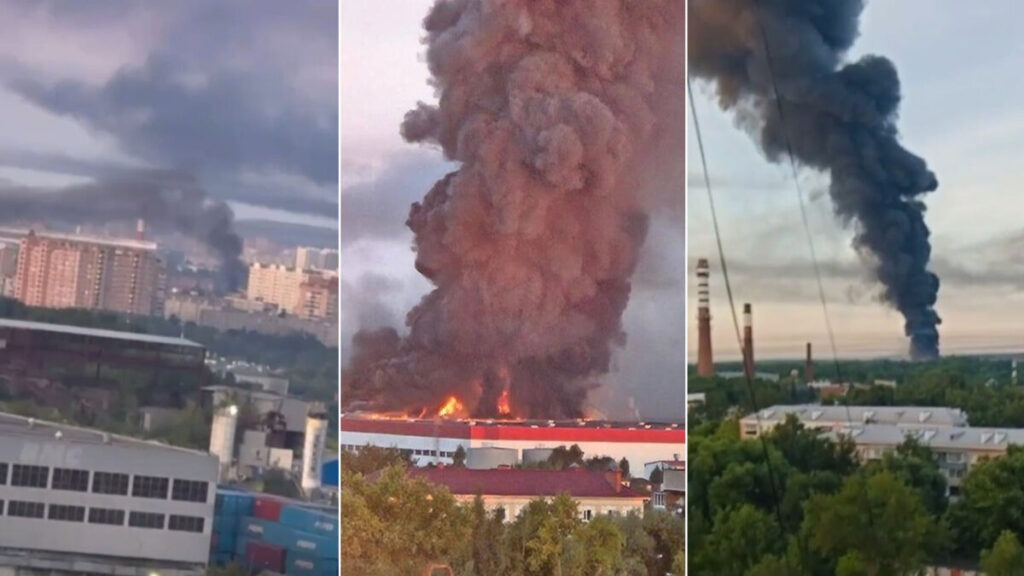
The latest Ukrainian drone strikes targeting additional facilities associated with the Russian online retail giant Wildberries illustrate how the conflict is increasingly expanding beyond conventional military targets into the economic infrastructure that sustains Russia’s domestic resilience. While military installations, ammunition depots, and energy facilities have long dominated Ukraine’s long-range strike campaign, attacks on logistics centers linked to one of Russia’s largest e-commerce companies suggest a broader strategic objective: gradually eroding the commercial networks that underpin everyday economic activity. Rather than seeking immediate battlefield advantages alone, Kyiv appears increasingly focused on imposing cumulative economic costs by disrupting the logistical systems that facilitate trade, distribution, and consumer supply across the Russian Federation.
Wildberries occupies a uniquely significant position within Russia’s domestic economy. As the country’s largest e-commerce platform, its network extends across hundreds of logistics hubs, sorting centers, warehouses, and distribution facilities that connect manufacturers, retailers, and consumers throughout the country. These logistics nodes represent far more than commercial infrastructure; they are critical components of Russia’s internal supply chain architecture. Disruptions affecting these facilities can slow deliveries, increase transportation costs, complicate inventory management, and place additional pressure on an economy already adapting to sanctions, labor shortages, and wartime production demands. Even when physical damage is limited, repeated attacks force companies to divert resources toward security, redundancy, and operational continuity rather than commercial expansion.
The significance of these strikes therefore lies less in the immediate destruction they may cause than in the strategic message they convey. Ukraine is demonstrating an expanding capability to reach targets deep inside Russian territory that are closely linked to the country’s economic ecosystem rather than its military-industrial complex alone. This reflects an evolution in modern warfare, where the distinction between military and economic resilience continues to narrow. Logistics infrastructure has become increasingly valuable because it supports not only civilian commerce but also transportation networks, industrial production, workforce mobility, and the broader functioning of a wartime economy. As modern conflicts become more dependent on resilient supply chains, logistics hubs themselves emerge as strategically relevant assets.
From Moscow’s perspective, protecting this expanding range of potential targets presents an increasingly difficult challenge. Russia has invested heavily in strengthening air defenses around strategic military installations, energy infrastructure, and major urban centers. However, the country’s vast geography and extensive commercial infrastructure make it impractical to provide the same level of protection for thousands of warehouses, logistics parks, transportation facilities, and industrial distribution centers. Consequently, Ukraine’s long-range drone campaign compels Russian authorities to make difficult resource allocation decisions, balancing the protection of military assets against the need to safeguard critical elements of the civilian economy. This dynamic reflects a broader principle of strategic competition: forcing an adversary to disperse defensive resources can itself become a source of operational advantage.
The broader implications extend beyond Russia’s domestic economy. These attacks underscore the growing centrality of logistics in contemporary warfare. Success is no longer determined solely by territorial gains or battlefield attrition but increasingly by the ability to sustain production, maintain distribution networks, and preserve economic functionality under continuous pressure. In this context, logistics companies, warehouses, transportation hubs, and digital supply-chain systems have become part of the strategic landscape. The conflict is demonstrating that economic infrastructure is no longer merely collateral to war—it is becoming one of its principal arenas, where sustained disruption can gradually shape national resilience, public confidence, and the long-term capacity to sustain military operations.