An In Depth Reports
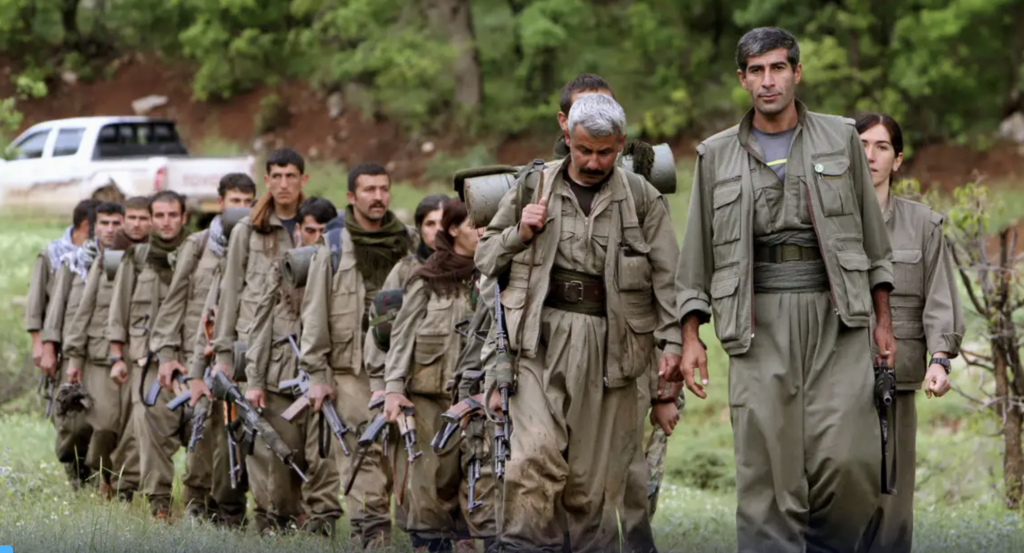
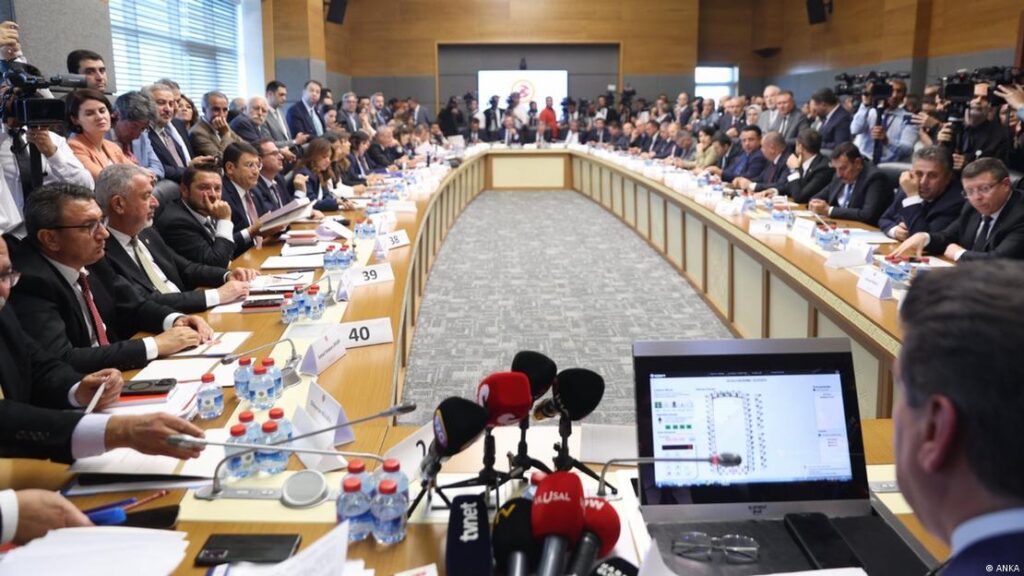
Turkey’s new legal framework for the peace process with the Kurdistan Workers’ Party, or PKK, marks one of the most important political developments in the country’s Kurdish conflict in years. Parliament’s approval of the “Law on Strengthening National Solidarity and Social Integration” gives the government a formal mechanism to suspend sentences, freeze investigations and potentially reintegrate thousands of people convicted of PKK-related offences, but only after Turkish authorities confirm that the organisation and its affiliated structures have fully disbanded and surrendered their weapons. The scale of parliamentary support is politically significant: 467 of 592 lawmakers backed the measure, including the ruling Justice and Development Party, its nationalist ally, and the pro-Kurdish DEM Party. Yet the breadth of that vote should not be confused with consensus over what peace should mean. The law may provide a legal route out of armed conflict, but it does not by itself settle the deeper questions of political representation, democratic rights, local governance and Kurdish identity that have sustained the conflict for decades.
The legislation is important because it shifts the peace process from symbolism into law. A year after the PKK publicly burned weapons in a symbolic ceremony and announced its intention to dissolve, Ankara has now responded with an institutional mechanism that defines how disarmament could translate into legal consequences. Under the framework, people convicted of PKK membership, propaganda, financing or intentional support may see sentences suspended for five years if their prison terms are up to 15 years, and for ten years in longer or life-sentence cases. Ongoing investigations could also be paused. According to pro-government reporting cited in the source material, as many as 3,600 prisoners may eventually benefit. The mechanism therefore creates a concrete incentive structure for disarmament, but it does so under tightly controlled conditions and leaves ultimate verification in the hands of the Turkish state.
That verification mechanism is one of the law’s most consequential features. Disarmament and dissolution must first be confirmed by Turkish authorities and then formally recognised by the National Security Council, which is chaired by President Recep Tayyip Erdoğan. In practice, this gives the presidency enormous influence over the pace and sequencing of the process. Supporters of the framework may argue that such centralisation is necessary after the collapse of earlier peace efforts between 2013 and 2015, when mistrust, competing expectations and renewed violence destroyed the negotiation process. Critics, however, see a risk that peace becomes dependent not on transparent legal benchmarks but on executive judgement. The question is therefore not only whether the PKK disarms, but who decides that it has done enough for the state to begin delivering political and legal concessions.
The controversy surrounding Abdullah Öcalan illustrates this tension particularly clearly. The law does not provide for his release, and exclusions mean that it does not apply to him directly. Yet Öcalan remains central to the political psychology of the process. His February 2025 call for the PKK to disband, end the armed struggle and pursue a political solution was a major catalyst for the current trajectory. Kurdish actors now argue that disarmament cannot be completed meaningfully if Öcalan remains unable to coordinate the process under conditions they consider sufficiently free. Ankara, by contrast, appears determined to separate the symbolic role of Öcalan from the legal concessions offered to rank-and-file members and supporters. This divergence may become one of the process’s most difficult unresolved issues.
The law also exposes a more fundamental divide over the definition of peace itself. For the government, the process is structured primarily around disarmament, national integration and the reduction of security threats. For the Kurdish movement, disarmament is only one element of a broader political settlement. The DEM Party supported the legislation but immediately described it as only a first step. Kurdish representatives continue to demand deeper democratic and legal reforms, arguing that former fighters, exiled politicians and legal activists will not abandon armed or underground structures if they expect to remain criminalised or excluded from legitimate political participation. This is the central strategic dilemma: a state can reduce the cost of surrender, but if political space remains restricted, reintegration may remain incomplete.
Why Ankara’s New Framework May Open the Door to Peace — but Cannot Resolve the Kurdish Question on Its Own
That concern is not theoretical. Legal pro-Kurdish political activity in Turkey has faced decades of restrictions, party closures, arrests and the removal of elected mayors. Former HDP co-chairs Selahattin Demirtaş and Figen Yüksekdağ remain in prison, while elected Kurdish politicians have repeatedly been removed from office and replaced by state-appointed administrators. For critics of the new law, these practices raise a basic credibility question. If the government asks armed actors to abandon violence in favour of legal politics while maintaining severe restrictions on legal Kurdish political activity, the distinction between armed and democratic participation becomes difficult to sustain. A peace process built only on disarmament therefore risks solving the military dimension of the conflict while leaving the political dimension intact.
The wider democratic environment adds another layer of uncertainty. Political scientist Berk Esen, cited in the source material, argues that the government is advancing peace with the PKK while simultaneously increasing pressure on the main opposition CHP. The imprisonment of prominent opposition figures, including former Istanbul mayor and presidential candidate Ekrem İmamoğlu, and the broader judicial pressure on CHP politicians have led critics to question whether the Kurdish peace process is part of a genuine democratisation agenda or a more selective restructuring of Turkey’s political landscape. That distinction matters enormously. Sustainable peace usually requires widening political participation, strengthening legal safeguards and lowering the cost of peaceful opposition. If concessions to Kurdish actors occur alongside broader democratic contraction, the peace process may become politically transactional rather than transformative.
Regional geopolitics also helps explain why Ankara has chosen this moment to move forward. The collapse of the Assad regime in Syria, continued instability in Gaza, the conflict involving Israel, the United States and Iran, and the presence of large Kurdish populations across Syria and Iran have significantly altered Turkey’s strategic environment. A more stable relationship with Turkey’s own Kurdish population could give Ankara greater flexibility in dealing with Kurdish movements beyond its borders and reduce one of the country’s longest-running internal security vulnerabilities. From this perspective, the peace initiative is not only about domestic reconciliation. It is also a strategic adjustment to a rapidly changing regional balance.
The contradiction inside Turkish nationalism is especially revealing. The nationalist IYI Party strongly opposed the law, while the MHP — historically one of the fiercest opponents of negotiations with the PKK — has become one of the current process’s key supporters. This reversal demonstrates how security strategy can reshape ideological positions. The MHP appears to have concluded that a controlled disarmament process led by a strong state may serve Turkish national interests better than indefinite conflict. IYI, by contrast, continues to frame concessions as a threat to national unity. The dispute suggests that the future of the process will depend partly on whether the government can convince nationalist voters that reintegration represents victory over armed conflict rather than capitulation to it.
Public opinion may prove decisive once symbolic legislation becomes practical implementation. It is one thing for parliament to approve suspended sentences in principle; it is another for former fighters to return to Turkey, remain out of prison and potentially enter legal political life. Reha Ruhavioğlu of the Kurdish Studies Center expects the government to proceed gradually, calibrating each stage according to public reaction. This incrementalism may reduce the risk of nationalist backlash, but it could also frustrate Kurdish expectations if the process moves too slowly or if promised concessions are repeatedly delayed. Peace processes often fail not because either side formally rejects them, but because sequencing becomes a source of mistrust.
The asymmetry of power between the Turkish state and the PKK further shapes the process. Ankara controls the legal framework, the security institutions, the verification mechanism and the timetable for implementation. The PKK, by contrast, is being asked to dissolve before many of its broader political demands are addressed. From the government’s perspective, this sequence is necessary because political reform cannot proceed under armed pressure. From the Kurdish perspective, disarming before credible reforms are guaranteed may amount to surrendering leverage without assurance that political promises will follow. This sequencing problem sits at the heart of almost every negotiated transition from insurgency to politics.
For that reason, the durability of the new framework will depend less on the wording of the law than on what follows it. If the legislation becomes the first stage of a wider process involving legal reform, stronger protections for political participation, reduced use of criminal law against non-violent activism and a clearer framework for local democratic governance, it could become the foundation of a historic settlement. If it remains limited to conditional sentence suspensions and controlled reintegration while the broader political system remains unchanged, it may succeed in reducing violence without resolving the conflict that produced it.
The difference between those two outcomes is substantial. Ending an armed campaign is not the same as achieving peace. The first can be accomplished through disarmament, incentives and security guarantees. The second requires a political order in which former adversaries believe they can pursue competing objectives without returning to violence. That means institutions matter more than symbolism, and political inclusion matters as much as weapons collection.
Turkey’s new PKK law therefore represents a genuine opening, but not yet a settlement. Its importance lies in the fact that Ankara has moved from rhetoric to legal architecture and created an institutional pathway for disarmament and reintegration. Its weakness lies in the fact that the Kurdish question is broader than the PKK itself. The conflict involves citizenship, representation, language, local governance, state centralisation and the boundaries of legitimate political participation. None of those issues can be permanently resolved through penal reform alone.
The coming months will reveal whether the Turkish government views the legislation as an endpoint or a gateway. If it becomes the first stage of broader democratic reform, Turkey may have an opportunity to end one of the region’s longest-running internal conflicts and reshape its role in a highly unstable Middle East. If it becomes primarily a security mechanism designed to dissolve the PKK without widening political space, the armed conflict may diminish while the underlying grievances remain.
The most important question is therefore not whether the new law can bring peace by itself. It cannot. The real question is whether Turkey is prepared to use the law to move from the politics of disarmament to the politics of coexistence. That transition — not the surrender of weapons alone — will determine whether the current process becomes a historic peace or merely another pause in a conflict that has repeatedly survived attempts to end it.