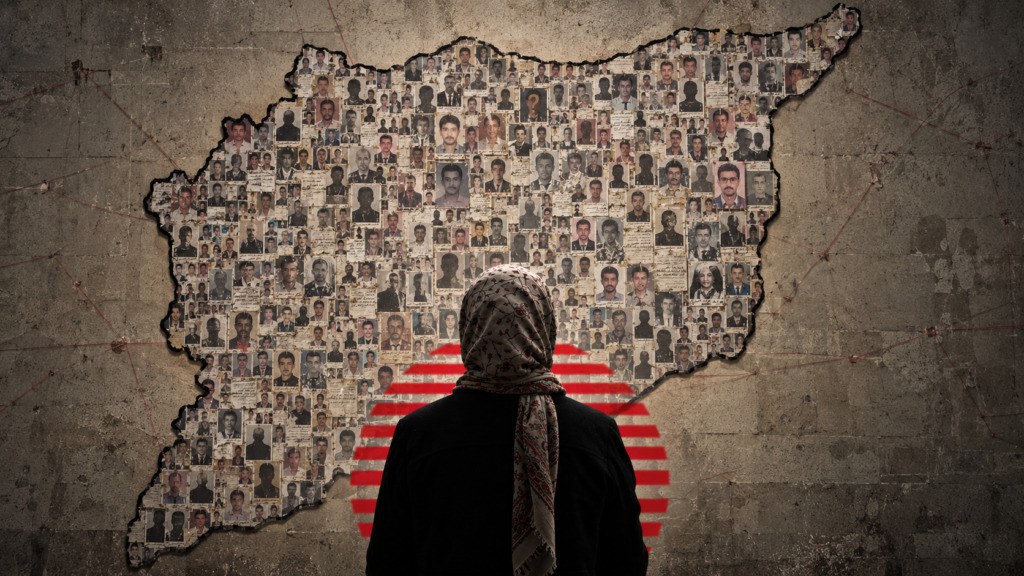
For four years, “Wife Zero” followed 97 wives of Syria’s missing and surveyed 1,100 affected families, tracking the consequences of disappearance across the fall of the Assad regime. For 90 of the 97 women, those consequences survived the political transition. The investigation also uncovered 17 former detainees who returned alive despite records identifying them as dead. Together, the findings reveal how enforced disappearance can outlive the system that produced it — moving from prisons into marriages, children, property and courts, and turning unresolved state violence into new conflicts that threaten Syria’s peace.
Ali Al Ibrahim, Hala Naser
In the first days after the fall of Bashar al-Assad’s regime in December 2024, Noura Barhoum searched for her husband in the faces of strangers.
On her phone screen, she watched men emerging from prisons that had remained closed for years. Some were so emaciated they were barely recognizable; others were surrounded by families who had waited years for that moment. Noura replayed the videos, enlarged the images and combed through lists of survivors, searching for a face she had not seen in fourteen years.
She did not find him.
But neither did she find proof that he was dead.
Noura’s husband disappeared in the Syrian capital, Damascus, fourteen years ago. Since then, she has not known whether he was being held in a cell, transferred elsewhere, killed, or buried somewhere unknown to his family. When the regime collapsed and prison doors opened, it seemed, briefly, as though one of the longest chapters of her life might finally be coming to an end.
But the fall of the regime brought her no answer. For Noura, the opening of the prisons briefly transformed fourteen years of waiting into the possibility of an answer. “I searched every face and every name. I was prepared for any answer — that he was alive or that he was dead. What I was not prepared for was to be left with no answer again,” she recalls.
Now 35, Noura sums up her place between life and death in a single sentence: “I am neither a wife nor a widow. I am Wife Zero.”
A “wife of a missing person” is a woman whose husband has disappeared and whose whereabouts and fate remain unknown, with no confirmed information establishing whether he is alive or dead. Her situation therefore differs from that of a widow, whose husband’s death has been established. Legally, her marriage remains in force unless a court terminates it or declares her husband dead in accordance with the procedures prescribed by law.
Syria’s Personal Status Law defines a missing person as someone “whose life or death is unknown, or whose survival is established but whose whereabouts are unknown.” In cases of enforced disappearance, that status becomes even more complicated: the absence was not voluntary. In many cases, people disappeared after being detained or under circumstances in which their families were denied any reliable information about where they were being held or what had happened to them.
A wife of a missing person, then, is not a widow, even if years have passed since her husband disappeared. Nor is she a wife living within a marriage in any ordinary sense. The marriage remains on paper, while one of its two partners has disappeared from life.
Behind Noura’s words lies one of the least visible consequences of enforced disappearance in Syria. When a man disappears, it is not only his freedom and fate that vanish with him. His wife may remain legally bound to someone whose life or death she cannot establish. His children may grow up with a father who is absent from their lives but still present in official records. Questions of marriage, guardianship, documentation, money and property can remain suspended, awaiting an answer that may never come.
Noura’s story is only an entry point into a far larger catastrophe.
As of August 30, 2026, the Syrian Network for Human Rights had documented at least 177,021 people who remained forcibly disappeared since March 2011. Yet there is no published nationwide figure for the number of wives of missing men, leaving the scale of one of the groups most profoundly affected by disappearance itself unknown.
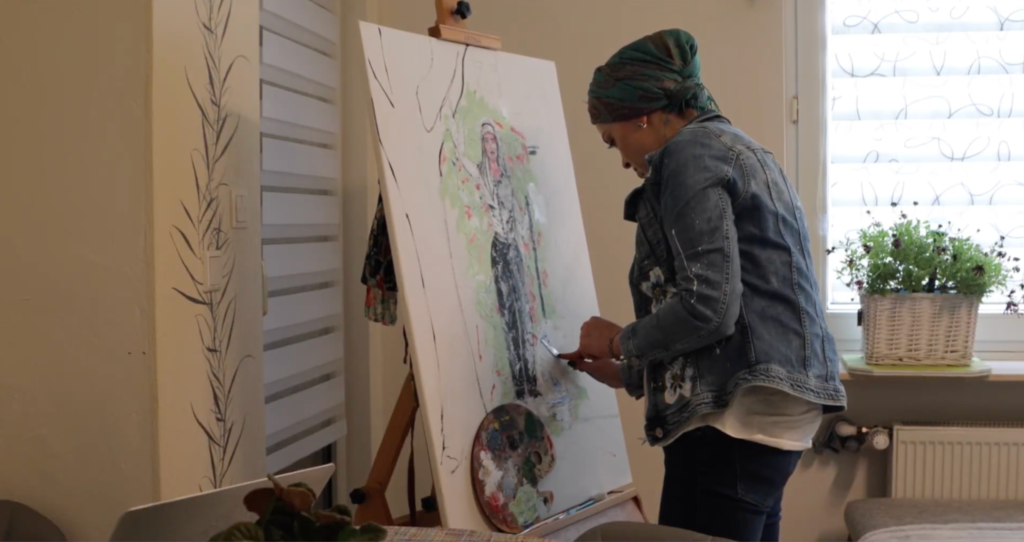
Noura Barhoum paints at her home, fourteen years after her husband disappeared and with his fate still unknown. Amid her canvases and colors, she tries to reclaim a space for her own life, while his absence remains embedded in its everyday details — leaving her suspended between the possibility of his return and the absence of any proof that he is dead.
Four Years Following Women’s Lives in Limbo
Work on this investigation began in 2022, while Bashar al-Assad was still in power. At the time, searching for a missing person often meant trying to obtain information from the very state institutions accused of making him disappear. Wives of detainees and missing men were left balancing the wait for their husbands with raising and supporting their children, while navigating complex legal procedures, differing religious interpretations, and social pressure that treated continued waiting as proof of loyalty.
Then came December 8, 2024. Assad fell, prison doors opened, and detainees emerged whom their families had believed to be dead. Syrians entered detention facilities that had remained sealed off for years, while the new era brought promises of uncovering the fate of the missing and delivering justice.
We returned to the women whose stories we had begun documenting before the regime’s fall. But this time, the question was no longer simply: Had their husbands returned? It was: Had their rights returned too?
Between January 2022 and mid-August 2026, this investigation collected testimonies from 97 wives of missing men across different parts of Syria, including Aleppo, Damascus, Rural Damascus, Idlib, Homs, Daraa, Raqqa and Suwayda. The cases reflected a range of experiences, including the length of the husband’s disappearance, the number of children, attempts to obtain judicial separation or remarry, and problems involving guardianship, civil documentation, property and financial rights.
Interviews were conducted in person, by telephone and online. To verify the legal dimensions of the cases, the investigation reviewed Syria’s Personal Status Law and provisions governing missing and absent persons, judicial separation, guardianship and inheritance, as well as relevant circulars and decisions. Wherever possible, the women’s accounts were cross-checked against court rulings, civil registry records, death certificates, family documents, powers of attorney and applications filed with the courts.
We also interviewed lawyers, legal experts, religious scholars, psychologists, social specialists, human rights advocates and researchers. We presented them with questions arising from the cases — including judicial separation, remarriage and the return of a missing husband — in an effort to distinguish between three forces that repeatedly overlapped in the women’s lives: what the law permits, what Islamic jurisprudence says, and what society imposes in the name of religion.
Given the sensitivity of the subject, participants were allowed to determine how much of their identities could be disclosed. The investigation used women’s real names only with their consent. In cases where participants feared retaliation, stigma or family disputes, surnames were withheld or names and identifying details were changed. None of these measures altered the underlying facts documented by the investigation.
Across these cases, the investigation identified a recurring pattern: political change did not end the legal consequences of disappearance. Even after the fall of the Assad regime, wives of missing men continued to face unresolved barriers involving their marital status, their children’s documentation and guardianship, and access to property and financial rights tied to husbands whose fate remained unknown.
The Regime Fell — The Waiting Did Not
Over the course of four years, we followed the women’s attempts to resolve their marital status, obtain documents for their children, exercise legal authority over them, access money and property, seek judicial separation, or remarry.
What we found after the fall of the regime was more complicated than whether prison doors had opened. Opening the prison doors did not necessarily open a way forward for those who had spent years waiting outside them.
The problem is not simply that Syrian law “prevents” the wife of a missing man from starting a new life, nor that Islamic law categorically “forbids” her from doing so. What we found instead was a web of legal procedures and evidentiary requirements, restrictions involving guardianship and rights tied to an absent husband, differing interpretations of Islamic jurisprudence, and social pressures capable of making a right that exists in theory extraordinarily costly to exercise in practice.
Among the 97 women included in the investigation, participants described social pressure to continue waiting for their missing husbands. In some cases, religious language — including phrases such as “Islamic law does not allow you to” — was invoked to discourage women from considering judicial separation or remarriage.
Those pressures did not disappear with the fall of the regime.
And therein lies the contradiction that drives the rest of this investigation: The state under which the men disappeared fell. But the consequences their disappearance imposed on women’s lives did not fall with it.
Fourteen years later, Noura is not asking for a miracle. She wants to know whether her husband is alive or dead.
But if the state still cannot give her that answer, another question remains:
How many more years of her own life must disappear with him?
An Endless Wait
Hundreds of kilometers away from Noura, in the northern Syrian city of Aleppo, 49-year-old Suzan Najm was confronting the same question from a different angle.
Suzan’s husband disappeared during the war, and all contact with him was lost. In the first months, she treated every piece of information as a possible lead: a question put to a former detainee, the name of a prison that surfaced in conversation, or a tip passed along by a relative or intermediary. But none of it ever led to a definitive answer. No husband returned home, no body was buried, and no document brought the waiting to an end.
As the years passed, Suzan was no longer simply waiting for her husband. She was waiting to know what she was entitled to do with her own life.
Her husband’s absence left her carrying the family’s day-to-day responsibilities, supporting the children and making decisions alone. And the longer he remained missing, the more urgent became the question she was afraid to voice: Should she remain his wife indefinitely, with no end to the waiting in sight, or did she have the right to end the marriage and begin a new life?
“Thinking about remarrying is not about abandoning my husband,” Suzan says, tears filling her eyes. “It is about trying to provide stability and security for my child.”
Yet even contemplating that possibility confronted her with two questions repeatedly raised by those around her: What does Islamic law say? And what does Syrian law say?
For Suzan, the uncertainty eventually became a question not only about her missing husband, but about who had the right to decide how long the rest of her own life should remain suspended.
“I am not asking anyone to tell me to forget my husband. I am asking who decides how long I must wait when no one can tell me whether he is alive or dead. At what point am I allowed to decide what happens to the rest of my life?” she says.
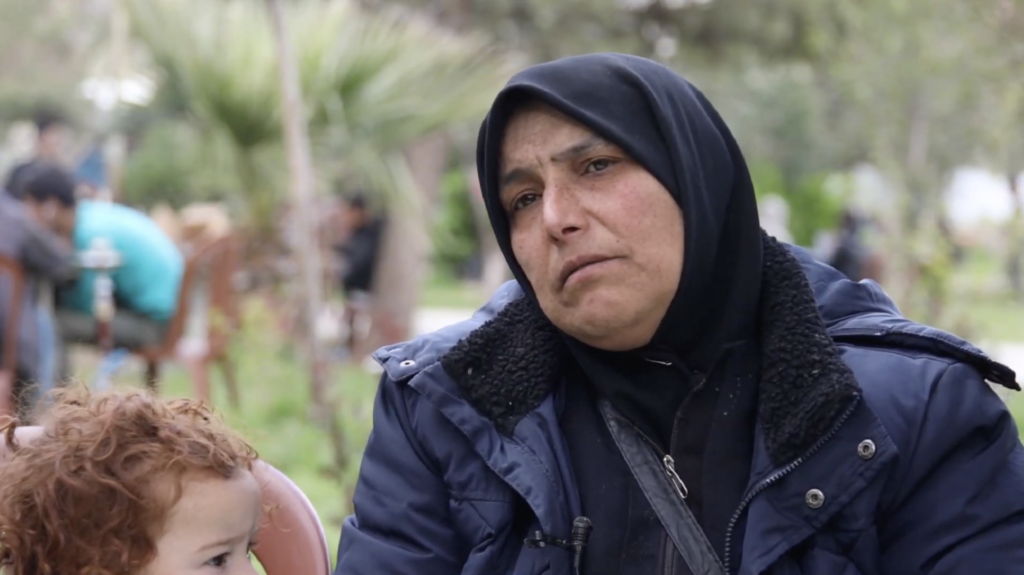
Suzan Najm, one of the wives of missing men whose stories were documented in this investigation, speaks about years of waiting after losing all contact with her husband, and the questions his absence has imposed on her life and her child’s future, with no definitive answer as to whether he is alive or dead.
In Islamic jurisprudence, there is no single, universally agreed period that the wife of a missing man must wait. According to the jurisprudential opinions reviewed for this investigation, the issue has long been subject to differing interpretations, particularly over the length of the waiting period, the harm suffered by the wife, and the circumstances in which the disappearance occurred. Some traditional opinions linked a declaration of death to the passage of enough time for the missing man’s contemporaries to be presumed dead, or to his reaching the age of 80. Other interpretations allowed the wife’s status to be resolved sooner, particularly when the circumstances of the disappearance made death highly probable or when continuing the marriage caused her serious harm.
Under Syrian law, Article 205 of the Personal Status Law states that a person’s status as missing ends “upon the missing person’s return, death, or being deemed dead upon reaching the age of 80.” It also allows a missing person to be declared dead in cases connected to military operations or comparable circumstances in which death is highly probable, subject to the conditions prescribed by law.
But declaring a missing person dead is not the same as granting a wife judicial separation because of her husband’s absence. A woman may be able to ask a court to terminate the marriage under provisions governing absence and separation without her husband necessarily being declared legally dead. A declaration of death, by contrast, carries other consequences involving civil registration, inheritance and the family’s financial rights.
The issue becomes even more complicated in a rare scenario that, in Syria, is no longer merely hypothetical: What happens if a man is declared dead, his wife remarries, and he later returns alive?
According to lawyers interviewed for this investigation, Syria’s Personal Status Law does not provide an explicit answer resolving every consequence of such a case. This can require recourse to Islamic jurisprudence in matters whose details are not directly addressed by the law.
Lawyers and Islamic legal experts who spoke to the investigation said the legal and jurisprudential consequences of the first husband’s return may differ depending on the status of the second marriage, including whether it has been consummated, as well as how the first marriage was terminated and the judicial ruling on which the second marriage was based.
For this investigation, that is not an abstract question of jurisprudence. After the fall of the regime and the opening of prisons, men emerged alive after their families had believed them dead. In some cases, the lives they had left behind had changed completely.
Suzan, then, did not encounter a single religious ruling that simply told her, “Wait indefinitely.” Nor did she encounter one that made the decision to end her marriage for her. Instead, she found a body of jurisprudence in which the circumstances of the disappearance and the harm suffered by the wife can become central to determining her situation.
But that diversity of interpretation did not always reach the women we interviewed. Instead of hearing about competing jurisprudential views, some encountered a single social verdict: “Islamic law does not allow you.”
Here, the investigation began to uncover a divide that would recur in other women’s stories: the gap between the choices Islamic jurisprudence may afford a woman and the restrictions society imposes on her in the name of religion.
Syrian law, meanwhile, places women before two distinct legal routes that should not be conflated: seeking judicial separation because of a husband’s absence, and obtaining a judicial declaration that a missing husband is dead.
Under Article 109 of Syria’s Personal Status Law, a wife may, in cases of absence, petition for judicial separation once the period and conditions prescribed by law have been met. Such a ruling does not, in itself, amount to a declaration that her husband is dead.
Yet what may appear to be a viable legal route on paper becomes considerably more complicated in cases of enforced disappearance.
These husbands did not simply travel and then lose contact with their families under ordinary circumstances. In the cases we followed, men disappeared within a detention system that withheld information about their place of detention and fate from their families. Detainees died or were killed in custody without their relatives receiving, at the time, reliable information sufficient to establish what had happened to them.
A wife may therefore be able to prove that her husband has been absent for years, while remaining unable to prove that he is dead.
The distinction is not merely semantic. A declaration of death can have consequences for inheritance, civil status and the legal and financial rights of family members. Judicial separation, by contrast, is intended to resolve the marital relationship under the conditions prescribed by law, without necessarily turning the missing husband into a deceased person in official records.
It is this space between “absent” and “dead” that has left some of the women we interviewed in a status that is extraordinarily difficult to resolve: a man absent from everyday life, yet still legally present in decisions affecting his wife and children.
Hala Tarjuman, a researcher with the United Nations’ Independent Institution on Missing Persons in the Syrian Arab Republic (IIMP), says the consequences of disappearance for families extend far beyond establishing the missing person’s fate. They include legal questions involving the management of his assets, financial support, separation or termination of marriage, guardianship and custody, civil documentation, death certification and the settlement of estates.
That was precisely the reality Suzan was living.
After years of waiting, the question was no longer whether she loved her husband or had abandoned him. It was simpler — and harsher: Why should a man’s enforced disappearance mean that a woman’s life must remain suspended with his indefinitely?
After the fall of the regime, an even more urgent question emerged: If the new state still cannot tell Suzan whether her husband is alive or dead, what can it offer her so that her own life no longer remains suspended by his disappearance?
One of the women we followed chose not to wait for an answer. She chose to begin another life.
The Heroine Accused of Bringing Shame
Unlike Suzan, Heba Mohammed did not wait for a definitive answer about her husband’s fate before deciding the course of her own life.
Years passed, but her husband did not return, and no information emerged to establish whether he was alive or dead. At first, she waited, hoping for news, for his name to surface somewhere, or for him to suddenly come home. But with each passing year, her own life was passing too.
In 2022, Heba decided to turn to the courts to bring the years of waiting to an end, filing for judicial separation on the grounds of her husband’s absence. But she says obtaining the ruling was not possible through official procedures alone. According to Heba, she was forced to pay a bribe to secure a court decision in her favor. She eventually obtained a ruling terminating the marriage and later chose to begin a new life and remarry.
For Heba, the bribe was more than a financial price paid for a court ruling. It exposed another contradiction: even when she chose to pursue the legal route available to her, she says she had to pay money simply to access it.
The court ruling was supposed to settle her marital status. It did not settle how society viewed her.
Heba did not see her remarriage as abandoning her missing husband. She saw it as exercising a right she had obtained through the courts — and as refusing to allow his disappearance to become the disappearance of her own life as well. She did not know where he was, and no one could tell her whether he would return in a month, in ten years, or never.
But ending the wait came at a cost.
Heba says her remarriage changed the way some people around her treated her. The sympathy she had received while she remained “the wife of a missing man who was still waiting” turned into blame once she decided to move forward with her life.
“How can you remarry when your husband may still be alive? What if he comes back?”
The paradox was that Heba had not remarried in secret, nor had she simply disregarded her previous legal status. She had obtained a judicial separation. Yet the court ruling was not enough to shield her from social judgment.
According to Heba, the dispute went beyond words. Her relationship with her husband’s family deteriorated after her remarriage, and she says she was prevented from accessing money or property to which she believes she or her children have rights.
The investigation contacted her husband’s family and offered them the opportunity to respond to her account concerning the money and property. They declined to comment before publication.
Heba’s case exposes one of the central contradictions of this investigation: a woman may succeed in escaping legal limbo in court, only to remain trapped in social limbo outside it.
Sara al-Azm, a social expert, says the uncertainty surrounding the fate of a missing person places his wife in a position fundamentally different from that of either a widow or a divorced woman. A widow faces a confirmed death; a divorced woman knows the relationship has ended. The wife of a missing man, by contrast, remains caught between two possibilities: she cannot treat him as dead, yet she cannot live with him as though he were present.
This experience is described in psychological literature as “ambiguous loss” — a form of loss in which a person is physically absent but remains psychologically and socially present within the family.
“Society can turn waiting into a moral measure of a wife’s loyalty,” al-Azm says, “so that her decision to remarry may be interpreted as abandoning her husband rather than as an attempt to reclaim her life after years of an absence for which she bears no responsibility.”
That is precisely how Heba describes her experience.
“How many years am I supposed to wait? Four? Ten? Eighty? Am I supposed to remain the wife of a missing man for the rest of my life, just so I am not accused of abandoning him and bringing shame on my family?”
Crucially, that judgment did not disappear with the fall of the regime. Heba says she continued to hear the same questions after December 2024, as though the court ruling that ended her marriage had not been enough to end society’s judgment of her.
The court gave her the right to end the waiting. Society continued to demand that she wait.
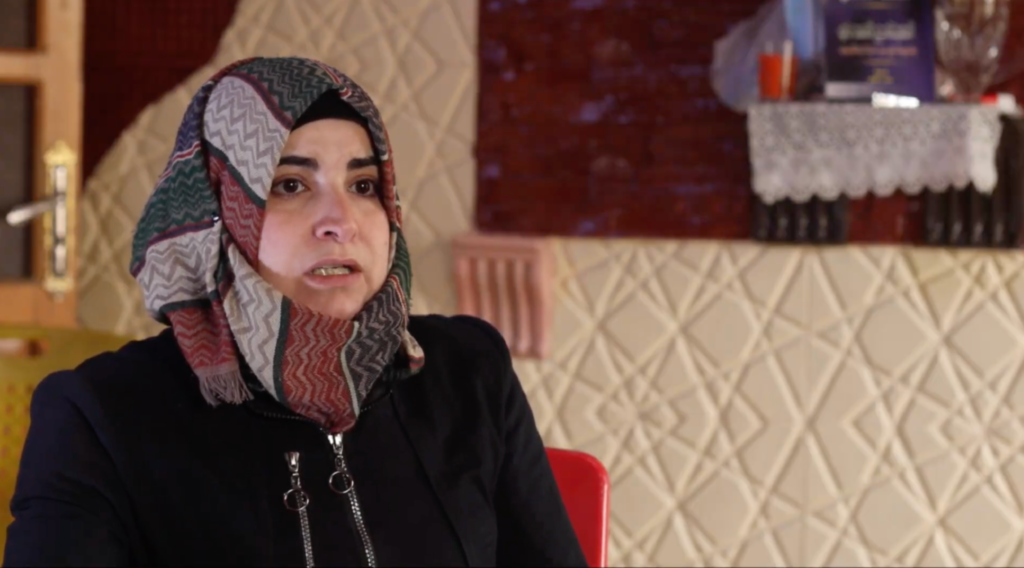
Heba Mohammed, one of the wives of missing men whose stories were documented in this investigation. After years of waiting for her missing husband, she obtained a court-ordered judicial separation and chose to remarry. She says that decision exposed her to social pressure and stigma, beginning another struggle — this time for the right to choose the course of her own life.
This problem extends far beyond Heba’s individual experience. Heba Zayadin, a senior researcher in the Middle East and North Africa division at Human Rights Watch, says: “This is not a secondary issue. With more than 100,000 people missing in Syria, their wives face a legal and economic vacuum, while their children are denied the documents they need to access education and healthcare.”
Zayadin argues that addressing the circumstances of these women and children should be “at the heart of any serious discussion about transitional justice and gender equality in Syria.”
The investigation was built around two complementary layers of reporting. The first was longitudinal: over four years, we repeatedly followed 97 wives of missing men, documenting how the consequences of disappearance changed — or persisted — across two distinct periods, before and after the fall of the Assad regime in December 2024. The second was quantitative: a survey of 1,100 Syrian families was used to test whether patterns emerging from those individual cases appeared across a broader group of families affected by disappearance.
The survey was conducted between January 2022 and early August 2026. It documented the legal, financial and family consequences associated with the disappearance of a family member.
The survey included families from nine Syrian governorates: Damascus, Rural Damascus, Aleppo, Homs, Hama, Idlib, Daraa, Raqqa and Deir ez-Zor. Participants were reached through field interviews, telephone calls, referrals from families previously contacted by the investigation, and local networks working with families of detainees and missing persons. The survey used purposive sampling rather than a nationally representative random sample, targeting families with direct experience of detention or disappearance who could provide information about its consequences.
Questions focused on access to the missing person’s money, property and associated rights; legal procedures for establishing absence or death; civil documentation; guardianship and matters involving children; judicial separation and remarriage; and financial or family disputes that arose or persisted because of the disappearance.
Within the participating families, part of the survey focused specifically on women whose husbands were still considered missing when the data was collected. Among the 600 wives of missing men who answered the question on property and associated rights, 522 (87%) said they had been unable to access their missing husbands’ property or the rights associated with it. Among 300 respondents who had initiated legal proceedings to obtain a declaration of absence or death, 72 (24%) obtained the legal outcome they sought, while 198 (66%) said their cases remained unresolved at the time their circumstances were documented. The remaining 30 (10%) reported that their applications had been rejected, stalled, or otherwise not completed.
The survey was not designed as a nationally representative study of all families of missing persons in Syria. Participants were not randomly selected from a comprehensive national registry, and access to families was affected by security conditions, geography and the ability to establish contact. The investigation therefore does not extrapolate these percentages to all wives of missing persons in Syria. Instead, they are presented as quantitative indicators within the surveyed sample, showing that problems identified through the in-depth interviews were not confined to a single individual case.
To strengthen verification, the survey findings were compared with the in-depth testimonies collected over four years and, where available, with supporting documentation, including civil registry records, death certificates, court rulings and applications, and family documents. The findings were also examined alongside interviews with lawyers, human rights advocates and specialists working on the issue of missing persons.
The investigation used the survey as a quantitative complement to its qualitative reporting: interviews and documents helped explain how disappearance reshapes a family’s life, while the survey helped assess how frequently some of those patterns appeared among the wider group of families reached during the investigation.
Four years after this investigation began, Heba had managed to resolve in court what the state still could not resolve about her husband’s fate.
He remained missing. But she refused to remain missing with him.
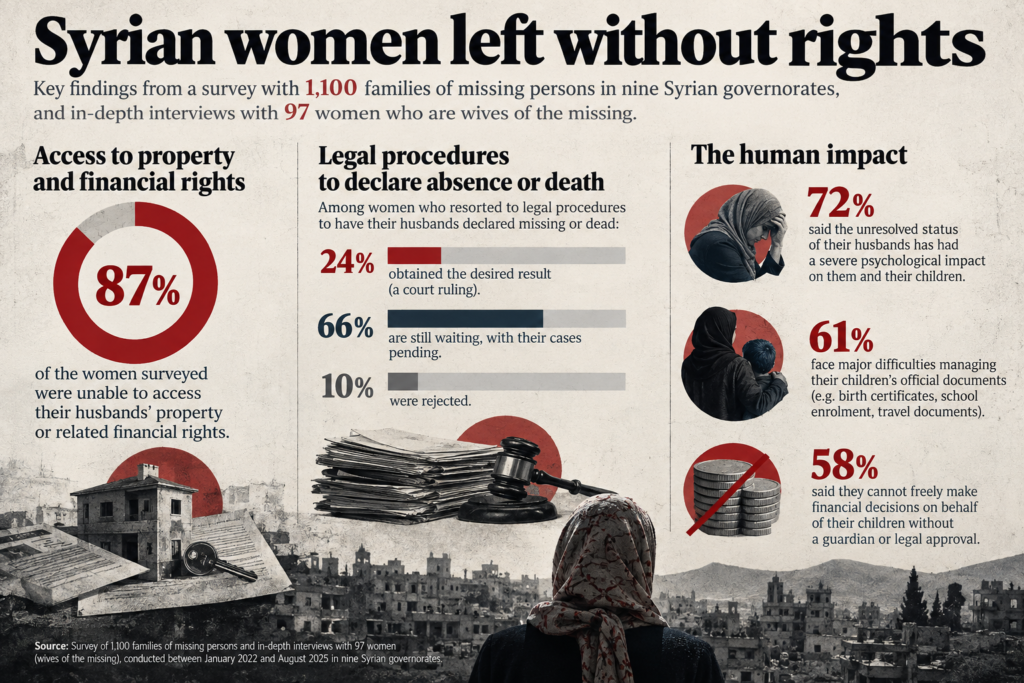
Key findings from the investigation’s survey of 1,100 Syrian families and in-depth interviews with 97 wives of missing persons, highlighting the legal, financial and family consequences of prolonged disappearance — including barriers to accessing property and financial rights, unresolved procedures for declaring a missing husband absent or dead, and obstacles involving children, guardianship and civil documentation.
The Man Is Missing — His Legal Authority Remains
The suffering of wives of missing men does not end with questions of waiting or remarriage. For other women we interviewed, remarriage was not the issue at all. A mother might simply try to obtain a document for her child, or make a legal decision on the child’s behalf, only for her missing husband to re-enter her life through another door: the law.
A man’s physical absence does not necessarily erase the legal authority associated with him. Women who had carried sole responsibility for their children for years found that effectively acting as both mother and father did not automatically grant them the same legal authority to make decisions on their children’s behalf.
This is one of the contradictions uncovered by the investigation: a father may be absent for ten years, while the mother is still required to prove her right to make decisions she has effectively been making throughout his absence.
The dilemma is starkly illustrated by the case of Fatima Touban, 33, from the town of Dana in Idlib governorate.
Fatima’s husband disappeared ten years ago. Since then, she has taken responsibility for their son in his father’s absence — caring for him, providing for his daily needs, overseeing his education and carrying the responsibilities of raising him.
But she says that being his mother — and the person actually raising him — was not enough for certain official procedures.
According to Fatima, her signature alone was not accepted for some procedures involving her son, forcing her to turn to male relatives on his father’s side for approvals related to his documents.
The contradiction, as she describes it, is that those relatives do not share the burden of supporting or raising the child, yet they can become legally relevant whenever she needs to complete an official procedure on his behalf.
The father is absent. The mother is present. Yet legal authority does not necessarily follow the person carrying the actual responsibility.
The distinction between custody and legal guardianship is crucial to understanding the problem. A child living in the mother’s care does not necessarily mean that she holds all the legal powers concerning the child. Certain matters may remain governed by guardianship rules and the legally prescribed order of those entitled to exercise that authority.
For Fatima, this was not an abstract legal distinction. It surfaced every time she needed a signature, an approval or a document for her son.
“I am the one who has raised my son alone throughout all the years his father has been missing,” Fatima says. “I am the one who feeds him, takes him for medical treatment, follows his education and carries responsibility for him every day. But when I need a document or a signature concerning him, being his mother is suddenly not enough, and I am told to go to a man from his father’s family. I feel as though the law sees me as responsible for my son when it comes to carrying the burden, but not as the person entitled to make decisions when it comes to his rights.”
The fall of the Assad regime might have been expected to create an opportunity to reconsider some of the legal consequences that disappearance had imposed on families. The new authorities inherited not only the missing-persons file, but also thousands of cases in which fathers had disappeared and mothers had, in practice, become the primary — and often sole — caregivers of their families.
Yet subsequent legal developments did not necessarily move toward expanding mothers’ legal authority.
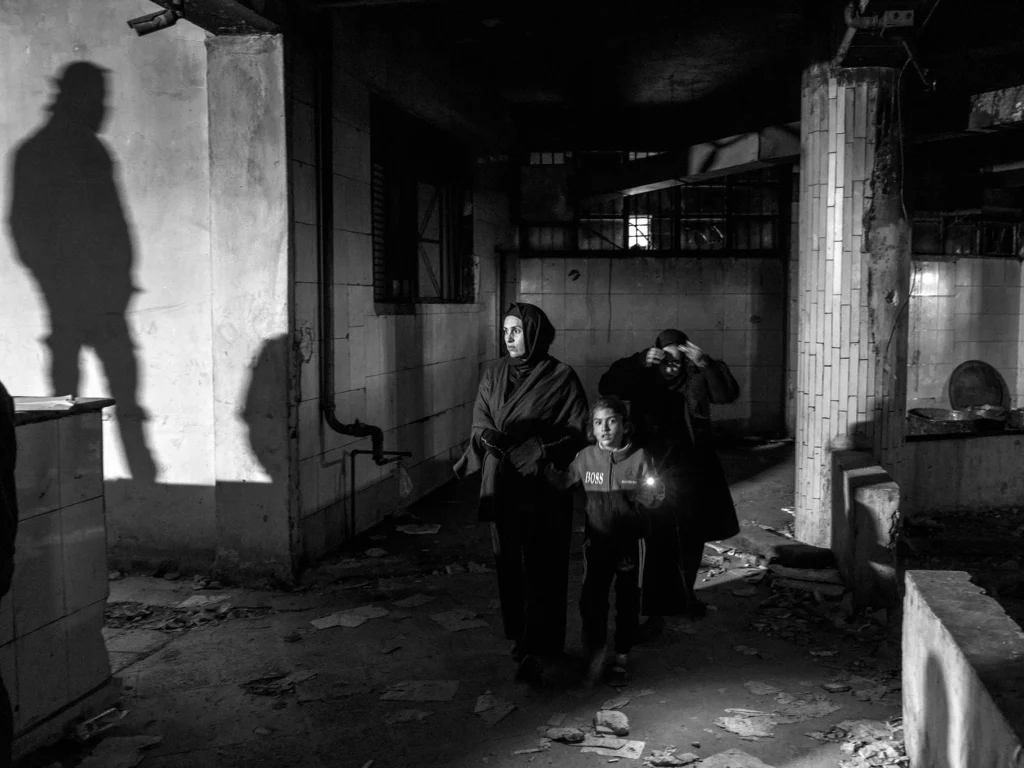
Fatima inside one of the facilities at Sednaya Prison following the fall of the Assad regime, a place that had remained closed to the families of detainees and missing persons for years. Amid the cells and corridors, families continued searching for any trace that might reveal the fate of those who never returned. The prison doors had opened, but thousands of families were still left without answers.
A copy of Circular No. 17 reviewed by this investigation indicates that, since December 2025, the Ministry of Justice has restricted some of the discretion judges previously had in matters involving the granting of legal authority to mothers when fathers are absent. Syrian legal researcher and human rights expert Lina Ghotouq says the circular reorganized guardianship over minors according to an order that gives priority to male relatives, further narrowing the mother’s position within that framework.
Ghotouq describes the measure as “a gradual intensification of discrimination against mothers,” with particularly severe consequences for the wives of missing men, whose husbands may remain absent for years without any way of knowing whether they will ever return.
In response to questions and findings presented by this investigation, the Ministry of Justice said it had begun reviewing the legal and practical consequences of Circular No. 17 for families of missing and forcibly disappeared persons. The ministry said the review includes examining safeguards that would allow mothers to exercise essential legal authority over their children when a father’s prolonged absence can be established, while preserving the rights of the missing person should he return. It added that it was also considering amendments or implementing measures to prevent a father’s disappearance from blocking essential legal procedures concerning his children.
At this point, the question that had driven our investigation began to change.
Before the fall of the regime, the central problem for many women was that the state would not tell them where their husbands were. After its fall, another question emerged: If the state does not know where the father is, why can the mother who is raising his children not make the decisions they need?
Syrian activist Yafa Nawaf, founder of the “My Children, My Right” initiative, says thousands of women from different parts of Syria have contacted the initiative over difficulties involving guardianship and civil documentation.
“We are calling on the People’s Assembly, in the context of the new constitution, to fundamentally amend the Personal Status Law, particularly its provisions on custody and guardianship,” Nawaf says.
But the problem does not end with children.
Syrian law treats a missing person as someone whose life or death has not been established. That status leaves behind a web of legal questions that cannot all be resolved through the same procedure.
A wife may obtain a judicial separation and end the marriage without her husband being declared legally dead. His money and property, as well as rights affecting his children, may remain tied to his legal status. A judicial declaration of death, meanwhile, carries different consequences involving civil registration, inheritance and other rights.
One part of the problem can therefore be resolved while others remain open.
That is what makes enforced disappearance fundamentally different from ordinary absence: a family is required to manage an entire life around a person whom the state itself cannot say with certainty is alive or dead.
Fadel Abdul Ghany, director of the Syrian Network for Human Rights, says: “These are not theoretical questions in a country where at least 177,000 people remain missing, most of them men. Family law therefore cannot be treated as an issue separate from the missing persons file or from transitional justice.”
What Fatima’s case reveals, then, is not simply that the law can make life more difficult for the wife of a missing man. Disappearance can also redistribute power within the family: the mother bears the responsibility in practice, while some legal authority remains attached to an absent man or to male relatives who stand in the legal chain of guardianship.
That raises a question extending far beyond Fatima’s case: How can a state ask a woman to wait for the fate of a missing father to be established before giving her the legal tools she needs to care for a child who depends on her every day?
The search for the missing seeks to answer one question: Where is he?
But legal reform must answer another, no less urgent: What happens to those he left behind until we know where he is?
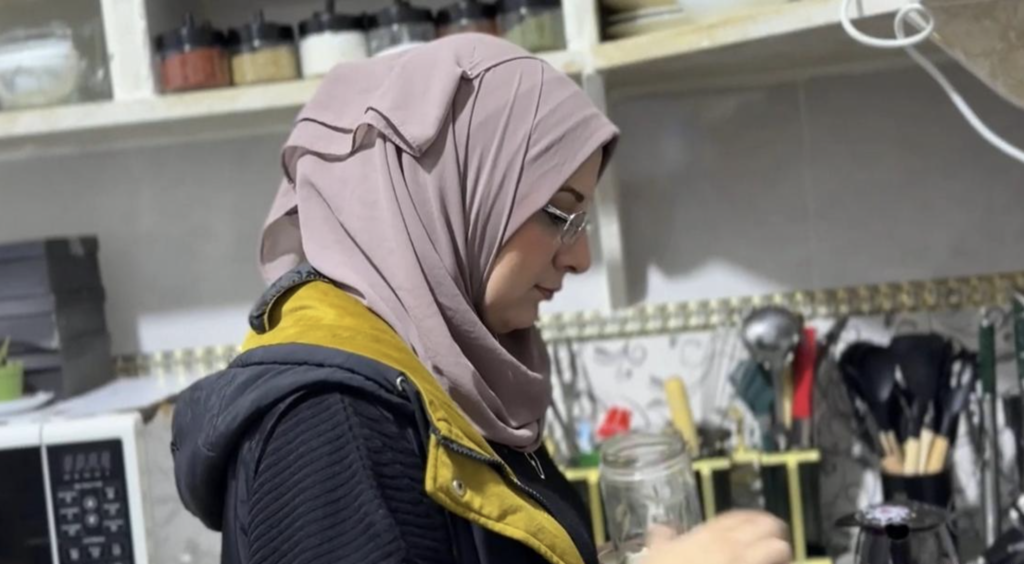
Yafa Nawaf, founder of the “My Children, My Right” initiative, at her home. Nawaf is calling for fundamental reform of Syria’s Personal Status Law, particularly provisions governing custody and legal guardianship, to give mothers greater authority to manage their children’s affairs and make decisions on their behalf when the father is absent.
Money Frozen in the Name of a Missing Man
Marriage was not the only thing left suspended by the fate of Syria’s missing men. Their disappearance also left behind homes, land, savings, salaries and financial rights that remained tied to their names, while families that had lost their primary breadwinner faced a harsh paradox: the money may still exist, but the man legally entitled to control it does not.
In Homs, Maryam Abdul Haq experienced this dimension of disappearance firsthand.
After her husband disappeared, Maryam became responsible for providing for the family. But his absence left behind money, property and other rights that were not as easy to access as she had expected. Her husband was no longer there to manage what he owned, yet there was no confirmed death that would allow his assets to be treated as an estate and distributed among his heirs.
This is where a legal distinction — one that some families only discover when they need to access money or property — becomes crucial.
A missing person does not become legally dead simply because years have passed since his disappearance. Unless his death is established or a court declares him dead through the prescribed legal procedures, his assets remain tied to someone whom the law considers missing, not deceased.
For Maryam, this distinction was not an abstract legal matter. It carried a daily cost: the family needed money in the present, while determining their rights to it could depend on resolving the fate of a man whose life or death she had no evidence to prove.
“The missing person did not leave behind only a question about where he is,” Maryam says. “He also left behind an entire life that needs someone to decide what happens to it.”
The Personal Status Law also regulates a missing person’s share of another person’s estate. If the missing person is entitled to an inheritance, his share may be withheld until his fate is established, with its eventual disposition depending on whether he reappears alive or is legally declared dead.
But the women’s testimonies raised a question that legal provisions alone do not answer: Who bears the cost of waiting?
“The children cannot wait for a court decision. Food does not wait. School does not wait. Everything in our lives continues, except the rights that remain tied to his name,” she says.
A family cannot suspend its expenses until the missing person reappears. Food, education, medical care and rent do not wait for a court ruling. While the man’s legal status remains unresolved, the needs of his wife and children continue every day.
The problem becomes even more complicated when money and property become a source of conflict within the family.
Over the four years of this investigation, we recorded a financial dispute as a primary problem in nine cases. When we returned to the women after December 2024, five of those cases still had a financial dispute linked to the husband’s disappearance recorded as their primary unresolved problem. At that point, the nature of the harm begins to change.
Disappearance begins as a violation against an individual and his family. But as uncertainty persists, its consequences can spread into relationships within the family itself: Who has the right to control the home? Who manages the missing person’s money? What rights do his wife and children have? And what happens if he reappears alive years later?
For the families we interviewed, these are not hypothetical questions. They are disputes that arose because one person disappeared while the rights and obligations he left behind did not disappear with him.
When the Assad regime fell in December 2024 and prison doors opened, it appeared that one of the greatest barriers facing families of the missing had collapsed. Searches began at detention centers and burial sites, and a national commission for missing persons was later established. But for the women whose stories we had been following since 2022, we had another measure of how much had really changed.
We went back to them.
We asked about the husbands who had not returned, the court cases that remained unresolved, children’s documents and guardianship, attempts at judicial separation and remarriage, and the money and property that remained tied to the fate of a man whose whereabouts were still unknown.
What we found was that the fall of the authorities under which most of these disappearances occurred did not automatically erase the consequences of disappearance within the family.
When we returned to the women after December 2024, 90 of the 97 women still had a primary problem related to their husbands’ absence that remained unresolved.
Based on the primary problem recorded by the investigation in each case, 51 women faced problems involving documentation or matters concerning their children; 19 had sought judicial separation because of their husbands’ absence; 15 faced social pressure related to remarriage; and five were dealing with financial disputes linked to the husband’s disappearance.
The social pressure reported by all 97 women over the course of the investigation was therefore not always the only — or the primary — problem they faced after the regime’s fall. In 90 cases, the consequences of absence persisted or evolved into a specific unresolved problem involving documentation, children, judicial separation, remarriage or money.
In other words, in 90 of the 97 cases we followed, the disappearance continued to produce a concrete unresolved consequence in the woman’s life even after the political system under which most of the disappearances occurred had collapsed.
The figures reveal that, for these women, the fall of the authorities under which most disappearances occurred was not enough to end the consequences that absence had imposed on their lives. The authorities changed, but problems that began before the fall followed the women into Syria’s new era.
Behind the numbers are different lives, but they point to a common conclusion: political change alone was not enough to end the consequences of disappearance within the family.
The types of problems we documented are consistent with findings by the International Commission on Missing Persons, which has documented obstacles faced by Syrian women from families of missing persons in areas including property, inheritance, children, and access to documentation and services.
And the consequences of this prolonged limbo do not end at the courthouse door.
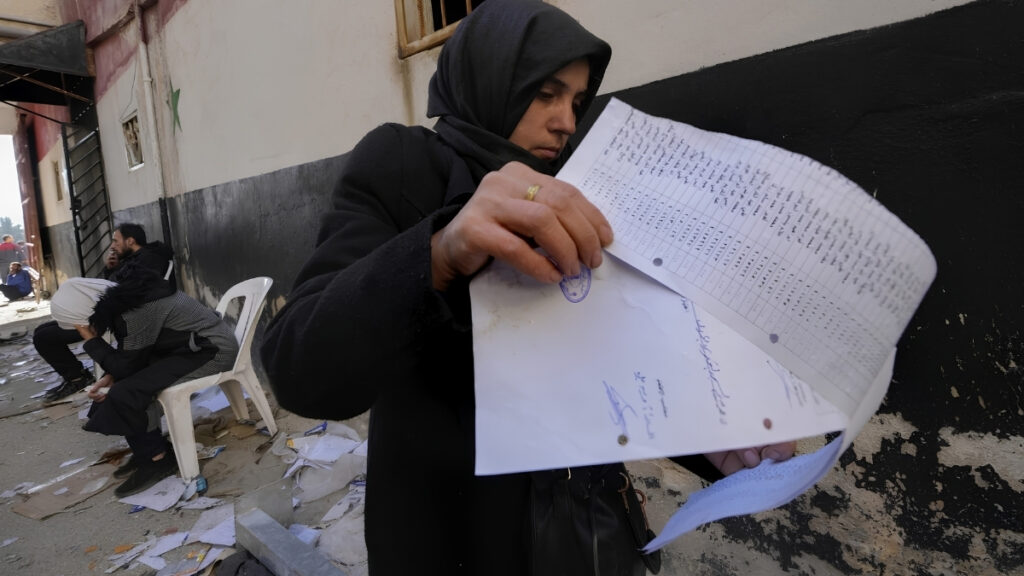
A Syrian woman examines documents and lists of names while searching for missing persons, amid records left behind by institutions of the former regime. For families of the missing, the search for a name or a document has become a search for the most fundamental answer: whether their loved ones are still alive, or whether years of waiting ended in death.
Marah Abdul Rashid, a psychologist and social counselor, says that continued uncertainty over a husband’s fate can leave a woman trapped in a state of waiting that does not necessarily end with a change in political power or the opening of prisons.
“Opening the prisons may bring detention to an end for those who emerge from them,” she says, “but it does not automatically resolve the lives of women whose husbands did not return. It does not determine who has legal guardianship over a child, resolve disputes over money, end a marriage, or remove the stigma attached to a woman who chooses to begin a new life.”
Abdul Rashid says that women in this position are dealing with more than the loss of a husband. They are forced to build their lives around uncertainty over his fate, while carrying family responsibilities and facing decisions they may fear making because the possibility of his return remains.
For a wife who did not find her husband among those who emerged from Syria’s prisons, then, opening the prison doors does not automatically bring her story to an end.
How do you begin a new life when the old one has never been given an ending?
We presented the findings of this investigation to the National Commission for Missing Persons and the authorities responsible for civil registration at the Ministry of Interior. We asked what procedures are available to wives of missing persons who continue to face problems involving documentation, civil status and rights tied to husbands whose lives or deaths remain unconfirmed, and what measures have been taken to address these cases since the fall of the regime.
Neither had responded by the time of publication.
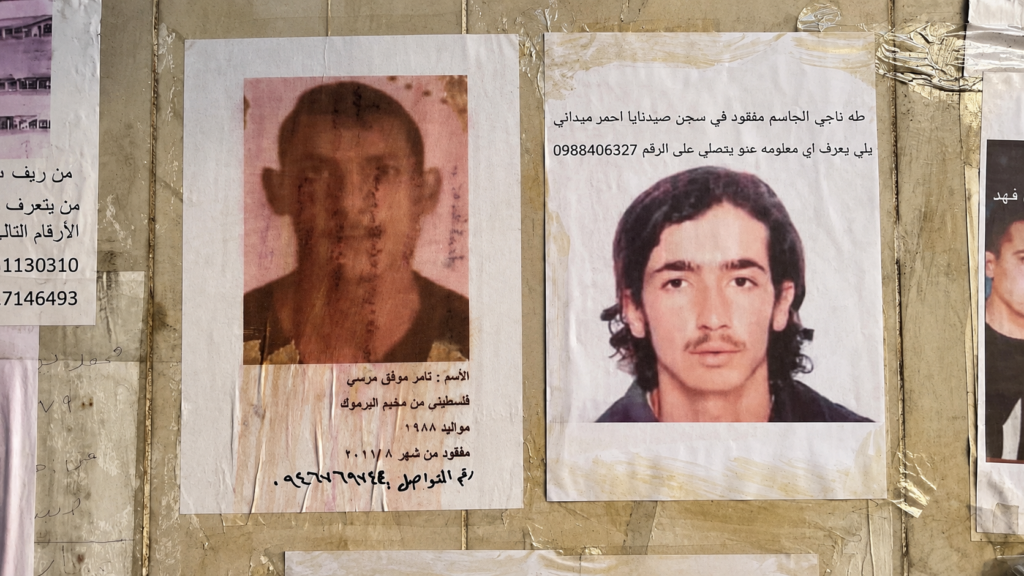
Photographs of missing Syrians displayed on a wall in Marjeh Square in central Damascus, accompanied by their names and contact numbers for their families in case anyone recognizes them or has information about their fate. Years after their disappearance, the photographs remain a testament to families still searching for answers.
What If the Missing Husband Returns?
There is a question some wives of missing men fear almost as much as news of their husbands’ deaths: What if he comes back?
After years of absence, a woman may have obtained a judicial separation, remarried, or built an entirely new life on the basis of information indicating that the husband who disappeared would never return. But Syria’s prisons have shown that prolonged absence does not always mean death — and that a man can return years later to a life that did not stand still while he was gone.
On December 8, 2024, as the doors of Sednaya Prison opened amid the fall of the Assad regime, Ahmad Farouq Mustafa walked free after nearly five years in detention.
Ahmad was alive. But the state’s records said otherwise.
While he was in detention, Ahmad had been registered as deceased in the civil registry, with official records listing his date of death as April 2, 2022. For his family, there was little reason to believe that a man whom the state had recorded as dead was, in fact, still alive behind prison walls.
His family held a funeral ceremony for him. His wife moved forward with her life and remarried. Then, more than two years after his recorded death, Ahmad returned to his family alive.
His return was not simply a reunion between a surviving detainee and a family that had believed him dead. He came back to a life his family had rebuilt on the basis of information provided by the state itself: that he was dead.
Here, the dilemma that has followed the women throughout this investigation is turned on its head. Heba had asked, “How many years am I supposed to wait?” For some women, the possibility that a missing husband might one day return had been invoked as a reason they should continue waiting.
But Ahmad’s story exposes the impossibility of placing responsibility for that possibility on the wife alone.
His wife did not know he was alive. His family did not know. Even the civil registry said he was dead.
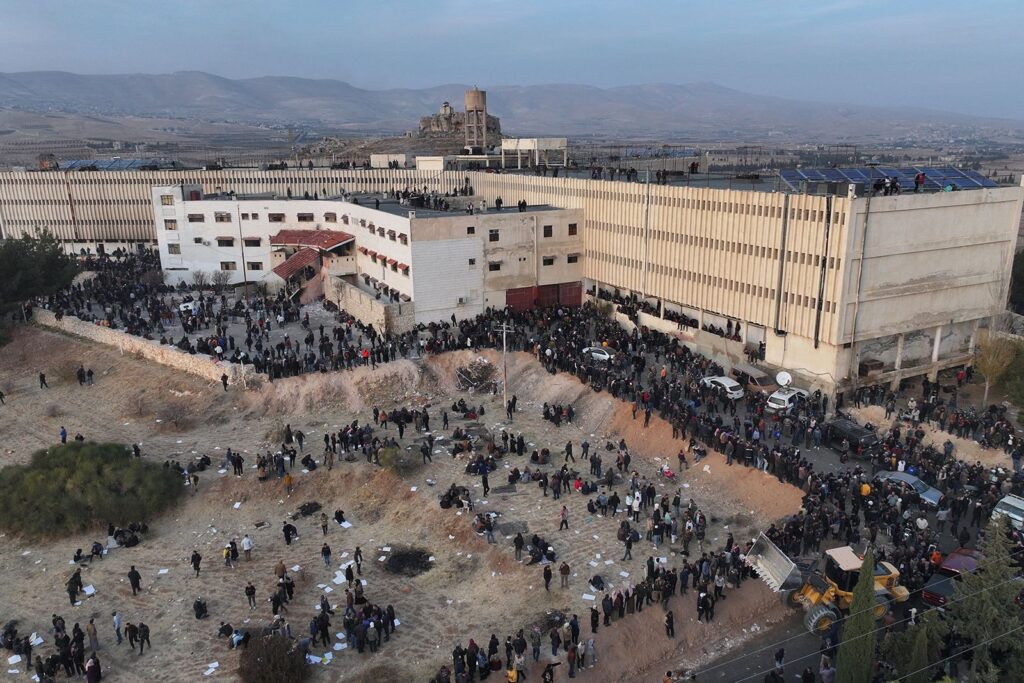
Crowds of Syrians gather outside Sednaya Prison on the morning of December 8, 2024, following the fall of Bashar al-Assad’s regime, searching for relatives and missing loved ones whose families had spent years waiting for news of their fate. The opening of the prisons reunited some detainees with their families, but left many others facing the same unanswered question: Where are those who never came out?
Alive Outside Prison — Dead in the Records
Ahmad’s ordeal did not end when he walked out of prison. After returning home, he tried to obtain a civil registry extract, only to discover that proving he was alive to his family had been easier than proving it to the state. According to his testimony and documents reviewed by this investigation, he remained officially registered as deceased and had to begin court proceedings to correct his civil status and reverse the legal consequences of his recorded death. He had emerged from prison alive, but still needed a legal process to become alive on paper.
Ahmad recalls the disbelief of returning from detention alive, only to discover that his legal identity still reflected the death his family had been told to accept. “I survived detention and came home alive, but on paper I was still dead. I had to go to court not to prove what happened to me in prison, but to prove something that should have been obvious: that I was alive,” he recalls.
Ahmad was not an isolated case. Over the course of this investigation, we documented 17 former detainees who emerged alive after records or documents produced during their detention had identified them as dead. In some cases, the death had been formally entered into Syria’s civil registry; in others, the detainees appeared as deceased in death records or data linked to prisons and detention facilities. Taken together, the 17 cases reveal a pattern that goes beyond individual clerical errors: information produced while people were forcibly disappeared could continue to determine their legal status — and shape decisions made by their families — even when that information was wrong.
The consequences run in both directions. Without proof of death, a wife may spend years unable to resolve fundamental questions involving marriage, children, property or inheritance. But official proof can create another danger: families may make irreversible legal and personal decisions on the basis of a death record, only for the missing person to later emerge alive. Ahmad’s case exposes that contradiction in its starkest form — the document meant to end a family’s uncertainty was itself not always proof that the person had died.
That raises a question extending beyond the accuracy of a record: Who bears responsibility when a family rebuilds its life in reliance on information produced by the state, only for that information to prove false?
Lawyer Michel Shammas argues that cases involving people who are alive but officially registered as dead should not be left to former detainees to resolve through a lengthy journey between courts and civil registry offices. Instead, he says, they require an exceptional, expedited mechanism to correct the records and reverse the legal consequences arising from them.
Asked what should happen when a former detainee returns alive but remains legally registered as dead, the Ministry of Justice said such cases should be handled through an expedited process rather than ordinary civil-registry procedures. The ministry said it had instructed relevant judicial and civil-registry authorities to expedite such cases and was reviewing a unified mechanism to restore the legal status of people incorrectly registered as dead and reverse the consequences created by those records.
Ahmad’s story, together with the cases of wives of missing men documented in this investigation, led us to confront the Ministry of Justice with a different question: What is the solution?
We presented the ministry with the problems uncovered by the investigation and asked specifically about five measures proposed by experts we interviewed as possible ways to address the current legal vacuum.
We asked whether the authorities would consider creating a temporary legal status for missing persons that would allow their families to manage essential affairs without forcing them to declare the missing person dead; granting mothers temporary legal authority when fathers are missing; establishing a court-supervised mechanism for managing a missing person’s assets while preserving his rights should he return; creating a clear legal framework to protect women who ended their marriages and remarried on the basis of a judicial ruling; and introducing an expedited procedure to correct the civil records of former detainees who reappeared alive after having been registered as dead.
In a written response to questions from this investigation, the Ministry of Justice said that addressing the legal consequences of the missing-persons file “requires an integrated framework that preserves the rights of the missing person in the event of his return, while at the same time preventing harm to the wife and children as a result of his continued absence.” The ministry added that, in coordination with the relevant authorities, it was reviewing procedures affecting families of the missing and ways to facilitate the resolution of cases that emerged after the prisons were opened.
On guardianship over children, the ministry said that “any amendment must take the best interests of the child into account first, while examining cases in which the father is unable to exercise guardianship because of prolonged disappearance.”
The ministry’s response therefore acknowledged several of the legal problems documented by this investigation, but left unanswered the central question raised by the women we followed: what legal mechanism is available to them now, and when will it become available?
As for people like Ahmad, who reappeared alive while official documents recorded them as dead, the ministry said such cases required “expediting the correction of civil records and removing the legal consequences resulting from the registration of death.”
But the ministry provided no timetable for adopting these measures. Nor did it provide figures on how many cases involving living people registered as dead had been corrected since the fall of the regime, or how many wives of missing men had had their legal status resolved during the same period. Its response also did not say whether the government would adopt the five measures we put before it in the forms proposed, or when its review of laws and procedures might translate into changes in force.
That gap — between acknowledging the problem and establishing a mechanism to resolve it — brings the story back to Ahmad.
His emergence from Sednaya proved that he was alive. But it did not automatically erase the years his family had lived believing he was dead, the decisions they made on that basis, or the legal consequences created by his recorded death.
A missing person may return. But the life he left behind does not necessarily wait for him in the same place.
That is why, after the prisons opened, the question is no longer only: Who came back?
It is also this: If the missing return one day, how will the law protect those who rebuilt their lives around an absence they did not create?
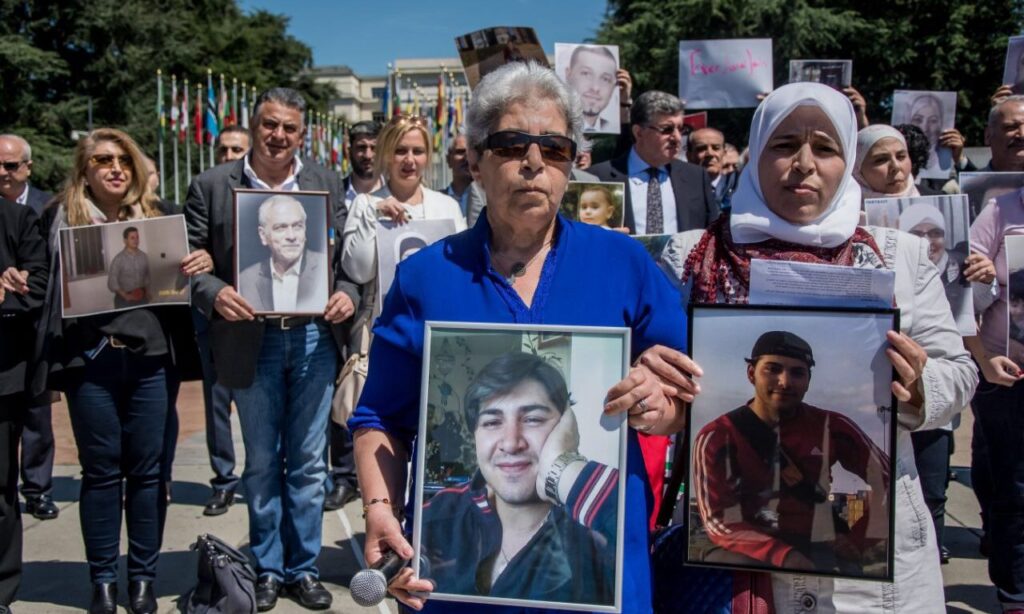
Families of missing Syrians hold photographs of their loved ones during a gathering demanding answers about their fate. Behind every photograph is a family still searching for the truth — in a crisis that extends beyond determining who survived and who died to encompass families’ right to truth and justice, both essential foundations for sustainable peace in Syria.
Taken together, the cases documented over four years point to a problem larger than prolonged uncertainty over the fate of the missing. In 90 of the 97 women’s cases we followed, a concrete consequence of the husband’s disappearance remained unresolved after December 2024. The investigation also documented 17 former detainees who emerged alive despite records or documents identifying them as dead. These findings show how disappearance can continue to produce legal consequences long after detention itself has ended — affecting marriage, children, property, civil status and decisions families make about their future.
When the Legacy of Disappearance Becomes a New Conflict
The consequences of disappearance do not stop at the boundaries of the family, nor do they end when prison doors open or the fate of some detainees becomes known. When the rights of a missing person, his wife and his children remain unresolved for years, the effects of the violation can travel from the prison cell into the home: a dispute over a house, a conflict over money, a mother restricted in exercising legal guardianship over her children, or a woman whose decision to remarry becomes a source of conflict with her husband’s family.
At that point, the missing-persons file is no longer only about uncovering the truth of a crime committed in the past. It is also about preventing its consequences from producing new injustices in the future. Syrian civil society organizations have placed this connection between the rights of missing persons and their families and the prospects for peace at the heart of their vision for transitional justice. In a guide prepared by eight Syrian organizations in cooperation with the International Center for Transitional Justice (ICTJ), they concluded: “There can be no peace in Syria until the rights of arbitrarily detained and disappeared persons and their families are fully restored.”
What we found over four years of reporting shows how this can unfold. When a man disappeared, the family, legal and financial relationships surrounding him did not disappear with him. As uncertainty persists, a crime that began between a security apparatus and its victim can re-emerge years later as a dispute between a wife and her husband’s family, a conflict over money or property, or a struggle over who has the authority to make decisions for a child.
We put these findings to Fadel Abdul Ghany, director of the Syrian Network for Human Rights. He says: “When the case of a missing person turns into a dispute over a home, money or guardianship of a child, the impact of disappearance has moved from the relationship between the victim and the authorities into relationships among members of society itself. This is dangerous in any transitional period, because transitional justice should not be limited to holding perpetrators accountable; it should also prevent the consequences of those violations from producing new grievances and conflicts.”
In this sense, the plight of the wives of missing men becomes a test of transitional justice itself. A woman who has spent years searching for her husband does not judge the state only by whether it can uncover his fate or hold those responsible for his disappearance accountable. She also encounters the state when she enters a courtroom, tries to obtain a document for her child, seeks to protect her family’s rights, manage assets tied to an absent husband, or resolve her own marital status.
Abdul Basit Abdul Latif, head of Syria’s National Commission for Transitional Justice, places the issue in a broader context, linking the need to address the consequences of disappearance with preventing them from being passed on to new generations and becoming sources of future conflict.
“Peace is not built simply by closing the files of the past,” he says, “but by preventing the consequences of that past from controlling the future. If disappearance continues to shape families’ relationships with their children, their money and property, and their daily lives, then the violation has not been fully addressed. Transitional justice deals not only with the moment in which the crime was committed, but also with the consequences it left in the lives of victims and their families.”
In that sense, addressing the circumstances of the wives of missing persons is not separate from transitional justice; it is part of it. Establishing the fate of the missing person delivers justice to the victim. Addressing what his disappearance left behind within the family prevents the violation from continuing long after he is gone.
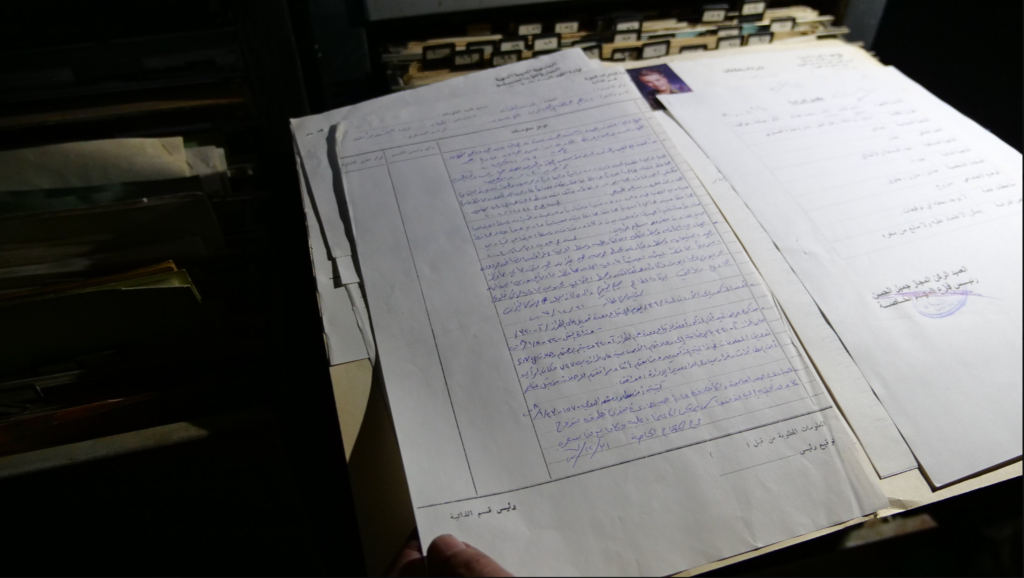
Official documents and state records inside a Syrian archive, containing information collected by government institutions. For families of the missing, these files are more than administrative paperwork: among them may lie evidence that reveals the fate of someone who has been missing for years — evidence that could also determine the rights, legal status and future of his wife and children.
From Justice for Victims to Preventing New Victims
Interviews conducted for this investigation with human rights advocates and legal experts suggest that addressing this legal vacuum does not require forcing families to choose between treating the missing person as alive or declaring him dead. Instead, it requires legal recognition of the space between those two possibilities, allowing families to continue with their lives until the truth emerges.
From those interviews, five practical measures emerged: a temporary legal status for missing persons; temporary legal authority for mothers over their children’s affairs when the father is missing; court-supervised temporary management of the missing person’s assets; a clear judicial pathway for separation that protects the legal status of a woman who later remarries on the basis of a court ruling; and an expedited mechanism to correct the records of people who return alive after having been registered as dead.
Shortly before publication, this investigation shared its findings on the legal consequences of prolonged disappearance with the Syrian People’s Assembly and asked whether forthcoming reforms to the Personal Status Law would address the circumstances of wives and children of missing persons. In a response sent through its press office, the Assembly said that “the situation of families of missing and forcibly disappeared persons will be considered as part of the review of Syria’s Personal Status Law.” It said the review would examine issues including guardianship when a father is missing, judicial separation, the legal consequences of remarriage, and protections for the rights of children and missing persons. The Assembly did not specify which provisions of the law could be amended, when the review would be completed, or whether the measures proposed by experts in this investigation would be incorporated into the final legislation.
None of these measures presumes that the missing person is dead, nor do they grant his family rights at his expense. Rather, they seek to distribute the burden of his absence more fairly: the family can manage its affairs, the missing person’s assets and rights remain protected should he return, and his wife is not forced to put her life on hold simply because the state has yet to establish what happened to him.
Such measures could also go beyond protecting individual families to preventing future conflict. A clear mechanism for managing a home or other assets could prevent a disagreement from escalating into a dispute between families. Giving mothers defined legal authority could avert conflicts over decisions involving children. And protecting a woman who rebuilt her life on the basis of a judicial ruling could prevent the return of a missing husband from creating a new legal crisis for which she bears no responsibility.
The women we interviewed are not asking the state to choose for them between waiting and remarriage, nor are they asking it to declare dead men whose fate remains unknown. What they need is for the state to give them information when it exists, rights when information does not, and a legal process that allows them to make their own choices rather than allowing absence to make those choices for them.
A woman holds photographs of two missing loved ones. Years after their disappearance, many Syrian families are searching not only for the truth, but also for rights and lives that can be reclaimed in the absence of those they lost. For them, peace begins with knowing their loved ones’ fate — but it cannot be complete until the consequences of disappearance stop governing the lives of those left behind.
Over four years, this investigation began with a question that seemed deeply personal: What does a woman do when her husband disappears? But the women’s testimonies, the documents and the cases we followed led to a larger question: What happens to an entire society when tens of thousands of its people disappear, while the rights of those they leave behind remain suspended with them?
For Noura, whose story opened this investigation, the answer remains simpler — and harsher — than any legal debate. Fourteen years later, she still does not know whether her husband is alive or dead. But the years she spent waiting for him were real. So were the lives of other women’s children, the assets families could not access, the decisions mothers were unable to make, and the marriages that became grounds for condemnation because they began before the missing man’s story had reached an end.
The regime fell and the prisons opened. But opening their doors was not enough to close everything they had left behind.
Syria’s new state inherits more than the missing themselves. It also inherits the homes into which the consequences of disappearance have entered, the women whose lives were put on hold, the children who grew up without their fathers, and the conflicts that can emerge when truth and rights remain suspended together.
That may be one of the hardest tests of peace in Syria: not merely determining who died and who survived, but preventing disappearance from continuing to determine the fate of the living — and finally closing the conflicts that those prison doors left open inside people’s homes.